The People Power Party, which holds 38 seats in the Seoul Metropolitan Council, has unveiled a caucus strategy centered on winning through policy rather than numbers. The plan calls for competing against the majority party not through confrontation or political slogans, but through objective evidence, carefully crafted policy alternatives and results that citizens can feel in their daily lives.
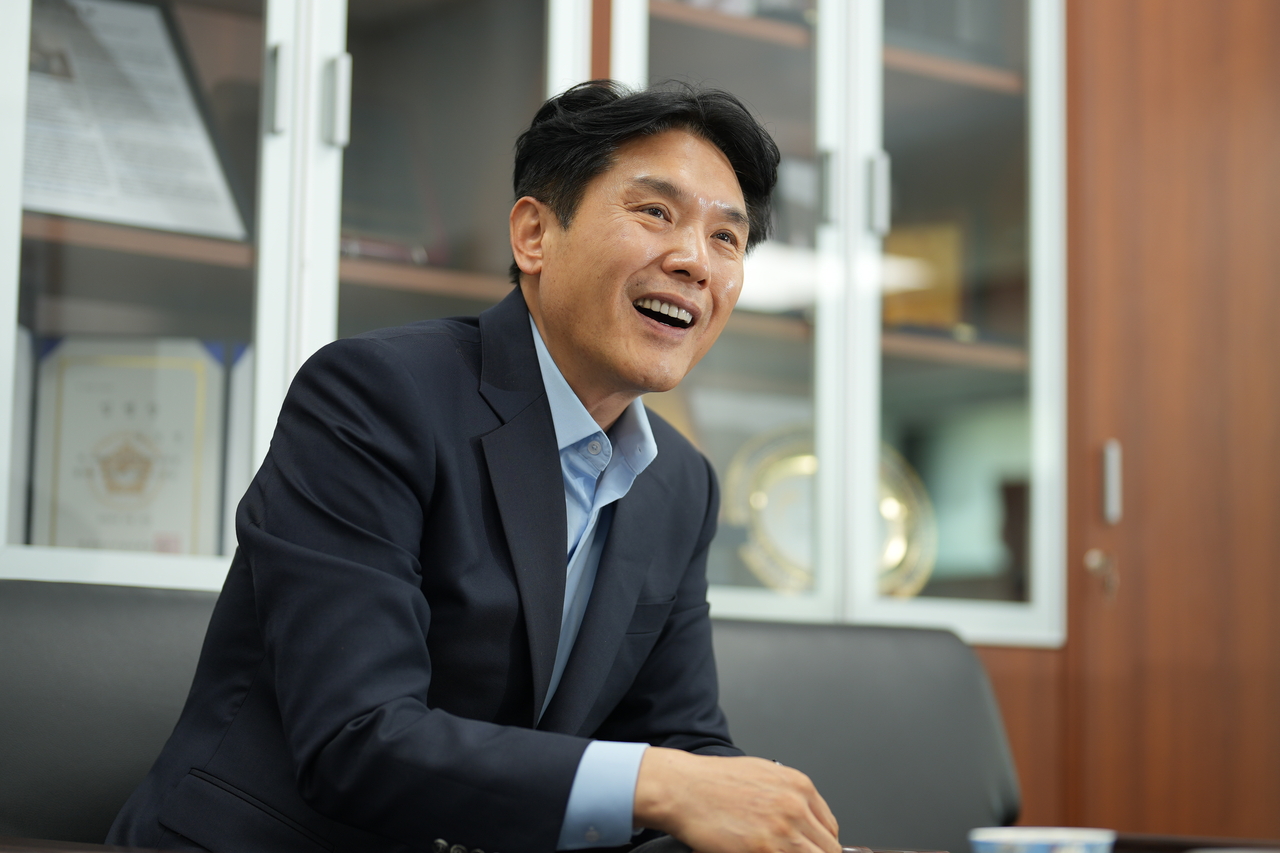
Kim Gil-young, the PPP's floor leader at the 12th Seoul Metropolitan Council representing Gangnam District 6, said Tuesday that the guiding principle of the PPP caucus would be "practical realism." He said the party would focus its energy on resolving everyday livelihood issues rather than engaging in ideological clashes, with the goal of becoming "a pragmatic party that changes citizens' lives and a responsible party that prepares for the future."
The PPP holds just 38 seats in the 12th Seoul Metropolitan Council, making it a minority party. Kim said that while the arithmetic limits of a minority position cannot be avoided in a democracy where decisions ultimately come down to votes, the party could persuade the opposition and the public through rational alternatives, objective figures and solid data.
His experience working in the National Assembly alongside Yoo Gyeong-jun, a former lawmaker who previously served as commissioner of Statistics Korea, also shaped his approach to politics. He said arguments backed by statistics and evidence are more effective at building policy credibility and earning public support than appeals rooted in ideology or slogans.
"I will lead the People Power Party on the principles of policy over political feuding, results over slogans and livelihoods over ideology," Kim said. "As a minority ruling party that cannot compete on numbers alone, we will study harder and earn citizens' trust through more sophisticated policy."
'We must increase housing supply and restore the residential ladder'
Kim identified housing insecurity as the most pressing livelihood issue Seoul must urgently address. While the broader economic situation — including high inflation and slowing growth — is also serious, he said housing is one of the heaviest burdens Seoul residents face in their daily lives.
Accordingly, he set expanding housing supply and restoring the residential ladder as the PPP caucus's top priorities. He said unnecessary regulations blocking redevelopment and reconstruction projects must be streamlined and complex administrative procedures simplified to accelerate housing supply in the city center.
The party also plans to expand the supply of public housing — including long-term jeonse units — for young people, newlyweds and low-income residents without homes, along with tailored support programs matched to different life stages. He said the aim is to create an environment where citizens can once again realistically aspire to homeownership by pursuing a balanced approach: private supply through redevelopment projects, expansion of public housing and demand-side support measures.
Kim said the ultimate goal of real estate policy should not be regulation for its own sake, but market stability and residential security for citizens. He said a steady and sufficient supply of housing must be maintained to ease supply-demand imbalances, and the foundation must be rebuilt so that those without homes can gradually improve their living conditions.
Drawing on his experience as chair of the Urban Planning and Balance Committee, Kim said real estate regulations must also be designed with precision to fit local conditions. On the land transaction permit system, he said a "targeted approach" — applying the rules selectively to zones closely tied to development projects — is needed. Blanket application across entire legal districts, he argued, can affect residents, homes and commercial areas that have no direct connection to the projects in question.
He also identified youth employment, the low birth rate and transportation as structural challenges in Seoul that are intertwined with housing policy. He said the city must move beyond one-off cash handouts and instead build a foundation where young people can stably work, live and start families in Seoul.
Kim said irrational regulations that constrain business activity should be reformed to create more quality private-sector jobs, and public care and childcare infrastructure should be expanded more comprehensively. On transportation, he proposed that policy go beyond simply improving commuting convenience and instead focus on reducing the time and financial costs of commuting while bringing workplaces and homes closer together.
Supporting city administration while fulfilling oversight responsibilities
Kim described the PPP's approach to Mayor Oh Se-hoon and the city administration as that of "a responsible ruling party that cooperates but also checks." He said the party must not simply agree with every policy and project of the administration just because it is the ruling party, warning that an uncritical stance could erode administrative discipline and lead to routine, unexamined decision-making.
He said it is also the ruling party's responsibility to rigorously scrutinize the feasibility of projects, fiscal soundness and the efficiency of budget execution, even while supporting the success of city governance. The plan is to establish a healthy party-administration relationship — actively backing policies that citizens need, while clearly identifying problems in troubled projects and demanding improvements.
Kim said the standard for inter-party cooperation should be the interests of citizens. On issues directly tied to livelihoods, he said both parties must set aside partisan calculations and find common ground through sufficient dialogue and compromise. However, if the majority party used its numerical advantage to delay the passage of livelihood budgets or key ordinances, or ignored reasonable alternatives, the PPP would respond on the basis of policy evidence and public opinion.
Kim credited mutual concession and trust between the ruling and opposition parties for the faster-than-expected completion of the 12th Seoul Metropolitan Council's organizational setup. Through negotiations with the Democratic Party of Korea, the PPP secured chairmanships of three standing committees and the chairmanship of the budget and accounts special committee in the council's second year.
He said the party judged it was the right thing to do for citizens to respect proper legal procedures and complete the organizational setup swiftly, rather than using the speaker election as a bargaining chip to delay the council's launch.
Kim also placed significant weight on the roles of the three committees the PPP chairs — the Culture, Sports and Tourism Committee; the Environment and Water Resources Committee; and the Urban Planning and Balance Committee. He said what matters more than the number of committee chairmanships is how responsibly the party presents alternatives in each committee's area of jurisdiction, given that each touches on core Seoul issues such as TBS, Han River policy and development in the Jongmyo and Sewoon Sangga area.
The answers are in the field — strengthening global competitiveness and council expertise
Kim identified responding to population decline and attracting global talent as the key challenges that will determine Seoul's long-term competitiveness. During his tenure as chair of the Urban Planning and Balance Committee in the latter half of the 11th Seoul Metropolitan Council, he proposed "connecting" as one of the major directions for Seoul's urban planning.
"Connecting" goes beyond the physical linking of roads and railways — it envisions a city that organically connects generations with one another, Koreans with foreigners, residential areas with workplaces, and culture with industry.
He said that for Seoul to compete with major cities around the world, it must create an environment where talented people from abroad can settle and work stably, not merely visit. He said residential, education, healthcare, cultural and administrative services must all be improved to match Seoul's standing as an international city, and diversity must be harnessed as a driver of urban growth.
Raising the professional capacity of the local council is also a key priority for the caucus leadership. Kim said the effectiveness of the policy support officer system must be improved, and the frameworks for budget analysis, legislation and policy review must be upgraded so that council members' capabilities are on a par with those of the city administration.
He said that as the scale of Seoul's budget and projects continues to grow and policy structures become more complex, relying solely on individual lawmakers' abilities makes it difficult to provide thorough oversight and credible alternatives. The plan is to systematically support lawmakers with expert staff, policy resources and data analysis to strengthen both the council's oversight function and the quality of its legislation.
Kim offered "the market has the answer" as the core message of the caucus leadership going forward. The phrase carries a double meaning — referring simultaneously to the Seoul mayor and to traditional markets and everyday livelihood scenes where real solutions lie. The intent is to ground policy in citizens' daily lives rather than in government offices, and to reflect the voices of merchants and residents in city governance.
He summed up his own political orientation as that of a "hands-on policy specialist" — one who favors carefully refining institutions and efficiently allocating limited resources to make a real difference in citizens' lives over flashy political rhetoric.
Kim said his goal is that when his term ends, the People Power Party will be remembered not as a minority ruling party mired in political feuding, but as a responsible party that diligently prepared for Seoul's future and improved the lives of its citizens.
7toy7@heraldcorp.com