
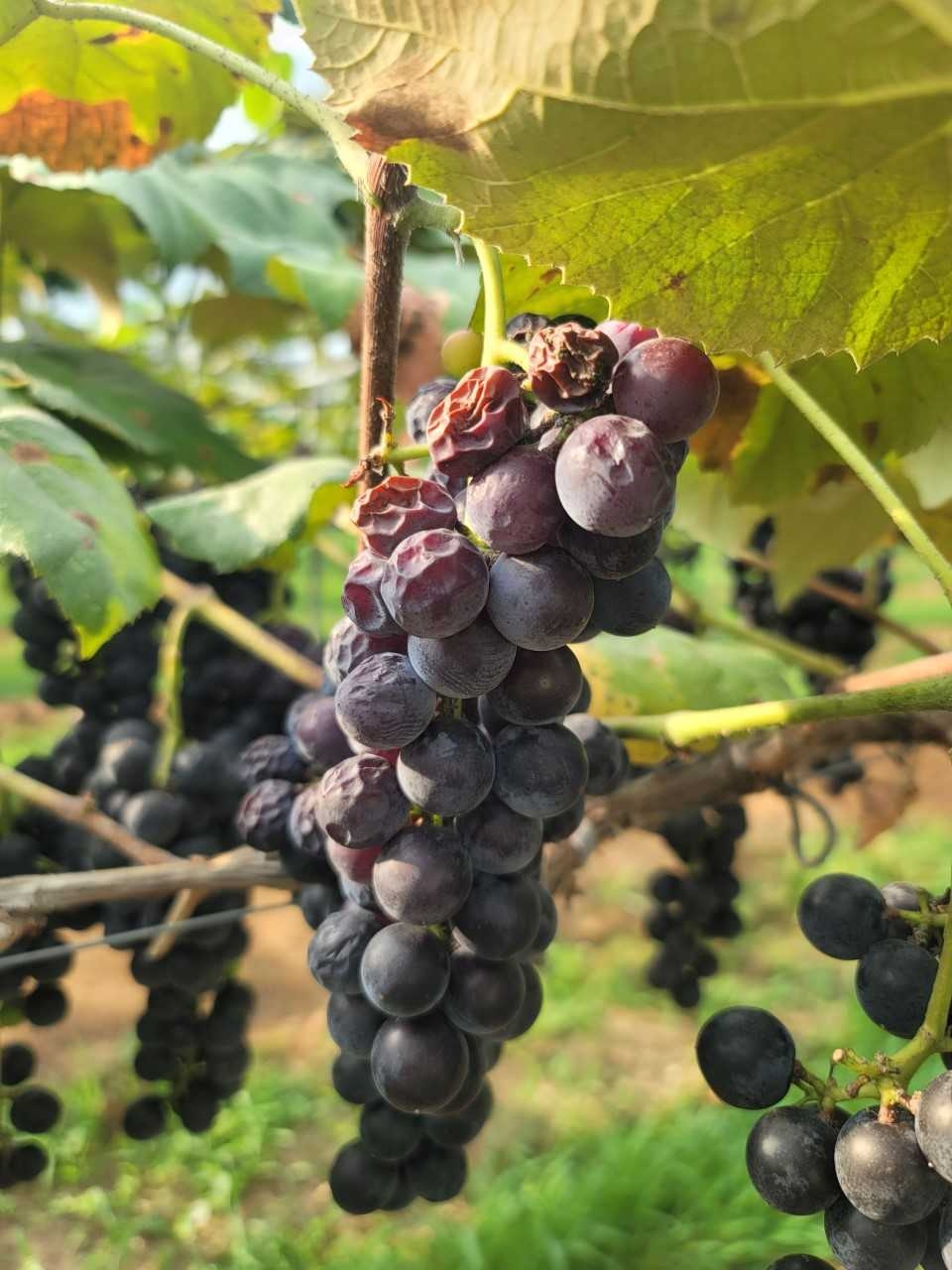
Damyang-gun has urged fruit farmers to closely manage crop growth and step up pest control as an ongoing heat wave and drought raise concerns about high-temperature damage — including fruit cracking and sunscald — to orchards across the county.
Extended periods of hot, dry weather increase moisture stress in fruit trees, slowing growth and reducing fruit quality. Grapes are particularly vulnerable: their thin skins and low elasticity make them prone to cracking, while high temperatures can also cause sunscald, poor coloring and lower sugar content, requiring careful attention from growers.
When intense sunlight drives fruit surface temperatures above 40 degrees Celsius, sunscald and leaf scorch become more likely. Reduced photosynthetic efficiency and increased respiration can further affect sugar content and coloring.
Keeping soil moisture and orchard conditions stable is key to minimizing damage.
Farmers are advised to use micro-sprinklers and shade nets, and during drought to water frequently in small amounts rather than all at once to avoid sudden swings in soil moisture. Growing cover crops between rows helps suppress soil temperature rises, and mowing grass to about 10 to 15 centimeters when it becomes overgrown reduces competition for moisture.
Pest monitoring and control are also essential. Mites, thrips and tobacco budworms — pests that thrive in hot weather — can reproduce rapidly in high temperatures, so farmers should respond quickly at the first signs of infestation by rotating pesticide applications.
sij@heraldcorp.com



