The 800-trillion-won Gwangju semiconductor cluster development project has gained fresh momentum.
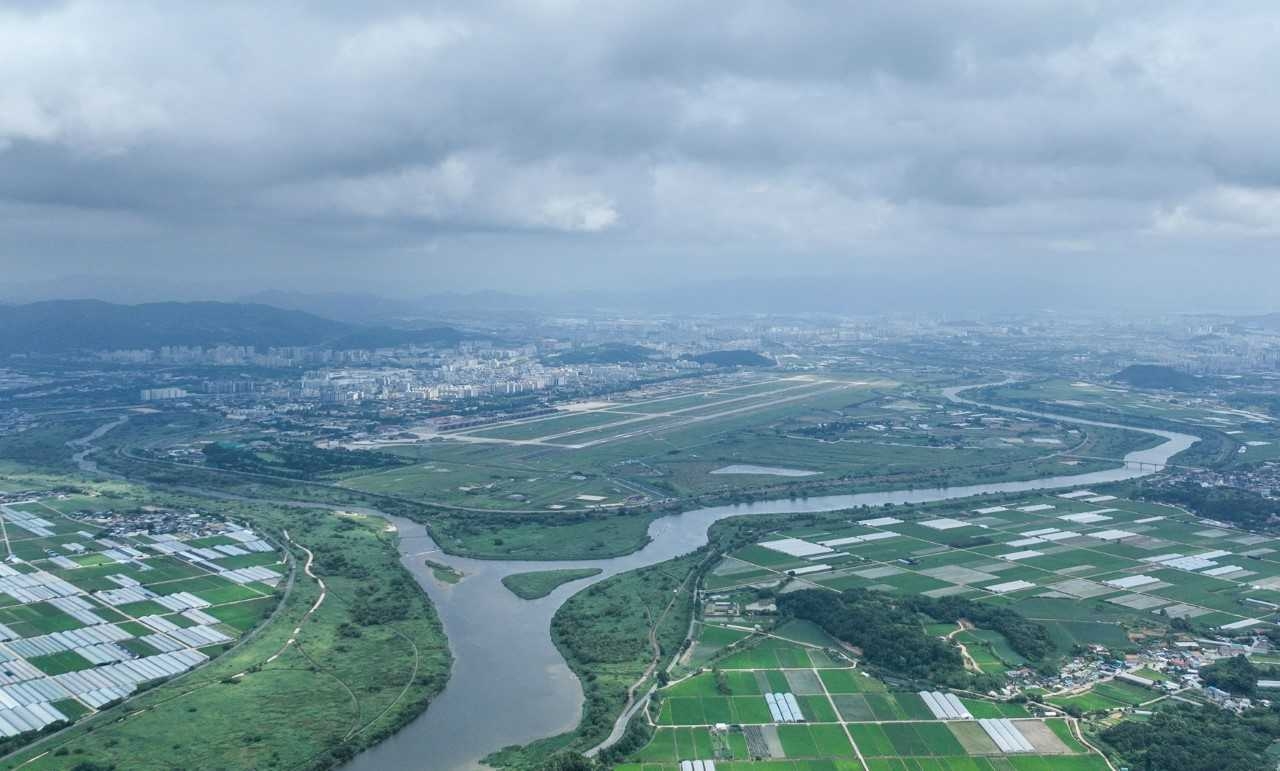
The government announced plans to complete the relocation and temporary redistribution of military facilities at the Gwangju air base by 2028, with the ammunition depot site — the first area to be cleared — earmarked for use as a semiconductor industrial complex.
President Lee Jae Myung, speaking Monday at the second joint public-private mega-project review meeting at Cheong Wa Dae, directed the Ministry of National Defense to temporarily redeploy the Gwangju base's functions to other military airports by mid-2028 so the site can be converted into a semiconductor industrial complex as early as possible.
Presidential Chief of Staff Kang Hoon-sik said the government would proactively prepare the planned ammunition depot site by launching groundwork early, so chipmakers could break ground on a fabrication facility at the earliest possible date if they choose to do so.
The government plans to pursue the military airport relocation and the semiconductor complex development simultaneously.
Under the previous approach, the entire military installation could not be vacated — and the site made available — until a new relocation site had been confirmed and a new military airport built.
That arrangement meant any delay in the airport relocation would automatically push back the semiconductor complex groundbreaking.
To address this, the government will relocate military facilities in phases, temporarily dispersing functions that cannot be moved immediately to other installations, and hand over cleared portions of the site for semiconductor complex development as they become available.
The government is moving quickly on national industrial complex designation and development planning, targeting completion of the first phase of the semiconductor fab by 2029.
Korea Land and Housing Corporation (LH), designated as the project operator, will fast-track its ongoing survey and design work. The government plans to sign move-in agreements with chipmakers in October and seek an exemption from a preliminary feasibility study for the complex in November and December.
Through advance surveys and streamlined administrative procedures, the government aims to finalize the complex development plan and design in 2027, clear a portion of the project site within the air base first, and begin construction of the first semiconductor fab unit.
Development will begin at the ammunition depot site within the Gwangju military airport.
Site preparation and related administrative procedures will be carried out in advance so that fab construction can begin even before the military airport relocation is complete.
The phased relocation of military facilities is being pursued with a target of the second half of 2028.
By that point, the government plans to move all facilities that can be relocated and temporarily disperse to other military installations any functions that must remain operational until a new military airport is completed.
The government will receive portions of the land needed for the semiconductor complex in stages, running the complex development and airport relocation in parallel, with the aim of meeting a 2029 completion and 2030 mass-production schedule.
Preparations for essential infrastructure — including power and water supply — are also set to be completed by 2028.
Significant challenges remain, however.
The government has yet to finalize when and where the facilities inside the Gwangju air base will be dispersed, or the sequence in which individual installations — including the ammunition depot — will be relocated. Consultations with the US military and the Ministry of National Defense will also be required, and the pace of those talks with Washington is expected to affect the timeline for the semiconductor complex.
sij@heraldcorp.com