
South Korea's stock market is expected to search for direction Monday as uncertainty over the reopening of the Strait of Hormuz collides with growing wariness about the rise of Chinese chipmakers. Investors will also be watching whether bargain hunters step in following recent losses.
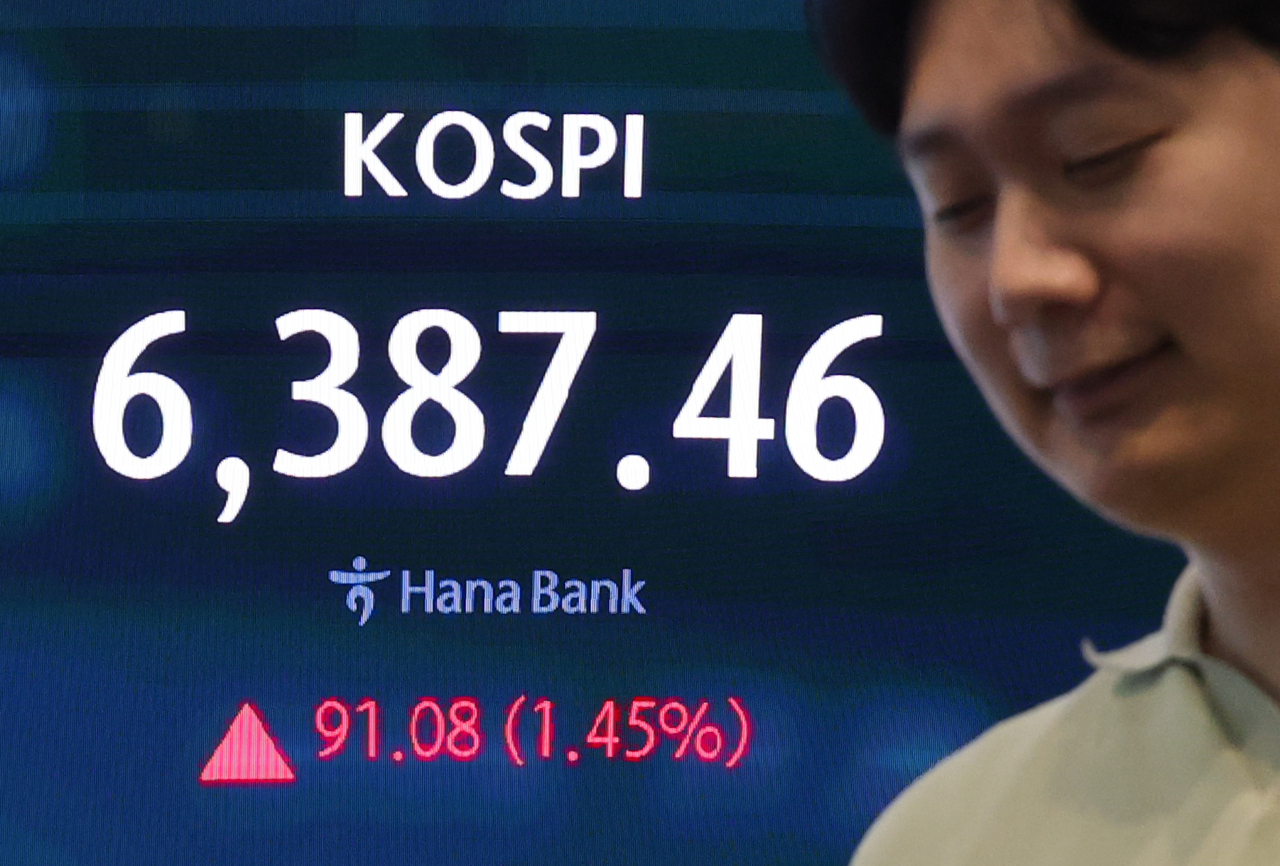
The Kospi closed Friday down 0.60 percent at 6,258.77, falling for a second consecutive session. Foreign investors were net sellers of 865.1 billion won ($610 million), while retail and institutional investors posted net purchases of 267.5 billion won and 585.3 billion won, respectively.
The dominant drag on sentiment that session was concern over a potential closure of the Strait of Hormuz. As fears of a blockade resurfaced, international oil prices rose and all three major Wall Street indexes fell in tandem.
Sentiment in the semiconductor sector also deteriorated. Memory chipmakers SanDisk and Western Digital tumbled 6.81 percent and 13.03 percent, respectively, after their earnings releases, and SK Hynix's American depositary receipts fell 4.97 percent.
On the domestic market, Samsung Electronics held up relatively well, edging up 0.22 percent, but SK Hynix dropped 4.88 percent. Other large-cap names also fell sharply — SK Square lost 3.20 percent, Samsung Life Insurance shed 4.17 percent, and Naver slid 7.08 percent.
Wall Street rebounded on Friday. The Dow Jones Industrial Average rose 0.28 percent and the S&P 500 gained 0.62 percent, with the latter closing at a fresh all-time high. The NASDAQ Composite also advanced 1.30 percent.
Weak US jobs data paradoxically lifted equities. The Ministry of Employment and Labor reported that nonfarm payrolls fell by 23,000 in July from the previous month. The larger-than-expected decline fueled expectations that the Federal Reserve would be cautious about raising its benchmark interest rate, boosting appetite for riskier assets.
Among individual stocks, system chipmakers Nvidia and Qualcomm rose 2.27 percent and 4.66 percent, respectively. SK Hynix's ADRs fell 3.92 percent, while memory chipmakers Micron, SanDisk and Western Digital declined 0.44 percent, 3.68 percent and 3.81 percent, respectively.
The MSCI Korea ETF rose 1.20 percent and the MSCI Emerging Markets ETF gained 0.95 percent. The Philadelphia Semiconductor Index and the Russell 2000 climbed 2.56 percent and 1.10 percent, respectively, and Kospi overnight futures were up 0.6 percent.
Market attention this week centers on the US consumer price index report due Wednesday. The CPI, a key indicator for determining whether the Fed will raise interest rates again, is expected to heavily influence the September FOMC decision. Fed officials have maintained that they cannot rule out further rate hikes if price stability is not confirmed.
Whether the Strait of Hormuz reopens is another major variable for the domestic market. US President Donald Trump told local media he was handling the Iran situation in a "low-key" manner, prompting market speculation that Washington may shift toward economic pressure rather than a military response. Iran, however, has demanded the withdrawal of US forces from its surrounding waters and compensation for war damages as conditions for reopening, keeping uncertainty elevated.
Moves surrounding Chinese memory chipmaker CXMT also add pressure to the domestic semiconductor sector. The Wall Street Journal reported Sunday, citing sources, that Apple is testing CXMT chips in products including iPhones and MacBooks and is in ongoing supply discussions aimed at using them in devices sold in China.
Analysts expect the market this week to take its cues from the US CPI release and the winding down of the second-quarter earnings season.
Han Ji-young, a researcher at Kiwoom Securities, said that if expectations for a rate freeze strengthen, "a virtuous cycle could emerge — government bond yields would fall, equity discount rates would ease, and the burden of AI investment costs on big tech would lighten." She added that because the market consensus is already positioned for a CPI decline, "a result in line with expectations leaves room for a muted stock market reaction."
On the AI and semiconductor sectors, Han said investors should note that earnings from Microsoft, Amazon, AMD and SanDisk since late last month "have gone a considerable way toward easing concerns about AI demand and profitability." She added that upcoming earnings from other chipmakers "should reasonably be seen as alleviating fears of a memory peak-out, which could in turn improve the foreign investor supply-demand environment."

moon@heraldcorp.com




