The ruling and opposition parties continued their sharp exchanges Thursday over the abolition of prosecutors' supplementary investigation powers and the government's proposed real estate tax reform.
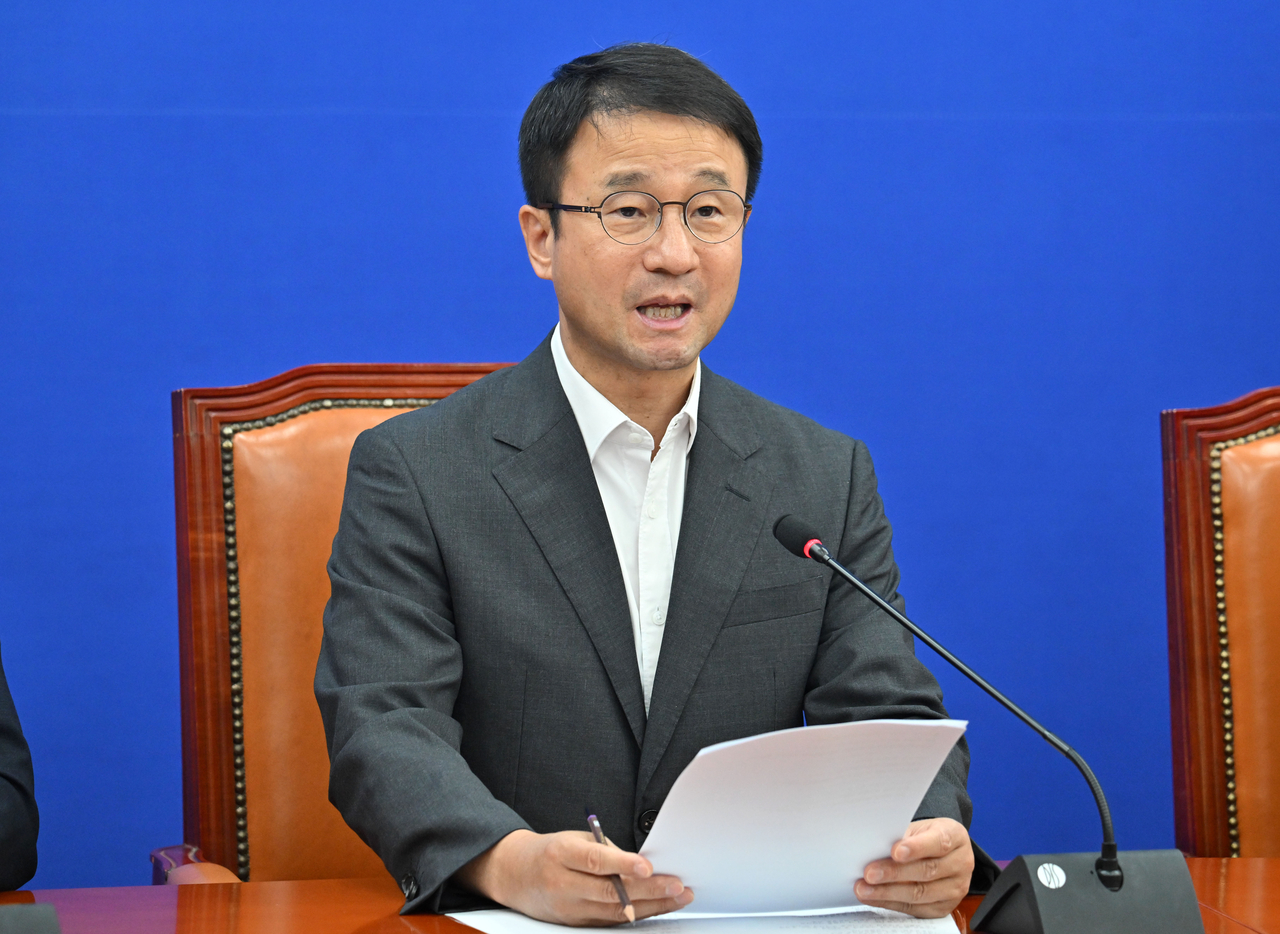
Han Byung-do, acting leader and floor leader of the Democratic Party of Korea, said at a policy coordination meeting Thursday that police must now demonstrate a higher standard of fairness, transparency and investigative integrity to match their expanded authority.
Han noted that the Public Prosecution Service and the Serious Crimes Investigation Agency are set to launch on Oct. 2, when amendments to the Code of Criminal Procedure abolishing supplementary investigation powers also take effect. He said effective oversight of police investigative authority and rigorous internal reform are critical tasks under the new criminal justice framework, and called on the police — from senior leadership down to frontline investigators — to pursue a thorough transformation as if the organization's very survival depended on it.
"The Democratic Party will do everything in its power to ensure the new criminal justice system launches without a hitch and takes root stably," he added.
On the real estate tax reform proposal, policy committee chairwoman Han Jeong-ae said the plan was designed to differentiate tax benefits between owner-occupied homes and investment or speculative properties, offering stronger protection for those who actually live in their homes while normalizing the tax burden on high-priced housing. She expressed deep regret over what she called the People Power Party's irresponsible political agitation, accusing it of mounting a political offensive based on groundless sophistry.
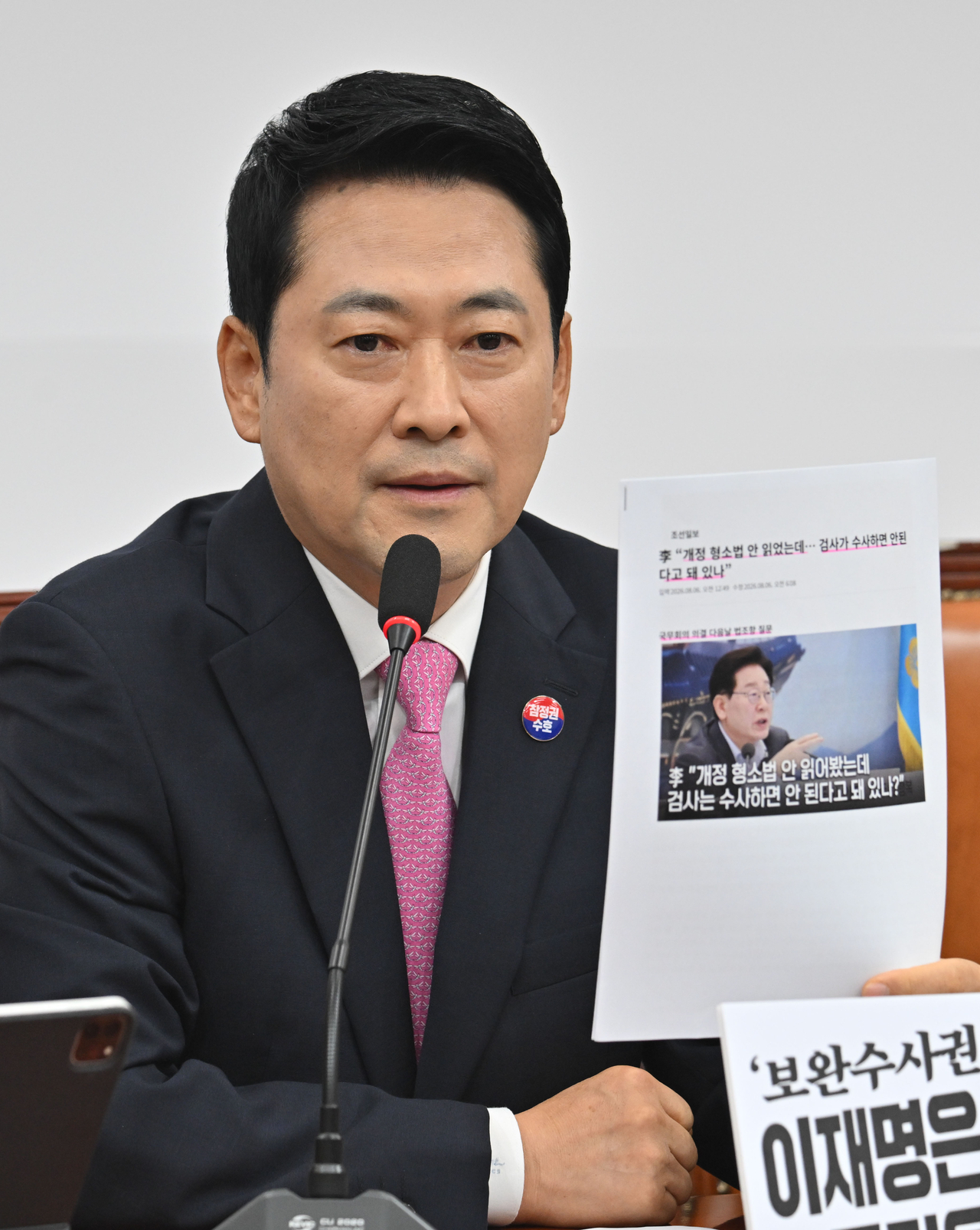
People Power Party leader Jang Dong-hyeok went on the offensive Thursday, targeting President Lee Jae Myung's remark on Wednesday — made during a Ministry of Justice briefing — that he had not read the amended Code of Criminal Procedure.
At a supreme council meeting, Jang said it was brazen for the president to openly declare he had not read the legal text after overhauling the Code of Criminal Procedure and, in his view, wrecking South Korea's entire judicial system. He drew a parallel to asking whether the current president was no different from former President Syngman Rhee. "I am curious about President Lee's state of mind," Jang said. "If the president has not even read the criminal procedure statute, this administration will ultimately collapse at the speed of light."
On the real estate tax controversy, floor spokesperson Kim Tae-gyu said in a statement that Cheong Wa Dae had announced a second meeting on real estate policy but, as expected, it would be closed to the public. "Whatever happened to those loud, televised debates that were broadcast live across every channel?" he said. "This time, let the opposition party into the discussion as well."
Meanwhile, Cheong Wa Dae communications chief Seong Gi-hong appeared on CBS Radio Thursday and said the president's remark did not mean he was unaware of the intent behind the amendment, but rather came while he was explaining and asking questions about how the joint police-prosecutor investigation unit's mandate was being understood.
bigroot@heraldcorp.com
raining@heraldcorp.com
moone@heraldcorp.com