
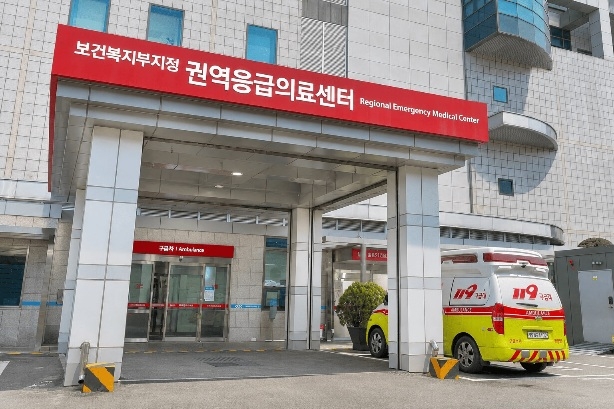
Inha University Hospital is drawing praise after successfully performing an emergency delivery for a high-risk mother who had been turned away by multiple medical facilities.
According to the hospital, the patient — a woman carrying twins at 27 weeks of pregnancy — underwent a cervical cerclage procedure on July 22 to reduce the risk of preterm birth and had been under observation since.
Early Friday, however, regular contractions began at five-minute intervals starting around 3:30 a.m., prompting her to call 119 for emergency assistance.
The hospital where she had been receiving care could not admit her due to a shortage of neonatal intensive care unit beds, and other facilities also declined one after another, citing similar capacity and care constraints.
Emergency responders and the emergency situation management center worked to find a hospital capable of handling the delivery, but time grew short as labor progressed rapidly.
Inha University Hospital — which has a memorandum of understanding with the Incheon Fire Department on a responsible emergency medical care system — ultimately made the independent decision to accept the patient.
The hospital itself was short on NICU beds but proceeded with the emergency delivery, putting the lives of the mother and fetuses first.
Thanks to the swift response of the medical team, a girl weighing 1.1 kilograms was born safely at 5:51 a.m. that day, followed by a boy weighing 1.08 kilograms at 5:54 a.m.
The twins are currently receiving incubator treatment and intensive care in the NICU at the hospital's regional maternal and child medical center.
The case has been credited to the close collaborative care system operated by the emergency medicine, obstetrics and pediatrics departments.
The phenomenon of emergency patients being shuttled between hospitals — known in Korea as "emergency room runaround" — is largely attributed to a lack of on-call specialist coverage and backup care capacity for surgery and critical treatment. Inha University Hospital was able to save both the mother and the newborns because its relevant departments mobilized immediately.
Centered on its regional emergency medical center, the hospital operates a network that includes a pediatric emergency medical center, a regional maternal and child medical center and a children's public specialized care center, forming an integrated care system spanning emergency treatment, hospitalization, critical care and follow-up.
The regional emergency medical center has ranked first nationwide in the Ministry of Health and Welfare's emergency medical institution evaluation three times — in 2017, 2020 and 2024 — and has maintained the highest rating in assessments of its contribution to emergency medical services.
The regional maternal and child medical center strengthened its obstetric functions last year to establish an integrated care system treating both high-risk pregnant women and newborns, while the children's public specialized care center operates the first pediatric intensive care unit in the northwestern Incheon-Gyeonggi Province area.
"Thanks to the swift cooperation of the emergency medicine, obstetrics and pediatrics teams, we were able to protect the lives of both the mother and the newborns," said Lee Taek, president of Inha University Medical Center and Inha University Hospital. "We will continue to strengthen our emergency and critical care systems as a regional hub hospital responsible for essential local medical services."
gilbert@heraldcorp.com




