Lee Ki-hyung outlines transport plans at 100-day press briefing for the ninth elected term
City to work with government, metropolitan transport body to shorten approval procedures
Five priority areas named as core pledges
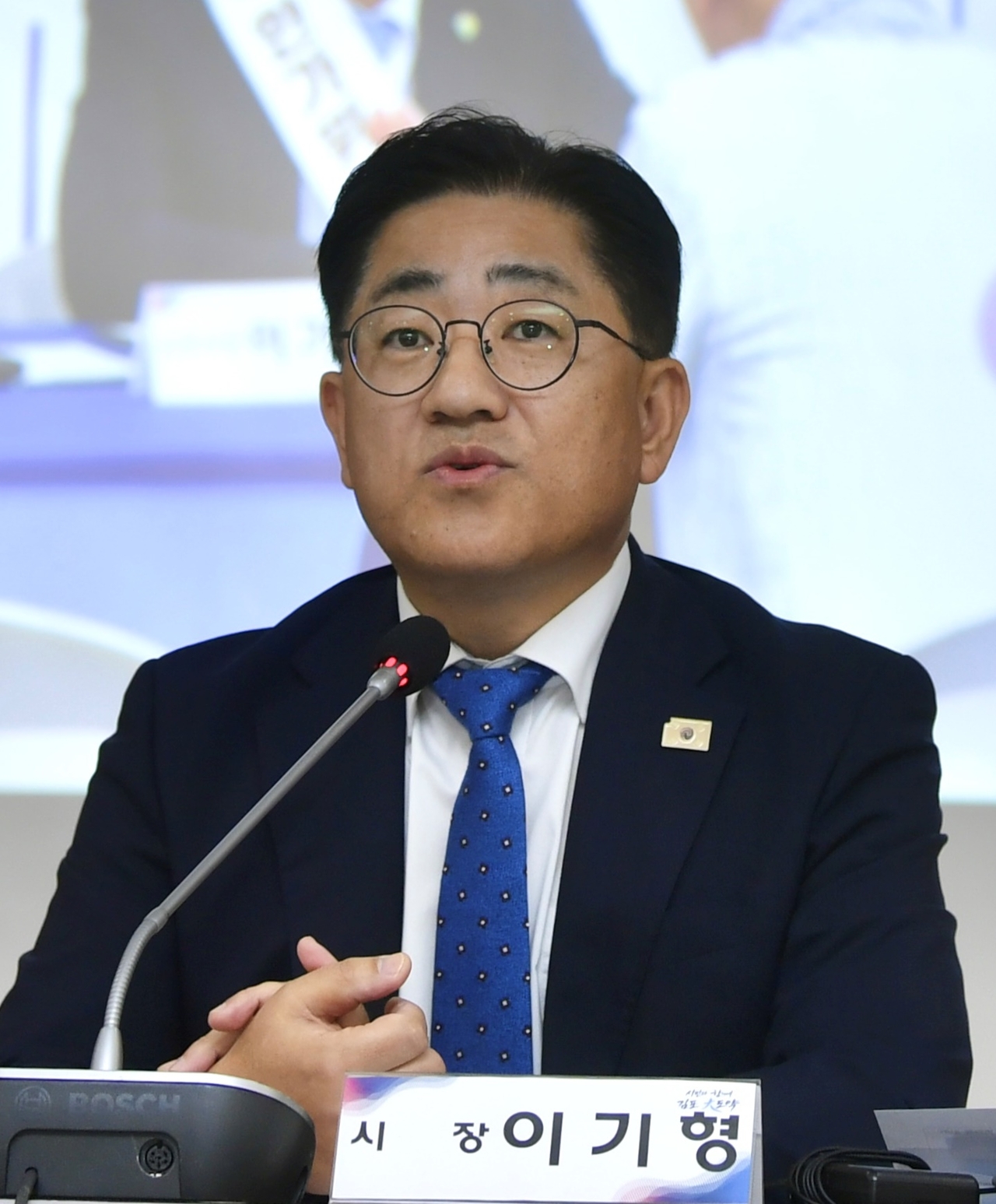
Gimpo has officially committed to preventing further delays to the Seoul subway Line 5 extension project and pushing for a ground-breaking within Mayor Lee Ki-hyung's term in office.
Speaking at a press briefing Tuesday to mark the 100th day of the ninth elected term, Lee said he would break ground on the Line 5 extension within four years. "There will be no more delays to the Line 5 extension," he said.
Disputes over the route and other issues have slowed the project, leaving residents to endure lengthy commutes. Lee said he would work with the central government and the Metropolitan Area Transportation Commission to accelerate the administrative process as much as possible.
Lee plans to focus his administration's efforts on resolving two key variables — stabilizing the route and working out a fiscal burden-sharing arrangement — and on shortening the administrative steps between the master plan and the ground-breaking.
He said he would prioritize the commuting convenience of Gimpo residents over the interests of any particular area or political group, and move to head off any risk of further delays before they arise.
Alongside the Line 5 extension, Lee also unveiled plans to simultaneously pursue an extension of Incheon subway Line 2 into Gimpo and a western metropolitan express rail link, with the aim of dramatically improving Gimpo's access to Seoul.
The city will also pursue a "transport first, move-in second" policy to prevent traffic chaos from large-scale residential developments.
Lee said he would complete the addition of trains on the Gimpo Gold Line ahead of schedule, cut headways to around two minutes, and station safety personnel on platforms during rush hours to ease crowding.
For newly developed residential areas, the city plans to deploy charter buses and smart mobility services and create new school bus and community shuttle routes — securing usable transport options before the rail network is expanded.
The city will also accelerate grade-separation projects at chronically congested intersections to improve road traffic conditions.
Beyond transport, Lee named four additional priority areas for the ninth elected term: industry and jobs, the local economy, healthcare and welfare, and everyday infrastructure.
On industry, the city will step up support for converting aging manufacturers into smart factories, strengthen research and development, prototype production and startup incubation through the Gimpo Manufacturing Convergence Innovation Center, and expand support for companies that hire local youth.
To revitalize neighborhood commercial districts, the city plans to expand discount benefits for top-ups of Gimpo Pay and develop Laveniche and the Geumbit Waterway into cultural and commercial destinations.
In healthcare and welfare, the city will support the normalization of a stalled project to build an Inha University medical campus with 700 beds in Gimpo, and direct administrative resources toward strengthening emergency medical and pediatric care systems.
The city will also restart long-suspended or delayed infrastructure projects — moving up timelines for a youth cultural complex in Janggi-dong and the Gimpo Arts and Culture Center, and accelerating the development of multipurpose community centers across different districts.
"Over the past 100 days since taking office, I have strengthened on-the-ground communication with residents and pushed forward various projects in transport, welfare and the local economy," Lee said.
Lee also cited other achievements from the period: adjusting city bus route No. 2000 to connect with the GTX-A Kintex station, creating new village bus routes for school commuters, passing a preliminary feasibility study for a grade-separation project at the Tari interchange on National Route 48 in Gochon, and securing central government funding to open a section of Provincial Road No. 22.
"Campaign pledges must be judged by results, not words," Lee said. "I will govern on fair principles, move with urgency, and deliver real change in the lives of residents."
With the prevention of delays to the Line 5 extension as a central pledge of the ninth elected term, negotiations with the central government and the Metropolitan Area Transportation Commission over the route and fiscal burden-sharing are expected to be the decisive factor in determining when construction actually begins.
gilbert@heraldcorp.com