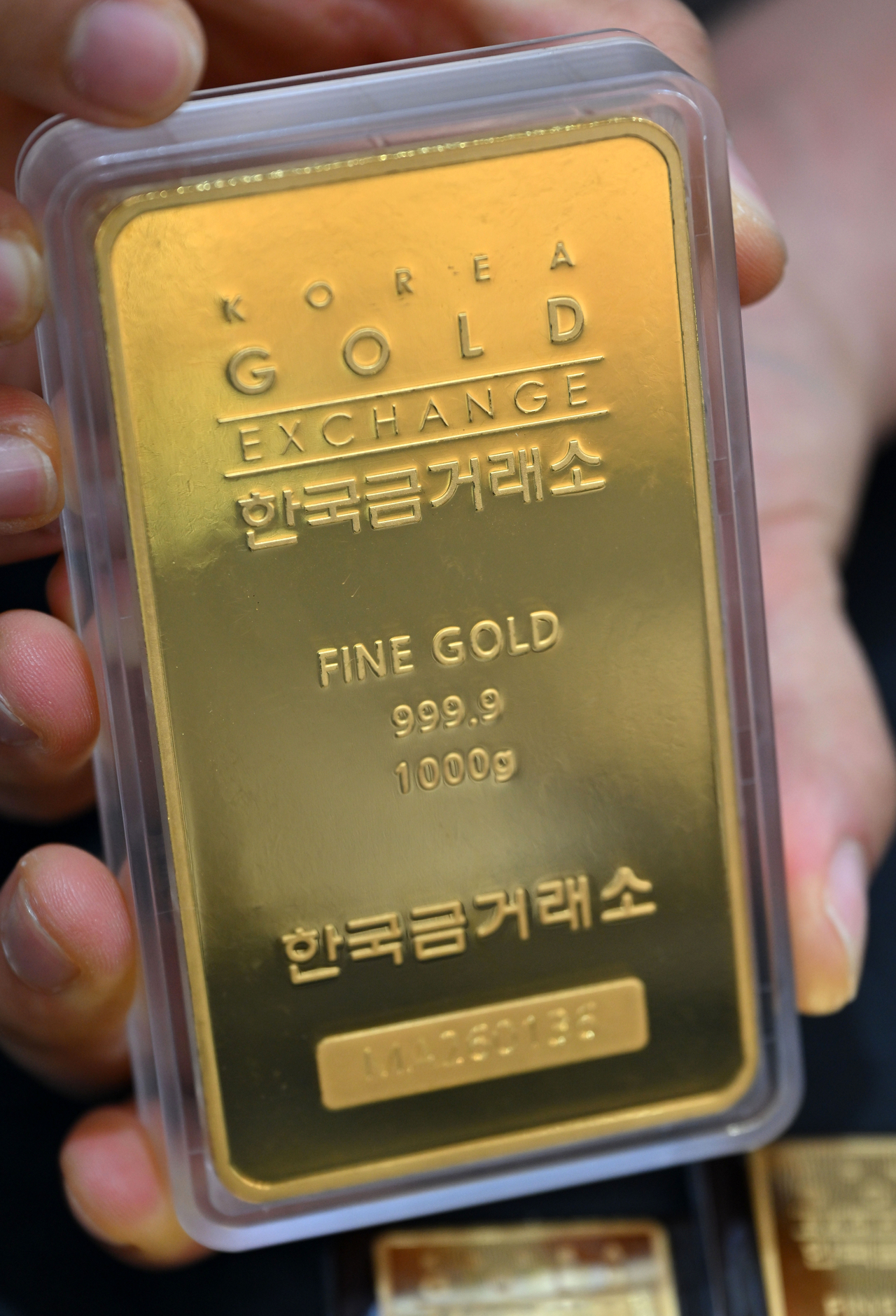
The Bank of Korea is establishing a new channel to purchase domestically produced gold — its first move to expand gold holdings in 13 years. The central bank plans to buy export-bound gold from domestic producers to diversify its foreign reserves and hedge against geopolitical risk.
The BOK said Monday it had built a cooperation framework with domestic gold producers, the Korea Exchange (KRX) and the Korea Securities Depository (KSD) to lay the institutional groundwork for purchasing domestically produced gold.
"By securing a new domestic gold procurement channel in addition to existing methods, we will diversify the Bank of Korea's gold acquisition routes and support a medium- to long-term expansion of gold holdings," the BOK said. "It is also meaningful in that it allows us to disperse gold storage locations and bolster foreign reserves."
Jeong Hee-seop, head of the BOK's Reserve Management Group, said most of the central bank's gold is currently stored overseas. "If we secure a domestic channel, the advantages are that gold becomes easier to sell and lending income can be generated — though storage costs would also arise," he said. He added that other countries are increasingly dispersing their gold storage and that the move offers the benefit of spreading geopolitical risk.
Under the new framework, the BOK plans to use the trading, settlement and custody infrastructure of the KRX gold market — operated jointly by the Korea Exchange and the Korea Securities Depository — to purchase export-bound gold from domestic producers at international market prices. The two domestic gold producers together export an annual average of four to five tons, according to the BOK.
When a domestic producer has export demand, it will present the BOK with the available volume and preferred timing. The BOK will then decide whether to proceed with a purchase after weighing its gold management plans and market conditions.
Because the transactions target gold already earmarked for export, the BOK said the impact on domestic gold supply, demand and prices would be limited, as no additional demand would be created in the domestic market.
The BOK also plans to use block trades rather than standard on-exchange transactions on the KRX gold market, minimizing any intraday market impact. By agreeing on price, volume and other terms in advance, the bank said it can execute trades without affecting on-exchange asking prices.
The timing of domestic gold purchases will be determined by weighing overall preparations related to gold transactions, the producers' export schedules and the BOK's own gold management plans. "The structure is that when a producer requests a purchase, we decide at that point whether to proceed," Jeong said. "Producers would make a request when the domestic gold price is less favorable than or similar to the export price, but it is impossible to know when that situation will arise." He added that the KSD's ongoing work to build custody infrastructure could also affect the timing.
The BOK last bought gold in 2013, when it acquired 20 tons, and has not made any additional purchases in the 13 years since, citing low liquidity and high volatility. Jeong acknowledged the asset's limitations. "Gold generates no income, and it is an unfavorable asset when interest rates are rising — its returns also lag behind equities," he said. "However, geopolitical risks have been occurring on a constant basis of late, and interest in gold as a safe asset has grown significantly within the central banking community. We also took into account that Korea's gold holdings are low compared with other countries and that there is a need to build them up."
Meanwhile, the BOK began investing in overseas-listed gold ETFs in the second quarter. "We started buying gold ETFs on a very small scale in Q2," Jeong said. "Because ETFs are recognized as securities, they do not affect the gold holdings ratio in foreign reserve statistics."
kimstar@heraldcorp.com