Data center power consumption forecast to hit 945TWh by 2030, driving demand for on-site collaboration
Hands-free multilateral voice communication holds even when network links go down
Q2 sales hit record 75.5 billion won; industrial product revenue up 28.2%
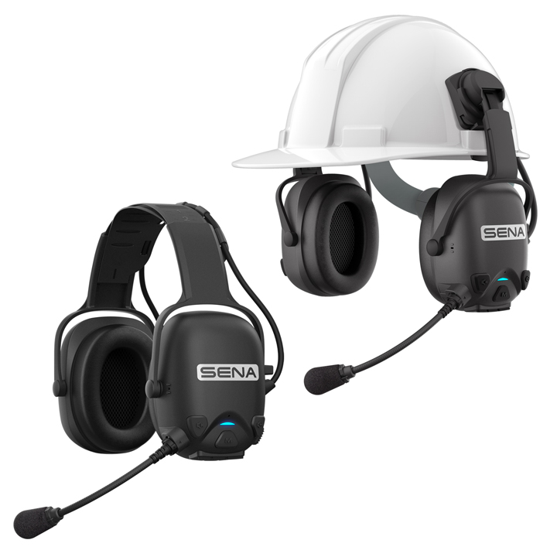
Sena Technologies, a company that built its name on motorcycle communication devices, is pushing into AI data centers and semiconductor factories by leveraging the mesh communication technology it supplied to Tesla's factory in Germany. As data centers grow larger and require power, cooling, fire safety and security personnel to work on site at the same time, the company is positioning industrial communication equipment as a new growth engine.
Sena Technologies said Monday it plans to expand its industrial product lineup in the second half of this year and secure new supply contracts targeting AI data centers, advanced manufacturing facilities, and logistics and construction sites.
Mesh communication, the technology at the core of Sena Technologies' industrial push, allows devices to form their own network. If some devices lose their connection, the remaining units automatically find alternative paths and rebuild the network. The company says workers can stay in contact even at industrial sites that lack dedicated relay infrastructure or have communication dead zones.
Conventional industrial radios typically use push-to-talk (PTT), which allows only the worker pressing a button to speak at any given time. Mesh communication devices, by contrast, let multiple workers hold a conversation simultaneously without pressing any button — an advantage in environments where workers wear gloves or need both hands to operate equipment.
The company said its mesh communication technology has been deployed at Tesla's Gigafactory Berlin in Germany. Tesla compared competing products and chose Sena Technologies' devices to support worker communication in security zones where smartphone use is restricted. A company official said there is no formal B2B contract between the two companies. "As far as we know, Tesla employees have been coming directly to purchase and use the products for about two years," the official said.
Sena Technologies is eyeing the data center market because facility scale and on-site operational complexity are growing rapidly alongside expanding AI investment. According to the International Energy Agency, global data center power consumption is projected to more than double, from 415TWh in 2024 to around 945TWh by 2030, with AI-specialized data centers expected to drive the bulk of that increase.
As data centers grow in size, power supply, cooling, fire safety, security and maintenance personnel must all operate alongside server and network technicians at the same time. When equipment failures or safety incidents occur, a communication system that lets multiple work teams share information instantly can directly affect operational efficiency.
Industrial products are also claiming a larger share of Sena Technologies' earnings. The company's preliminary consolidated sales for the second quarter of this year reached 75.5 billion won ($52.7 million), up about 40 percent from the same period a year earlier. Operating profit rose 128 percent to 18 billion won. Both figures set all-time quarterly records.
Within those results, sales of industrial products grew 28.2 percent year on year. Motorcycle, cycling and outdoor products currently lead overall revenue growth, but the key question is whether the industrial communication business can establish itself as an additional growth driver through expanded supply partnerships.
"Demand from industrial sites that need work-group communication is rising noticeably," said Lee Hwa-su, a division head at Sena Technologies. "In the second half of the year, we will expand our related product lineup and broaden our reach into AI data centers and advanced manufacturing facilities to compete in the global work-group communication market."
hong@heraldcorp.com