City sets 4 goals — carbon absorption, forest disaster prevention, forest welfare and forest industry innovation — to build an eco-safe city through carbon neutrality
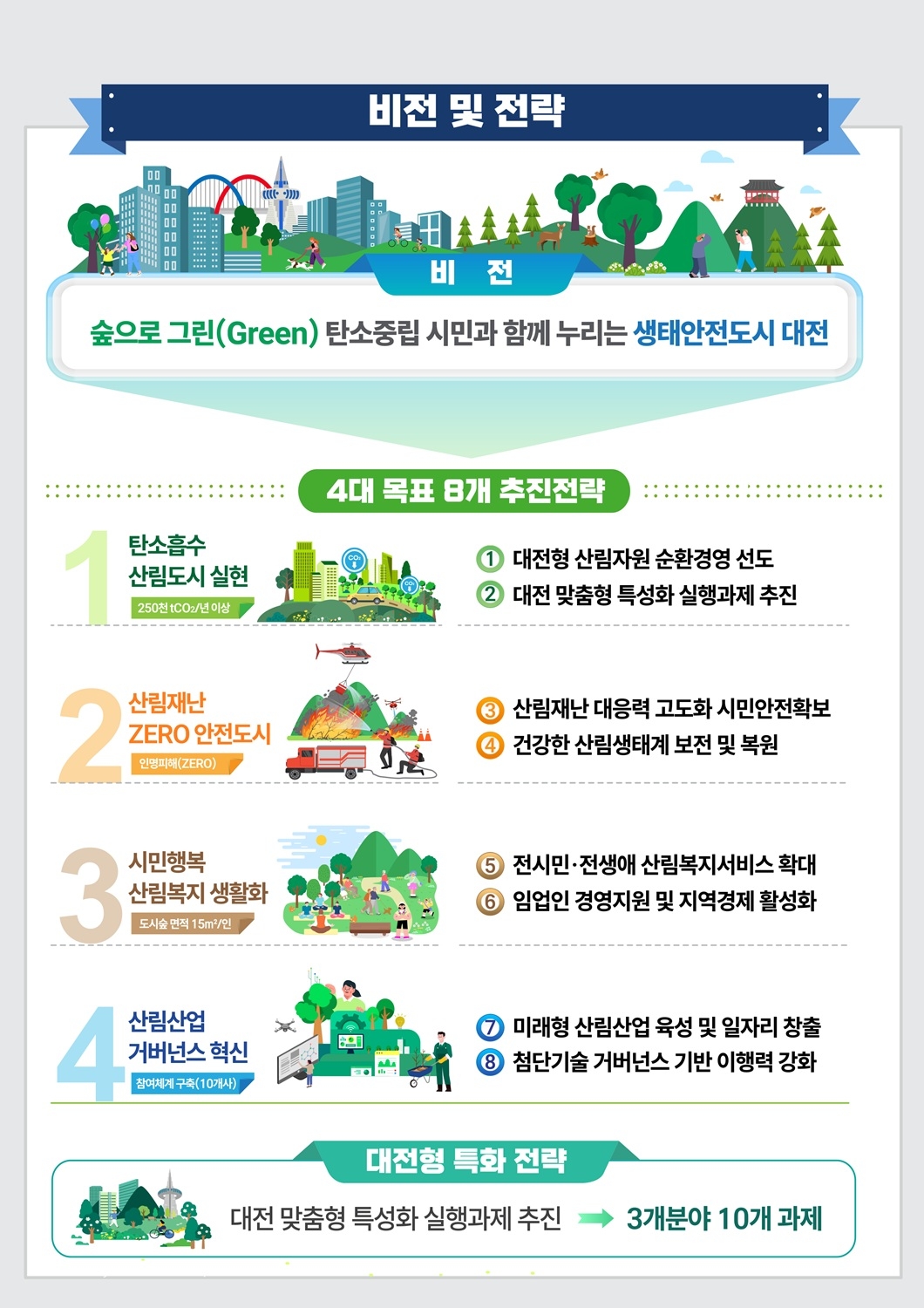
Daejeon has unveiled a tailored forest policy designed to respond to rapidly changing environmental conditions, including the climate crisis and forest disasters.
The city on Monday revised and adopted its sixth regional forest plan (2018–2037) under the Framework Act on Forestry, laying out a new direction and implementation strategy for its forest policy going forward.
The plan's vision is to build Daejeon into an eco-safe city where citizens enjoy carbon neutrality through forests. To that end, the city has set four goals — building a carbon-absorbing forest city, achieving zero forest disasters, making forest welfare part of everyday life, and innovating forest industry governance — and will pursue eight implementation strategies and 27 detailed tasks.
The revised plan supplements the existing framework in response to the growing frequency of large-scale wildfires, landslides and other forest disasters, as well as the finalization of the national greenhouse gas reduction target (NDC). It also reflects the shifting policy environment by incorporating a transition to an AI-based forest management system.
The city plans to strengthen its urban competitiveness by focusing particularly on three initiatives that draw on Daejeon's strengths: developing a green culture city, a forest science city and a forest welfare city.
The green culture city initiative centers on building a carbon-neutral city through joint participation by residents and businesses. The city will expand carbon-absorption activities that citizens can practice in their daily lives and support companies in creating urban forests as part of their corporate social responsibility programs. It will also spread green culture citywide through events such as an international garden expo.
The forest science city initiative uses advanced technology to enhance public safety. The city will strengthen its wildfire monitoring system by introducing forest-patrol drones and AI surveillance cameras equipped with heat-detection capabilities. Urban forests will also be converted into ecological forests that are more resilient to the climate crisis and require less maintenance, reducing heat waves and fine dust while boosting carbon absorption.
The forest welfare city initiative expands the forest welfare infrastructure so all residents can enjoy forests in their daily lives. The city will enhance forest recreation and healing programs and increase the value of forests as tourism resources by connecting the Daejeon Dulle Mountain Trail and developing themed forest paths.
The medium- to long-term strategy goes beyond forest management to serve as a comprehensive plan that simultaneously pursues climate crisis response, carbon neutrality, public safety, expanded forest welfare and local economic revitalization.
"We will gradually develop field-specific and year-by-year action plans to give concrete shape to our policies and steadily deliver results that citizens can feel in their everyday lives," a Daejeon city official said.
kwonhl@heraldcorp.com