Gurumi, a dog rescued in March, waited four months before finding a new family on July 1. Since then, the Tinkerbell Adoption Center in Gangseo-gu, Seoul, has gone a full month without a single adoption. Animals like Bomi, who has lived at the center for four years, and Anna, who has been returned by the same household twice, are still waiting for a permanent home.
Summer is the hardest season for animal shelters. Rescue requests climb, adoptions fall, and the heat makes caring for the animals far more demanding. Shelters are caught in a triple bind of limited space, insufficient staff and mounting operating costs.
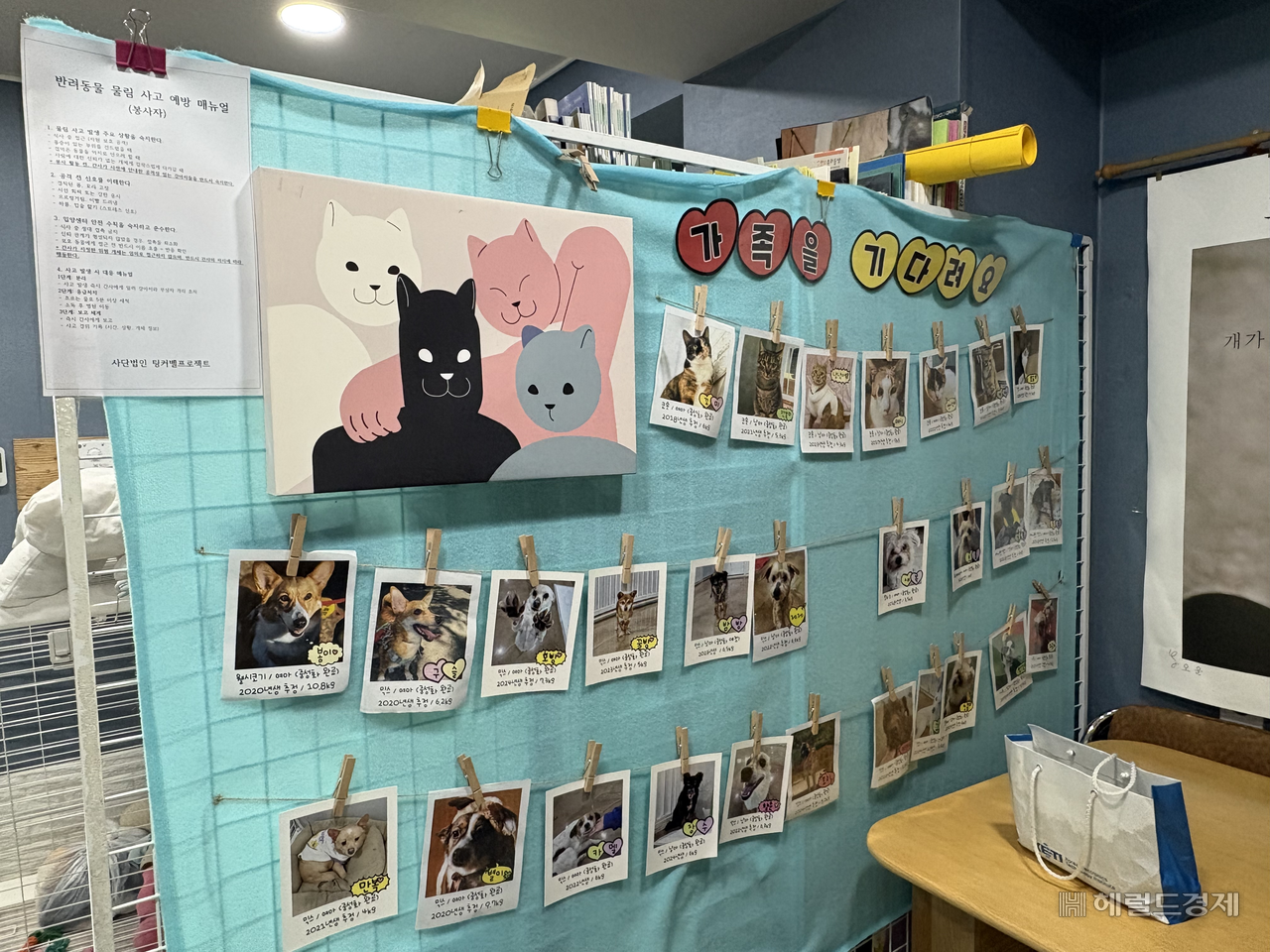
When a reporter visited the Tinkerbell Adoption Center on Thursday morning, the hallway walls were covered with photos of abandoned dogs and cats alongside the words "Waiting for a new family." The center was housing 15 dogs and 10 cats that day — already over its official capacity of 15 dogs and 8 cats.

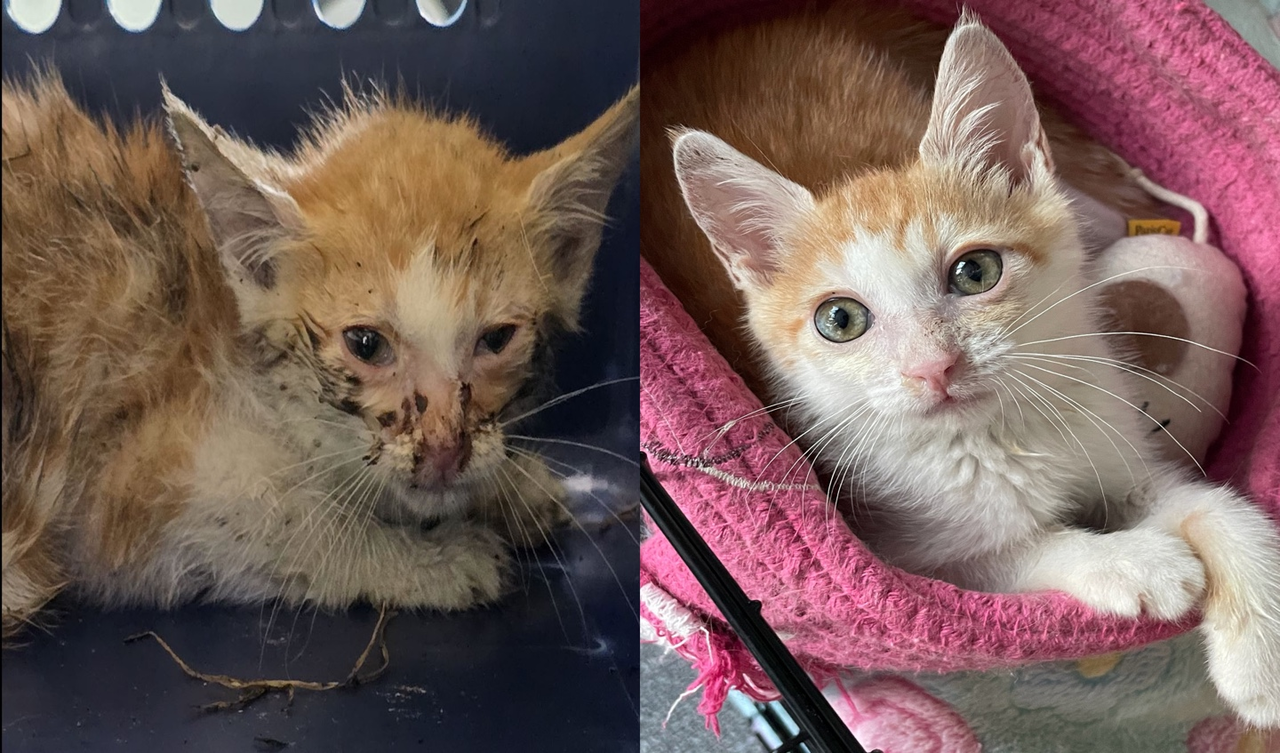
The center's most recent arrival is Ppotto, a kitten. She was found around 11 a.m. on July 2 at a large-breed dog adoption facility in Goyang, Gyeonggi Province. A stray dog named Bandal had been barking toward a patch of tall grass — and there was Ppotto, crying and completely worn out.
"It was very hot, and because she was in the grass, ticks had attached to her body," said Hwang Dong-yeol, director of the Tinkerbell Adoption Center, recalling the moment. A veterinary clinic the team rushed her to warned that she had been so severely dehydrated and spent that "she would have died within a day if left alone." After 11 days of inpatient treatment, Ppotto arrived at the center in good health on July 13.
On the day of the visit, only two volunteers were on hand, including the reporter. When the center's door opened, the stray dogs rushed over wagging their tails, but there were far too few hands to give them all proper attention. "There are weekdays when no volunteers show up at all," said Kim Chan-mi, a center coordinator. "Volunteer participation tends to drop in summer compared to other seasons because of the heat."
As the coordinator and volunteers stepped inside, the dogs swarmed around them eagerly. Some watched from corners with a mix of curiosity and wariness. Camel, a dog that loves human contact, placed his front paws on the reporter's hand the moment a palm was extended. A few others wedged themselves between the coordinator and volunteers and settled comfortably on the floor.
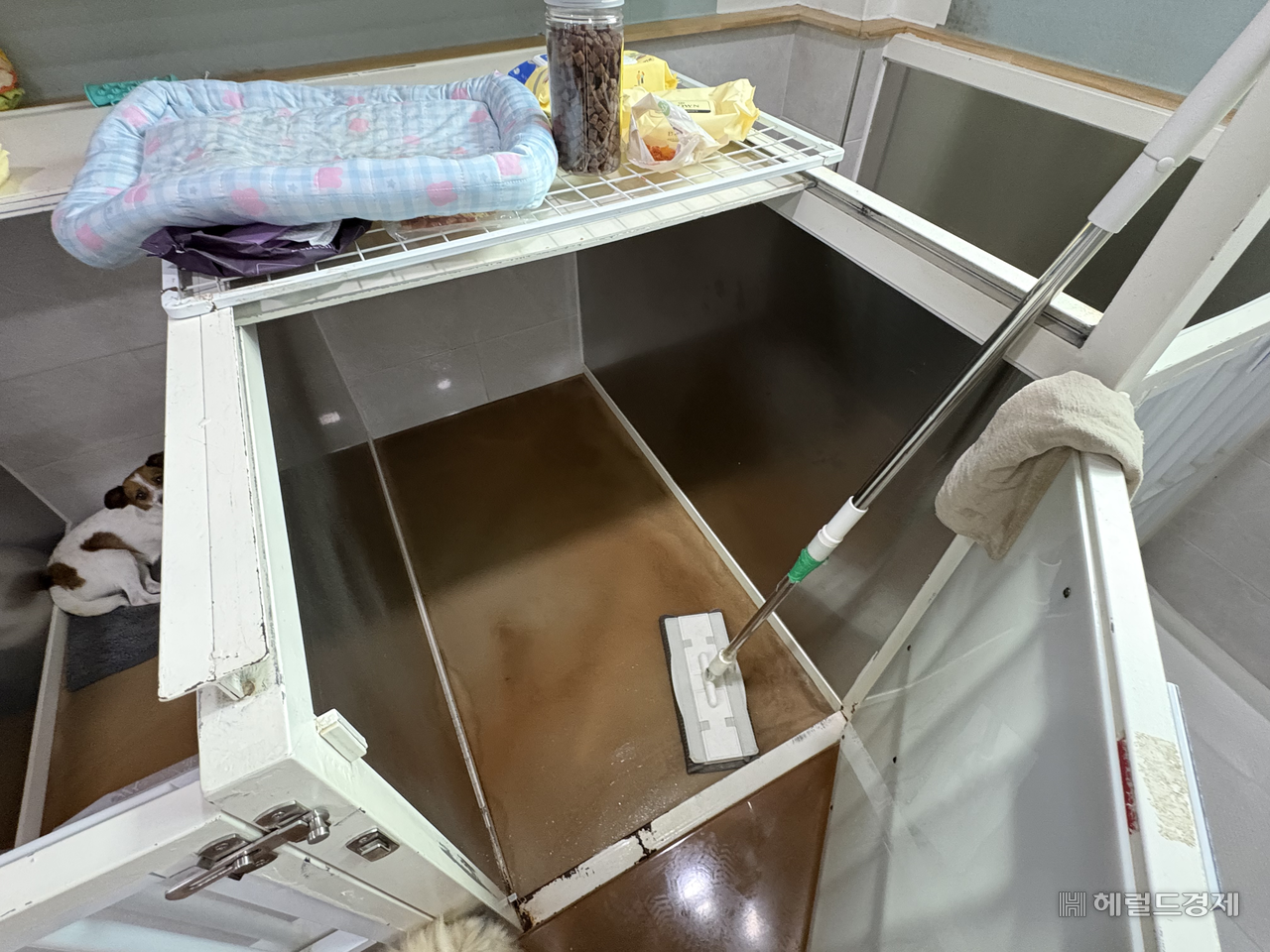
Each morning, while the dogs run and play, staff and volunteers clean the empty kennels. The indoor temperature in the dogs' area is kept at 24 degrees Celsius, which means the air conditioning runs around the clock in the current heat. But the temperature cannot simply be turned down further — the dogs would get cold.
The kennels, less than 1 meter high, are too cramped for a person to clean standing up. Crouching to wipe the walls and sweep up clumps of fur, a volunteer breaks into a sweat almost immediately. Even in kennels cleaned daily, a fistful of fur comes out every time. Once fresh blankets and waste pads are laid down and water bowls refilled, the cleaning is done — but by then, beads of sweat are already forming on the foreheads of the staff preparing the animals' meals.
The heat reshapes the animals' behavior as well as the humans'. High temperatures and humidity suppress appetites and make the animals irritable, requiring closer attention than usual. With outdoor walks cut short and more time spent indoors, managing stress becomes harder too.
Choi Mi-geum, director of the animal welfare organization Happy World with Animals, which operates the Balladang Adoption Center in partnership with the Seoul Metropolitan Government, said summer is when walking the animals becomes most difficult. "Walks that we normally do in the morning and afternoon get canceled a lot because of the extreme heat and heavy rain," she said. "When the animals are stuck inside with only air conditioning all day, they get edgy — dogs that would normally brush off minor friction suddenly break into fights while playing."
A staff member at Naesarang Baduki, a shelter that operates outdoor kennels, said even a brief lapse in care can be fatal. "If management gets a little lax, animals can suffer heatstroke or die from sunstroke," the person said.
Choi said food intake among the cats at her center has dropped sharply despite efforts to control humidity and temperature. "When you check their waste the next day, the volume has decreased too — it really shows how sensitive animals are to the season and the temperature," she said.
Shelters with outdoor kennels face an even harder situation. "Animals can suddenly collapse the moment they hit a critical threshold," Choi said. "If they're not found immediately and given emergency care after collapsing, it can be a matter of life and death."
Rescue calls keep coming even in the extreme heat. On Tuesday, Choi worked with the Seoul Metropolitan Government to rescue 33 dogs that had been kept in severely overcrowded conditions in a multi-unit residential building. "We started the rescue at 8 a.m. and moved all of them within an hour, but I had to change my shirt three times and shower again afterward," she said. "The heat is the same for people and animals alike."
Vacation season brings more abandonments, fewer adoptions
The physical toll is almost the easier part for those who work at animal adoption centers. Summer weighs on them emotionally too, because it is when the most animals are abandoned. "The number of stray animals near resort areas in particular shoots up in summer," said Hwang, the center director. "It's hardest when space is so limited that we can't rescue all of them."
While vacation season drives up abandonments, it drives down adoption inquiries. Consultations tend to be relatively active around the end and start of the year, but in summer, with so many people traveling, almost no one comes looking for a new pet.
According to the Ministry of Agriculture, Food and Rural Affairs' 2025 Animal Protection and Welfare Survey, 95,685 lost or abandoned animals were rescued last year. Of those, 26,753 — or 28 percent — were rescued in summer (June through August), the highest share of any season. July and August alone accounted for 16,811 rescues, more than 37 percent higher than the 12,269 recorded in January and February.
Choi said society needs a stronger support infrastructure for pet care. "People are raising pets in such numbers that there's a saying more dog strollers are sold than baby strollers these days," she said. "If community-based animal centers that support pet care and socialization were established, it would help reduce the problem of abandonment."
newday@heraldcorp.com
shy@heraldcorp.com