The Kia union has passed a strike authorization vote, setting the automaker on a path toward a work stoppage. With the Hyundai Motor and Hyundai Glovis unions already threatening additional partial strikes, Kia's move to formally pursue dispute procedures signals that labor tensions within Hyundai Motor Group are spreading across its entire passenger-vehicle lineup.
According to industry sources Friday, the Korean Metal Workers' Union's Kia branch passed its strike authorization ballot late Thursday, with 82 percent of all eligible members and 92.5 percent of those who voted casting ballots in favor. If the National Labor Relations Commission issues a mediation-suspension ruling on Monday, the Kia union will have secured the legal right to strike.
Kia's labor and management held six rounds of full-scale negotiations through July 15 but failed to narrow their differences on key issues. The union is demanding a flat monthly wage increase of 149,600 won ($101), a performance bonus equivalent to 30 percent of the previous year's operating profit, and an extension of the retirement age to 65. Demands for new business development inside factories, fresh hiring and employment-stability measures are also on the table.
The Kia union had urged members to channel their anger into an overwhelming "yes" vote, saying "all that remains for us is anger and struggle."
Whether a strike actually materializes will depend on how negotiations unfold. Over the past five years, the Kia union has gone through dispute procedures each year but reached last-minute agreements, wrapping up wage talks without ever staging an actual strike. This year, too, the outcome of the NLRC mediation and subsequent bargaining rounds are expected to be the deciding factor.
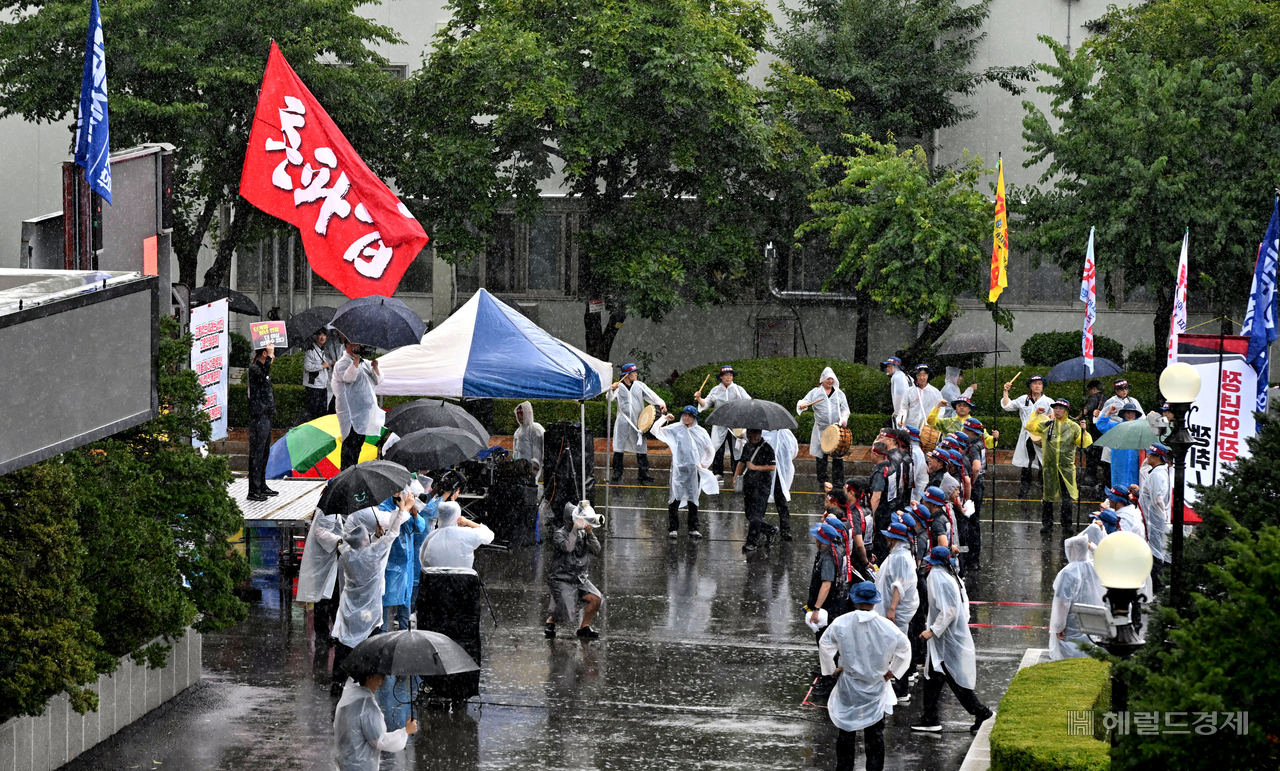
However, observers note that the elevated level of labor-management conflict across Hyundai Motor Group this year makes it difficult to rule out a strike. The Hyundai Motor union has already staged two-hour partial strikes by shift from July 13 to 15 and four-hour partial strikes by shift from Monday to Wednesday, and has announced another round of four-hour partial strikes by shift from Wednesday through Friday of next week.
The Hyundai Motor union is ratcheting up pressure on management ahead of the early-August summer holiday. If the additional strikes at the end of this month proceed as planned, cumulative production-line disruptions at Hyundai Motor could reach up to 60 hours. Losses from workers' refusal to take on holiday overtime shifts add to the total.
The Kia union's strike authorization vote is also seen as a move to coordinate with the Hyundai Motor union and intensify group-wide pressure on management. If both Hyundai Motor and Kia enter a strike phase simultaneously, the ripple effects would extend well beyond finished-vehicle output, hitting parts suppliers, logistics operations and regional economies.
The Hyundai Glovis union has also been stepping up its campaign. Workers at worksites with unresolved grievances staged a total of eight hours of strikes — four hours each — on Thursday and Friday.
Hyundai Rotem's labor and management have similarly failed to close the gap on key issues including wages. The union secured the legal right to strike after the South Gyeongsang Province Regional Labor Relations Commission issued a mediation-suspension ruling on Monday.
kwater@heraldcorp.com