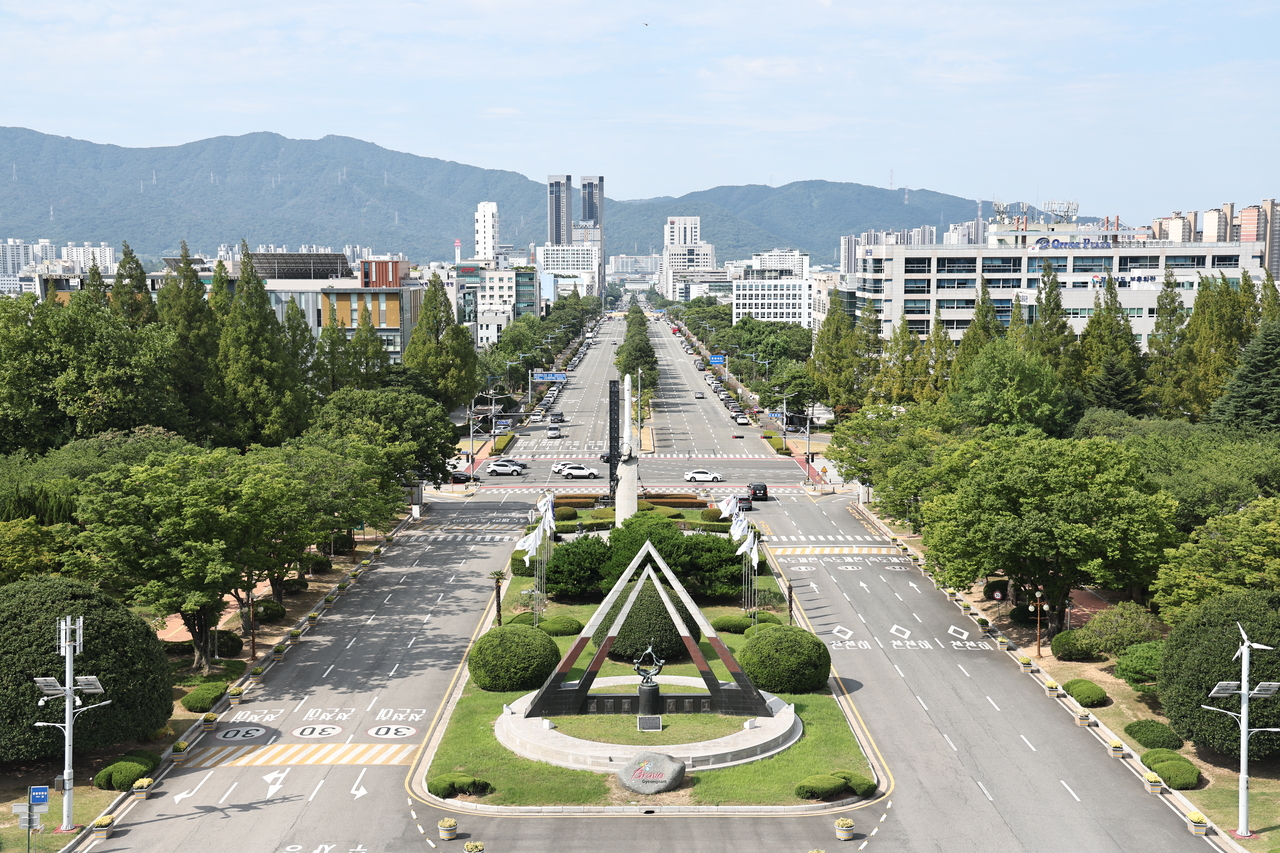
Changwon, long known as South Korea's hub of heavy machinery and built around car-centric infrastructure, is embarking on a sweeping transformation — replacing a dominant road corridor with green space, culture and everyday life. The city's "Changwon-style Central Park" project, which aims to stitch together residential and commercial districts through a ribbon of urban greenery, has moved into high gear.
South Gyeongsang Province said Wednesday it held a preliminary expert advisory meeting at the Gyeongnam Research Institute to launch the "Changwon Central Boulevard Central Park Development Project," a flagship campaign pledge of Gov. Park Wan-su in the ninth round of local elections. More than 20 specialists in urban planning, landscape architecture and transportation attended the session to assess the feasibility of the project brief and explore what would make the park distinctly Changwon's own.
The project corridor runs 2.8 kilometers, beginning at the South Gyeongsang Provincial Government complex and passing through Yongji Park and Changwon City Hall Plaza before ending at the Korea Industrial Complex Corporation's South Gyeongsang regional headquarters. The existing 10-lane boulevard has long been criticized for severing residential neighborhoods and commercial districts on either side of the city center.
The province plans to apply a "road diet" technique — reducing the number of lanes — to create a linear park totaling 82,500 square meters, comprising 49,500 square meters reclaimed from the roadway and 33,000 square meters of the existing City Hall Plaza.
The project will be carried out in three phases, drawing on Changwon's identity as a city anchored by a national industrial complex. The first phase, covering the stretch from the provincial government complex to Yongji Park, will be developed as a forested green corridor. The second phase, from Yongji Park through City Hall Plaza to Jungang-dong, will be designed as a cultural and media hub. The third phase, linking Jungang-dong to the industrial complex, will inject vitality into the austere gateway of the industrial zone, transforming it into a commercial district where workers and residents can mingle.
The province is reviewing a plan to convert two of the 10 lanes into park space. A provincial official said traffic congestion from the lane reduction would be addressed by coordinating closely with Changwon's bus rapid transit (BRT) system and securing alternative routes, adding that dispersal measures would be treated as a core task in the upcoming feasibility study. Financing the project — expected to cost hundreds of billions of won — remains a major challenge. Because local government funds alone would be insufficient, the province plans to seek out nationally linked projects eligible for central government funding to ease the fiscal burden.
Incorporating the advisory meeting's findings, the province will commission a 50 million won ($34,100) conceptual design study in August. The study will benchmark domestic and international cases to develop a model blending Changwon's industrial and cultural character. Once a master plan is drawn up, the province will hold a public hearing to gather input from merchants, residents and industrial complex workers. Securing national funding and completing design work will take several years before the first ground-breaking, but the province said it is concentrating its administrative resources on starting the project within Gov. Park's current term.
Kim Bok-gon, head of the South Gyeongsang Province urban policy division, said the Central Park is "a strategic project that goes beyond simply adding green space — it is about reinventing Changwon, a car-centered industrial city, into a future-oriented, mixed-use living city where the lives and culture of residents can breathe." He added that the province would "achieve a sweeping transformation of the urban environment where industry and nature coexist."
ook967@heraldcorp.com