
The total value of residential property transactions in Seoul during the first half of this year exceeded 57 trillion won ($38.9 billion), with funds from the sale of existing properties accounting for about 19 trillion won — or 33 percent of the total. The figures suggest that government efforts to cool the market have failed to stop buyers from trading up to what Koreans call a "ttoltteolhan han chae," or a single premium home. Despite designating all of Seoul as a regulated zone in October last year and capping mortgage loans at 600 million won or less — with limits of 400 million won for homes priced above 1.5 billion won and 200 million won for those above 2.5 billion won — the government has not stopped the upgrade trend.
Seoul apartments average 932 million won per deal; over 60% of buyers tapped property sale proceeds
According to Ministry of Land, Infrastructure and Transport data on housing purchase funding disclosure forms submitted across Seoul's 25 districts — obtained through the office of People Power Party lawmaker Lee Jong-wook — a total of <style ref="s1">61,425 such forms were filed in Seoul from January through June this year.</style> The combined market value of the homes purchased reached approximately <style ref="s2">57.25 trillion won, with an average transaction price of 932 million won per deal.</style>
The Ministry of Land, Infrastructure and Transport had implemented revised enforcement decrees and rules under the amended Real Estate Transaction Reporting Act starting in February. Under the revisions, all buyers of homes in land transaction permit zones — regardless of nationality — must submit a funding disclosure form along with supporting documentation.
A breakdown of the first-half disclosure forms shows that proceeds from selling existing properties were the single largest source of funding. Some <style ref="s3">36,857 transactions</style> — roughly 60 percent of the more than 60,000 total — listed <style ref="s4">18.8 trillion won in proceeds from disposing of existing real estate</style> as their funding source. That figure exceeded the <style ref="s5">12.9 trillion won borrowed from financial institutions</style>, underscoring the scale of capital flowing into the housing market from buyers trading up to better homes.
After property sale proceeds, the next largest source of personal funds was <style ref="s6">stock and bond sales, which accounted for 4.5 trillion won.</style> Some 15,968 transactions — about 25 percent of the total — reported selling equities to finance a home purchase. Analysts attributed the trend to a sharp Kospi rally in the first half of the year, driven by semiconductor stocks including Samsung Electronics and SK Hynix, which pushed more than 4 trillion won out of the stock market and into housing.
With loans tightened, some buyers turned to what is colloquially known as the "mom-and-dad option" — financial support from parents. A total of 16,341 transactions, or about 26 percent of the total, reported receiving <style ref="s7">gifts or inheritances</style> from parents, with the combined amount reaching <style ref="s8">3.6 trillion won.</style>
Buyers also drew on other sources: 256.2 billion won came from employer support such as in-house loans, while 133.3 billion won was borrowed from acquaintances under the category of "other borrowings."
Loan curbs fail to stop upgrade buying; in Gangnam and Seocho, stock sales outpace bank loans
Experts say the government's aggressive loan restrictions have failed to suppress the preference for a single premium home. During the first half of the year, the housing market saw simultaneous price increases across sale prices, jeonse and monthly rent — a so-called triple rise — while buyers trading up to better homes tapped a wide range of funding channels beyond mortgages, including stock and bond sales, gifts and inheritances, and rental deposits.
A district-by-district breakdown shows that in some areas, the amount raised through stock and bond sales exceeded what buyers borrowed from financial institutions.
In <style ref="s9">Gangnam-gu</style>, where high-priced homes are concentrated, 910 of the 2,267 transactions recorded over the six-month period listed <style ref="s10">stock and bond sales as a funding source, totaling 738.3 billion won</style> — more than the <style ref="s11">477.4 billion won in bank loans recorded across 1,232 transactions.</style> Seocho-gu showed a similar pattern, with stock and bond proceeds reaching 617.5 billion won, surpassing bank loans of 381.1 billion won.
<style ref="s12">The government tightened loan limits as home prices rose to suppress demand, but could not stop wealthy asset holders from selling stocks and moving their capital into areas where property values were expected to rise further.</style>
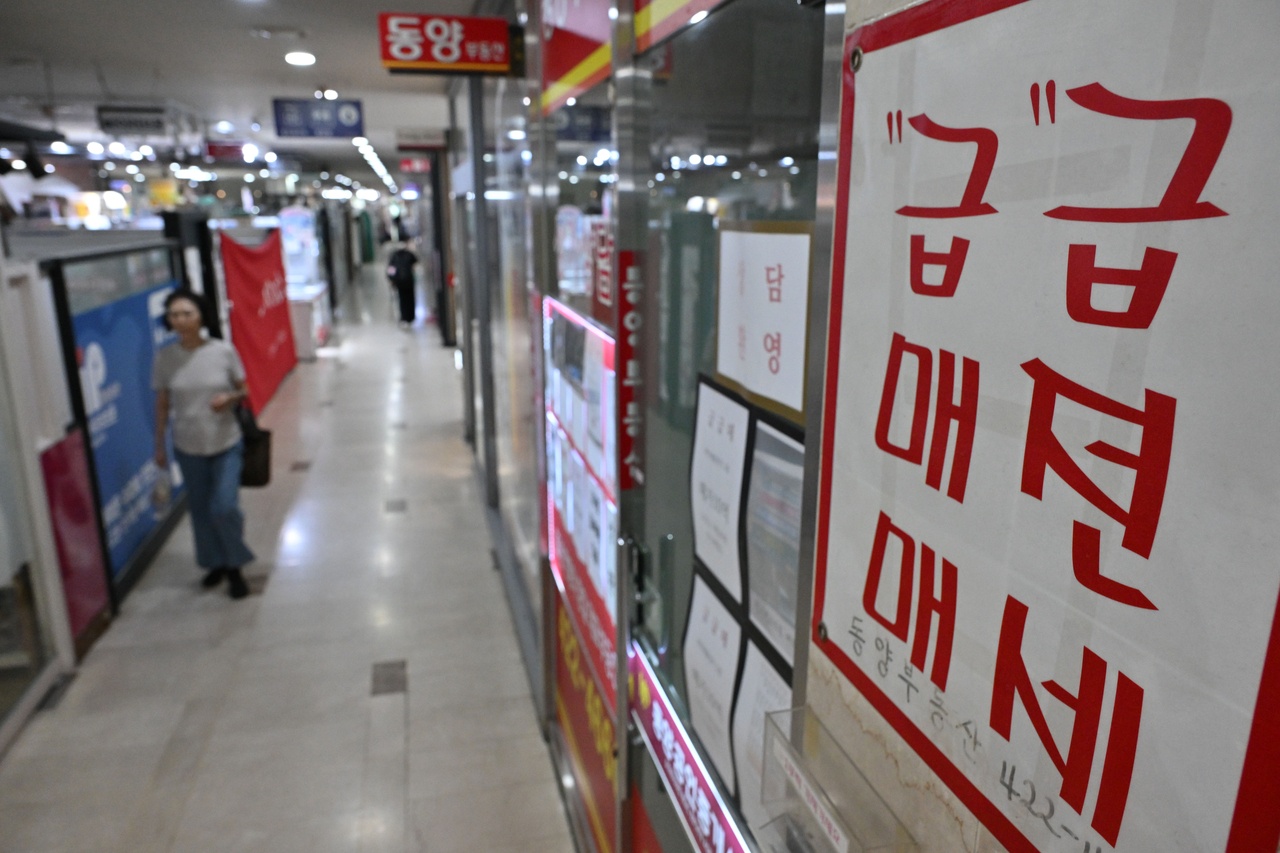
According to KB Real Estate's July national housing price trend report, the average apartment sale price in Seoul this month stood at 1.59 billion won, up 133.58 million won from 1.46 billion won in October last year, when the areas were designated as land transaction permit zones.
"The government said tightening loans would bring down home prices, but in practice all that continued was the trading-up to premium homes by buyers with cash," said Rep. Lee Jong-wook. "It only raised the barrier to entry for people without homes and genuine end-users who desperately need to buy."
He added that the government should correct its regulation-heavy real estate policy and put in place measures to expand housing supply and stabilize the jeonse and monthly rent market in ways that end-users in Seoul and the greater metropolitan area can actually feel.
hss@heraldcorp.com