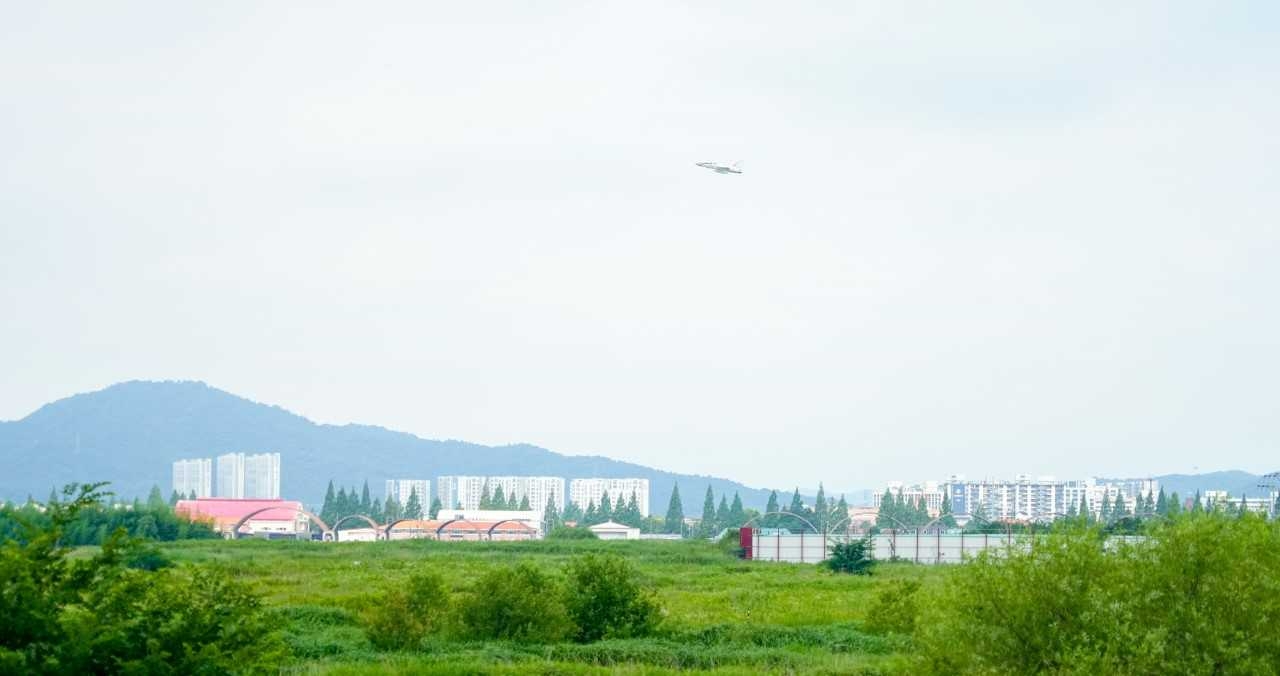
The Gwangju military airport relocation project is expected to move forward under a "state-supplemented" structure that adds national fiscal support to the existing donation-transfer framework.
Under the model being reviewed, the basic approach of selling the Gwangju military airport site to fund relocation costs would remain intact, with the government and the South Jeolla-Gwangju integrated special city splitting any shortfall that sale proceeds cannot cover.
Attention is expected to focus on how much each party — the government and the special city — will be required to contribute.
Gwangju Mayor Min Hyeong-bae said President Lee Jae-myung recently stated his position that, regarding the military airport relocation, "the donation-transfer framework should be maintained, but national responsibility must be raised by drawing on state resources such as a future-response fund."
Min proposed that "integration support funds can be used for projects vital to the special city's future, such as the military airport relocation and the semiconductor industrial complex development."
Under the current plan, the special city would build a new military airport in Muan and hand it over to the Ministry of National Defense, then develop the Gwangju military airport site received from the ministry to raise funds for relocation costs and support projects for the Muan area.
However, with the Gwangju military airport site now being converted into a national semiconductor industrial complex, the existing approach alone will not be sufficient to cover project costs.
Developing the land for residential and commercial use would allow the site to be sold at a premium, generating substantial revenue, but an industrial complex requires land to be supplied at low prices to attract businesses.
Pre-sale prices at the semiconductor complex could fall to less than half of what residential or commercial development would fetch. That has raised concerns that covering both the cost of building the new military airport and the roughly 1 trillion won ($682 million) in support projects promised to Muan may prove impossible.
President Lee's position is therefore interpreted as establishing the principle that any funding gap created by the shift to a semiconductor industrial complex — a national growth initiative — will be made up with state funds.
Going forward, a plan under which a public developer such as the Korea Land and Housing Corporation would purchase the Gwangju military airport site for use as a national industrial complex is expected to be reviewed, with the government and the special city sharing any remaining shortfall in relocation and support project costs.
For the special city, a higher share of national funding would reduce its own fiscal burden, so it is expected to focus its efforts on securing as large a government contribution as possible.
One option under discussion would have the special city cover part of its share using the integration support fund of up to 20 trillion won that the government has pledged.
sij@heraldcorp.com