A bill to abolish prosecutors' supplementary investigation powers is heading toward a decisive vote this week. The Democratic Party of Korea has made passage of the Criminal Procedure Act amendment its official party position and says it will push the bill through. The People Power Party is mounting a last-ditch effort to block it, warning that eliminating prosecutors' supplementary investigation function could leave victims without adequate protection.
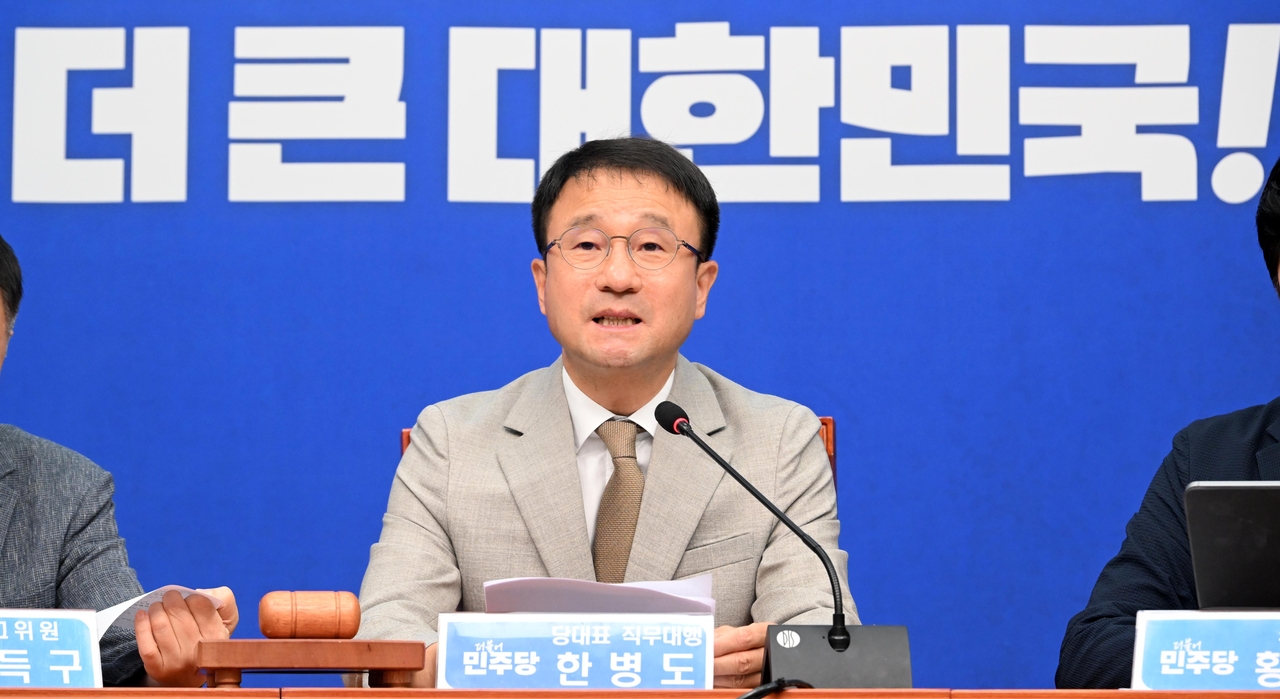
Han Byung-do, the Democratic Party's acting leader and floor leader, said at a supreme council meeting Monday that the party "will make sure the Criminal Procedure Act amendment passes at a plenary session this week," pledging to work "with every ounce of effort until the end so that a criminal justice system in which the people are sovereign can take stable root by Oct. 2."
Han said the party had adopted the amendment — centered on a complete separation of investigation and indictment — as its official position at a caucus meeting. "In the process, we have drawn up policy alternatives to expand victim protection measures and strengthen mutual checks among investigative agencies," he said.
Turning to the People Power Party, Han said it had "poured out reckless remarks calling the amendment a bargaining chip or even an act of national betrayal," and accused it of "stoking public anxiety with the absurd logic that people's lives and safety can only be protected if prosecutors retain investigative powers."

The People Power Party pushed back, arguing that abolishing supplementary investigation powers would weaken the mechanisms available to redress wrongly treated victims. Floor leader Jeong Jeom-sik said at the supreme council meeting Monday that when the party criticizes the abolition, "the Democratic Party brands us as defenders of prosecutorial privilege," adding that it is "inciting the demonization of prosecutors while stoking nostalgia for the late former President Roh Moo-hyun among its supporters."
Jeong highlighted a collection of exemplary supplementary investigation cases the Ministry of Justice published in December last year, saying it showed that "the truth was uncovered through prosecutors' supplementary investigations" in cases involving sexual violence against minors and people with disabilities, cases where victims and perpetrators had been switched, jeonse fraud cases, police-coerced false confessions, leaks of investigative secrets, and bribery.
"Prosecutors' supplementary investigations are protecting wronged victims," Jeong said, adding that "the Ministry of Justice under the Lee Jae-myung government compiled and acknowledged these very cases."
Voices within the Democratic Party itself have also raised concerns about potential investigative gaps in crimes targeting society's most vulnerable. Rep. Hong Ki-won called for allowing prosecutors to conduct supplementary investigations in seven categories of crime: child abuse, domestic violence, sex crimes, child sex crimes, stalking, abuse of people with disabilities, and elder abuse.
In response, the party leadership decided to pursue an amendment to the Agency for Serious Crimes Act that would establish a dedicated unit within the agency to handle supplementary investigations. Hong said on KBS Radio on Monday that while "supplementary investigation powers themselves will be completely abolished," the party "has also created mechanisms to more strongly protect victims and to provide mutual checks on police investigations."
mp1256@heraldcorp.com
addressh@heraldcorp.com