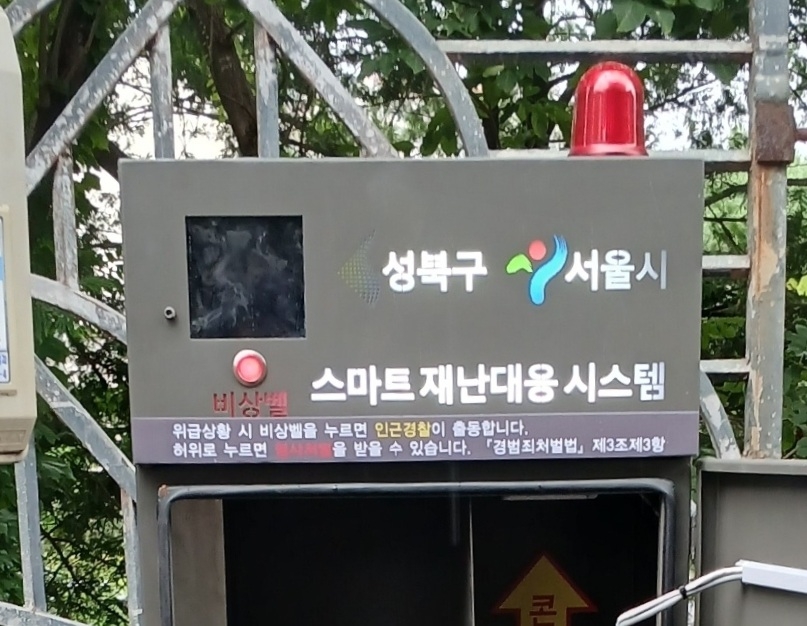
Seoul's Seongbuk-gu has installed a self-developed "neighborhood-based smart disaster response system" at 10 flood-prone locations across the district, strengthening its heavy-rain preparedness following flooding on the road beneath Seokgye Station last year.
The project was initiated after District Mayor Lee Seung-ro visited the Seokgye Station underpass with relevant department heads during the August flooding last year and ordered the development of special flood-prevention measures. This year, the district expanded its focus to include flood-vulnerable areas such as Jangwi Zone 3, a low-lying redevelopment site.
Seongbuk-gu completed installation of the system — developed entirely in-house and the first of its kind nationwide — at 10 flood-prone sites, including the Seokgye Station underpass and Jangwi Zone 3.
The system automatically detects road water levels and immediately relays disaster alerts to the district office, the fire department, police and other flood-response agencies. It was designed to enable a coordinated response within the critical window even during sudden extreme rainfall in the late-night hours.
The units also double as storage for seasonal disaster equipment — flood-response gear in summer and snow-removal tools in winter — allowing supplies to be pre-positioned year-round. Built-in emergency bells add a further layer of utility for both disaster prevention and crime deterrence.
"As climate change brings increasingly unpredictable heavy rainfall, prevention and rapid response are more important than ever," District Mayor Lee said. "We will continue to strengthen our field-centered disaster response system and do our utmost to protect the lives and property of our residents."
seouldream01@heraldcorp.com