The way Seoul's Gangseo-gu district office does business is changing.
Gangseo-gu announced it has selected five reform commitments — dubbed "Five Promises" — as improvement tasks aimed at eliminating unreasonable workplace practices that civil servants encounter on the ground. District Mayor Jin Kyo-hoon is leading the initiative.
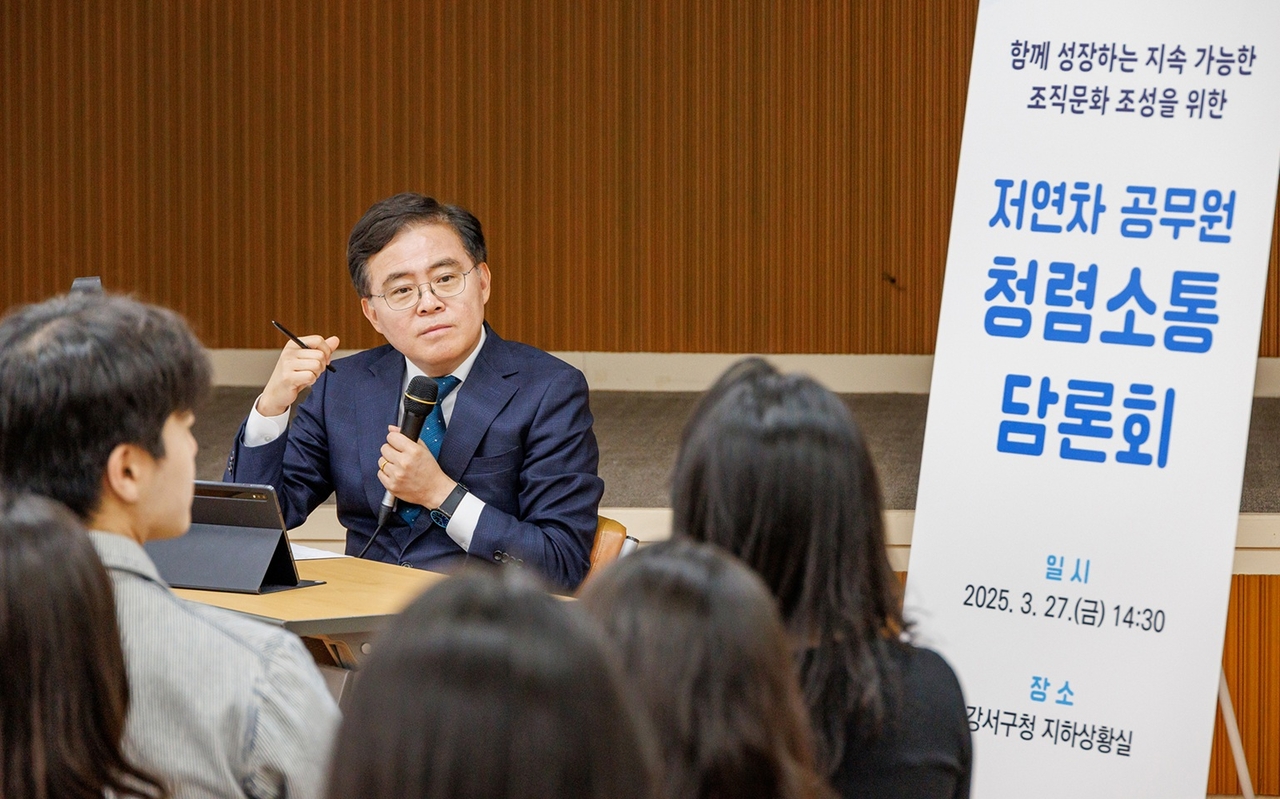
The reform tasks were designed to build an organizational culture where work is both fair and efficient. The district conducted a survey of all employees and held small-group meetings — chaired by the district mayor himself — with junior civil servants, gathering a wide range of opinions and analyzing practices that generate inefficiency and burden on the job.
Reflecting those frontline voices, the five selected tasks are: avoiding repeated preparation of similar documents, reducing paper printing and filing, holding meetings and submitting reports only as needed, prioritizing mutual respect and communication over burdensome conventions, and creating a workplace where employees feel secure.
In practice, documents already available through the electronic records system or previously prepared will not be recreated. Routine paper printing and physical filing will be kept to a minimum. Simple information sharing and minor administrative matters will shift to email or messenger-based electronic reporting, and meetings will focus only on agenda items that genuinely require discussion.
Beyond that, the district plans to make its organizational culture more rational by fostering mutual consideration and autonomy among staff. Formal protocol-heavy procedures will be streamlined, attendance at meals and after-work gatherings will be left to individual discretion, and workloads will be distributed more evenly based on volume and difficulty. For high-pressure duties — such as handling hostile complaints or responding to the district council — the district also plans to strengthen a collaborative system in which managers work alongside frontline staff.
As part of the reform, the district decided this month to move online the process of checking whether senior officials are in their offices, using the internal administrative system. The change eliminates the "presence light" — a symbol of the top-down approval culture centered on senior officials — and replaces it with an online system driven by working-level staff.
The initiative aligns with the organizational direction District Mayor Jin has championed since taking office at the start of the ninth elected term. At his inauguration ceremony on July 1, held primarily for senior civil servants, Jin called for swift decision-making, a streamlined reporting structure and a culture of mutual respect, stressing the need for an organization that can "work with less friction."
The district did not stop at issuing a policy statement. It held a public training session through an expanded senior officials' meeting, which was also live-streamed on YouTube so that all employees could watch — underscoring that the reform tasks are a shared institutional commitment for every department and senior official to carry out together.
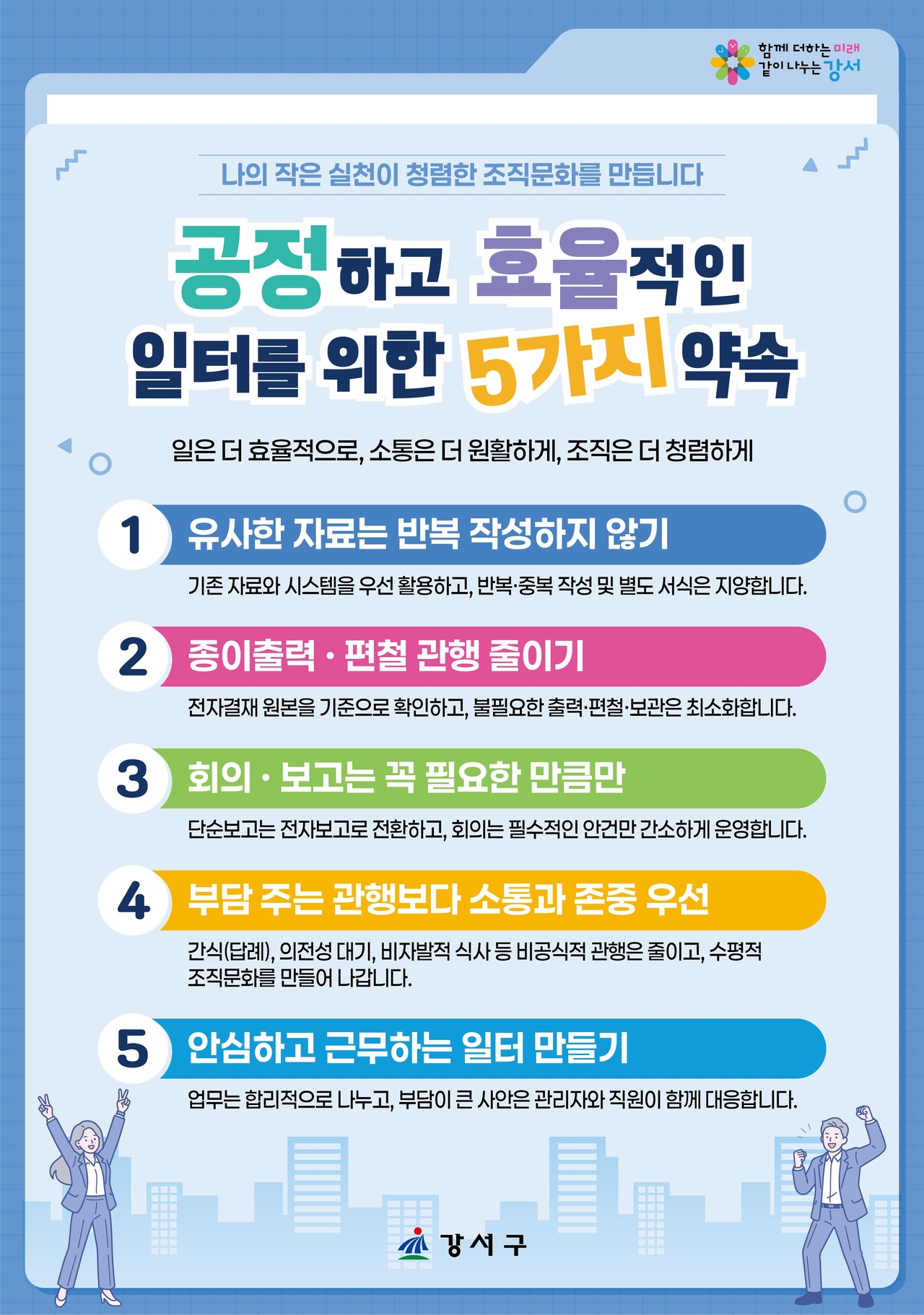
Going forward, the district will require each department to identify and carry out at least one reform task suited to its own circumstances, then review the results and share best practices across all departments. The district also plans to distribute promotional posters, conduct training for senior officials and circulate examples of successful improvements.
"A clean and upright organizational culture cannot be built through directives or declarations alone," District Mayor Jin said. "Starting with senior officials taking the lead, we will reduce unnecessary practices and create an environment where employees can work fairly and efficiently."
seouldream01@heraldcorp.com