
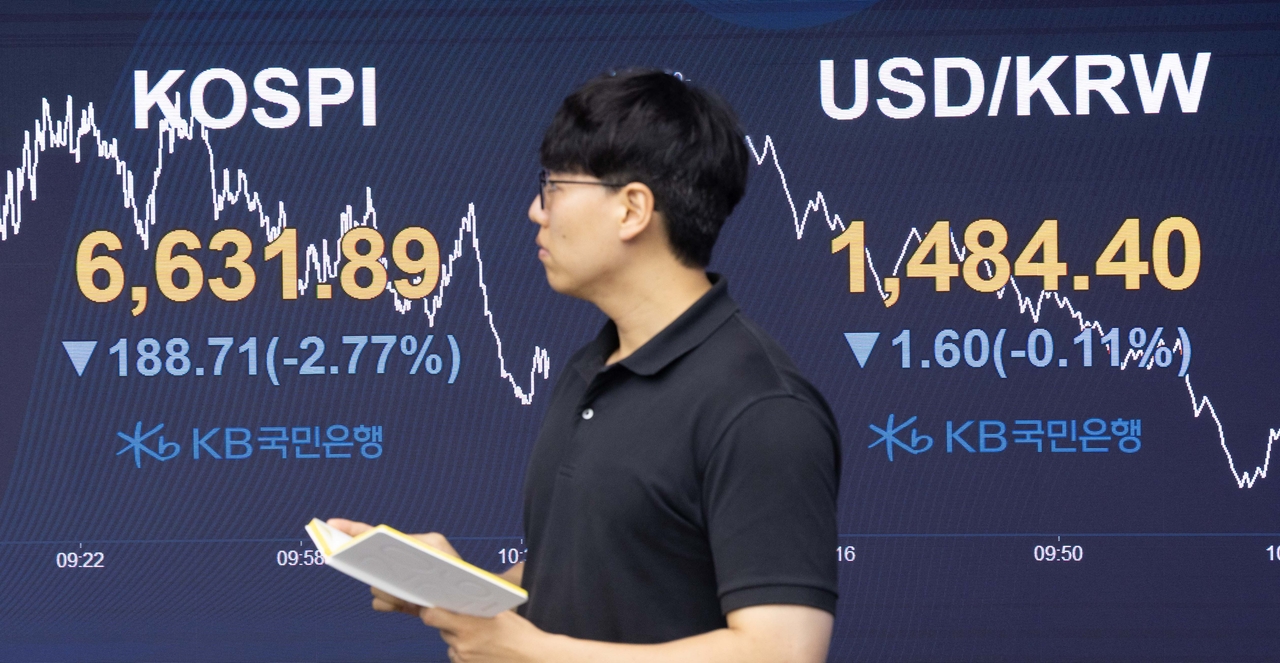
Fear of a semiconductor "peak-out" is intensifying as benchmark interest rate hikes gather pace and the broader macroeconomic environment turns hostile for equities. The sector has been gripped by a paradox: record-breaking earnings have done nothing to stop share prices from tumbling. Markets are now focused on the earnings season for "hyperscalers" — operators of massive data centers — which kicks off Wednesday. Analysts say a sustained rebound in chip stocks will require confirmation that these companies plan to raise their AI capital expenditure guidance further.
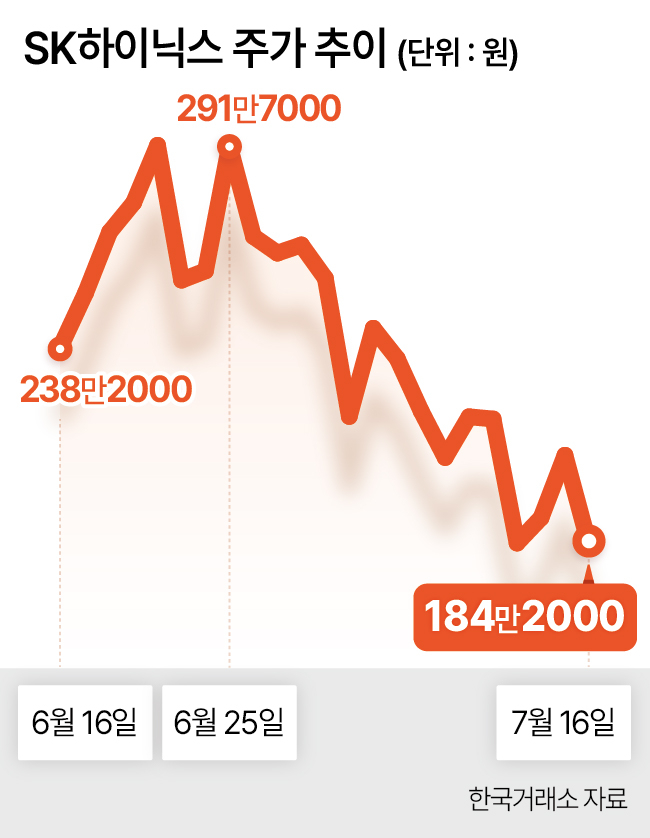
SK Hynix's maximum drawdown from its all-time high reached 43.82% as of the last trading session, according to Korea Exchange data released Monday — effectively cutting the stock in half. Investors who bought near the peak, or who put money into single-stock leveraged ETFs, face substantial losses. Samsung Electronics' MDD has also hit 34%.
The Philadelphia Semiconductor Index, which tracks US semiconductor and AI stocks, has tumbled 18.06% so far this month. With the index now down more than 20% from its peak, some analysts say the AI and chip sector has entered a bear market.
Major overseas chipmakers have also suffered steep declines. Japan's Kioxia Holdings fell the most among leading players, dropping 53.76%, weighed down by skepticism over AI semiconductor investment and news that it lost a patent infringement lawsuit in the United States and was ordered to pay $229 million in damages. Micron Technology (-35.93%), Nvidia (-19.75%) and TSMC (-19.41%) have also fallen sharply from their respective peaks.
A striking feature of the selloff is the disconnect between earnings and share prices. TSMC reported a record quarterly net profit for the second quarter of this year (April–June) that beat market expectations, yet its stock fell 2.77% on Friday local time — the session immediately following the announcement. Dutch semiconductor lithography equipment maker ASML also posted results that topped forecasts, but its shares have fallen for two consecutive trading sessions.
Strong earnings have been overshadowed by a confluence of headwinds: fears of an imminent resumption of full-scale conflict between the United States and Iran, a surge in global oil prices, concerns about interest rate hikes, and semiconductor peak-out anxiety. Adding to the pressure, Chinese AI startup Moonshot AI recently unveiled its latest model, Kimi K3, which analysts say has narrowed the gap with top-tier models from OpenAI and Anthropic. The rise of Chinese AI companies raises the prospect that US firms could lose their performance edge, which in turn could complicate plans for large-scale AI infrastructure investment.
The catalyst analysts most closely associate with a potential rebound is the earnings season for US hyperscalers, which begins Wednesday. Alphabet kicks things off that day, followed by Microsoft and Meta on July 29 and Amazon on July 30. Markets are focused less on headline earnings figures than on capital expenditure plans as a signal of continued commitment to AI investment.
Hana Securities projects that the combined capex growth rate for the four companies will rise from 80% in the first quarter of this year to 83% in the second quarter and 92% in the third. Industry observers still see robust underlying demand for AI infrastructure. In a recent report, Google said the spread of agentic AI has pushed inference demand past training demand, and that most companies will need to upgrade their existing AI infrastructure. Meta's expanding AI infrastructure business and SpaceX's AI computing leasing operations are also cited as evidence that the investment cycle could run longer than previously expected.
The guidance that follows each earnings release is also expected to shape the direction of domestic chip stocks. According to Hana Securities, when Alphabet has posted a revenue surprise, Samsung Electronics and SK Hynix have delivered average one-month share price returns of 11% and 17%, respectively. When results disappointed, those returns fell to 2% and -3%.
Han Ji-young, a researcher at Kiwoom Securities, said the Kospi is likely to enter a phase of testing downside support this week, buffeted by weakness in US and Japanese chip stocks during the market holiday, the US-Iran geopolitical standoff, earnings from US big-tech names including Alphabet, Intel and Tesla, domestic corporate results, and shifts in fund flows following the announcement of single-stock leverage regulations. "In particular, the AI earnings season starting this week will serve as a pivotal moment to simultaneously assess the sustainability of AI demand and whether chip stocks can break out of their deleveraging and derating phase," Han said. Kiwoom Securities set a weekly Kospi trading range of 6,300 to 7,300.
jiyun@heraldcorp.com
th5@heraldcorp.com




