![A construction worker drinks water at a job site. [Getty Images Bank/AI-generated]](https://wimg.heraldcorp.com/news/cms/2026/07/13/news-p.v1.20260713.ed93d76d1e8f46479b2d5bccb93a9858_P1.jpg)
The hotter it gets, the more the economy suffers.
Extreme weather events grow more unpredictable every year, and summer heat stands out as one of the most disruptive forms of abnormal climate for daily life.
Of late, that trend has only intensified. Climate change has driven South Korea to break heat records almost every summer.
Heatwaves have now been shown to inflict not only human casualties and social harm, but significant economic losses as well.
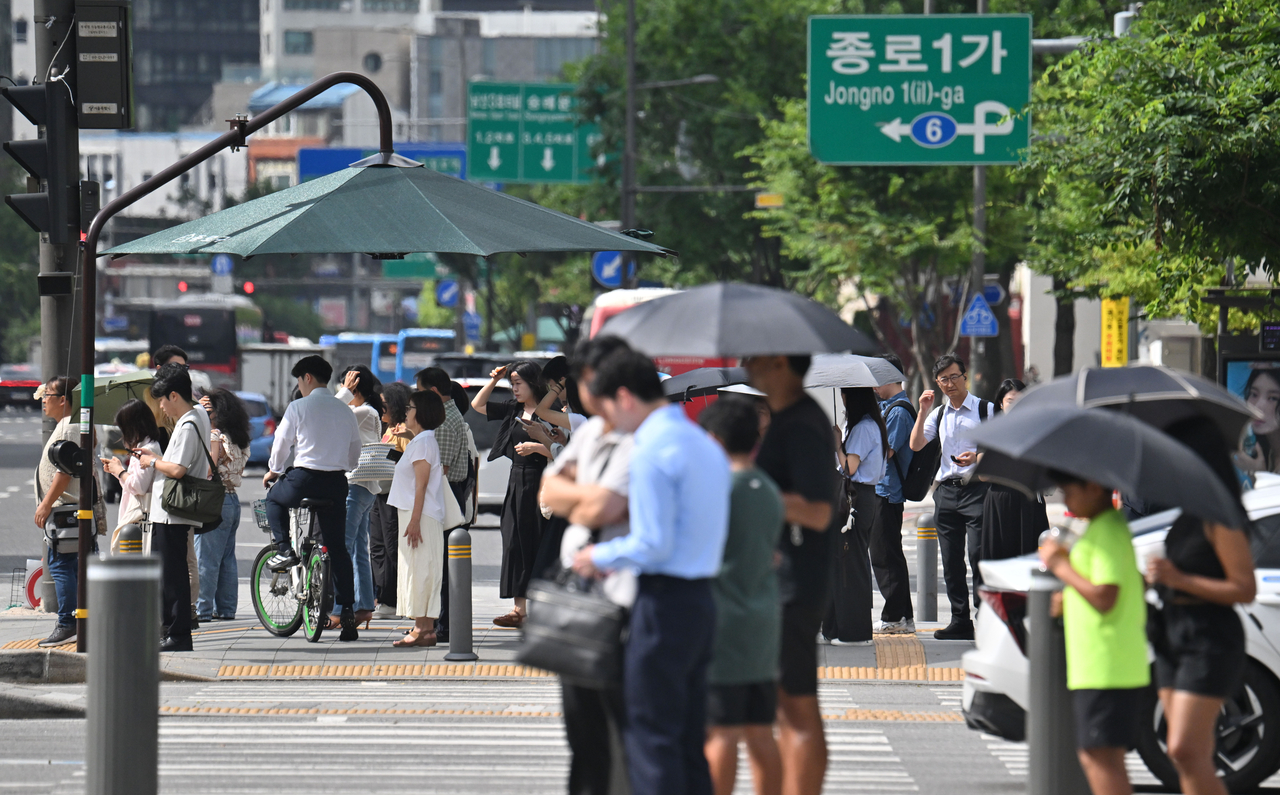
Measured in working hours, the toll comes to 1.1 billion hours a year. In monetary terms, that translates to nearly 28 trillion won ($18.6 billion). Human-induced extreme heat is draining more than 1 percent of the country's GDP annually.
The deeper concern is that this may be only the beginning. South Korean summers are projected to last more than half the year before the century is out.
By a simple estimate, that would be roughly double the current length — and the resulting loss in productivity and economic output is expected to grow substantially.
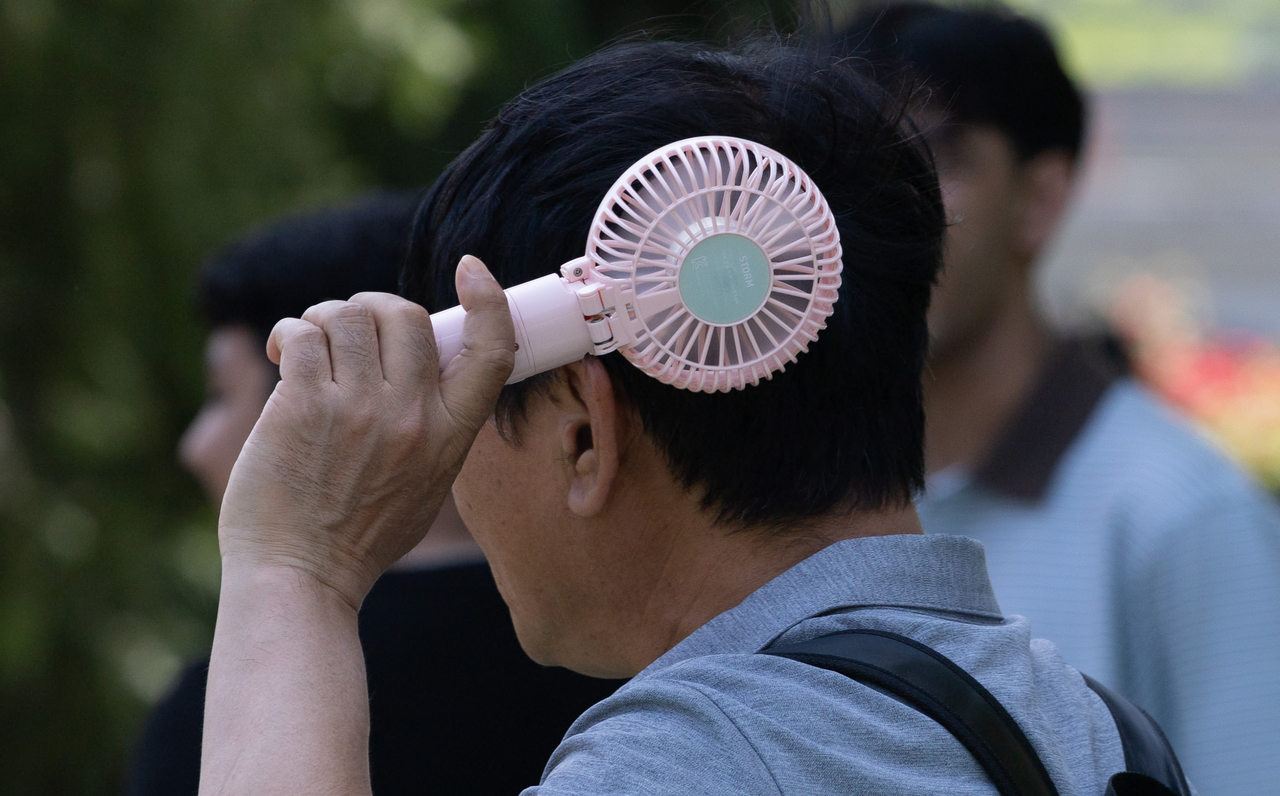
According to country-level climate damage data from the Lancet Countdown, an international collaborative research project, South Korea lost approximately 1.1 billion hours of potential labor in 2024 due to heat exposure — equivalent to about 37.6 hours per worker per year, based on an eight-hour workday.
The financial toll is even more striking when converted into real losses. Applying the average hourly wage for workers in 2024 — 25,156 won, as compiled by the Ministry of Employment and Labor — to the Lancet's country-level data, South Korea's annual potential income loss comes to approximately $20.4 billion, or 27.79 trillion won.
That figure is comparable to the combined annual wages of about 1.12 million minimum-wage workers, and equals 1.1 percent of GDP. Notably, the bulk of this loss is not simply the result of hot weather — most of it stems from climate change.
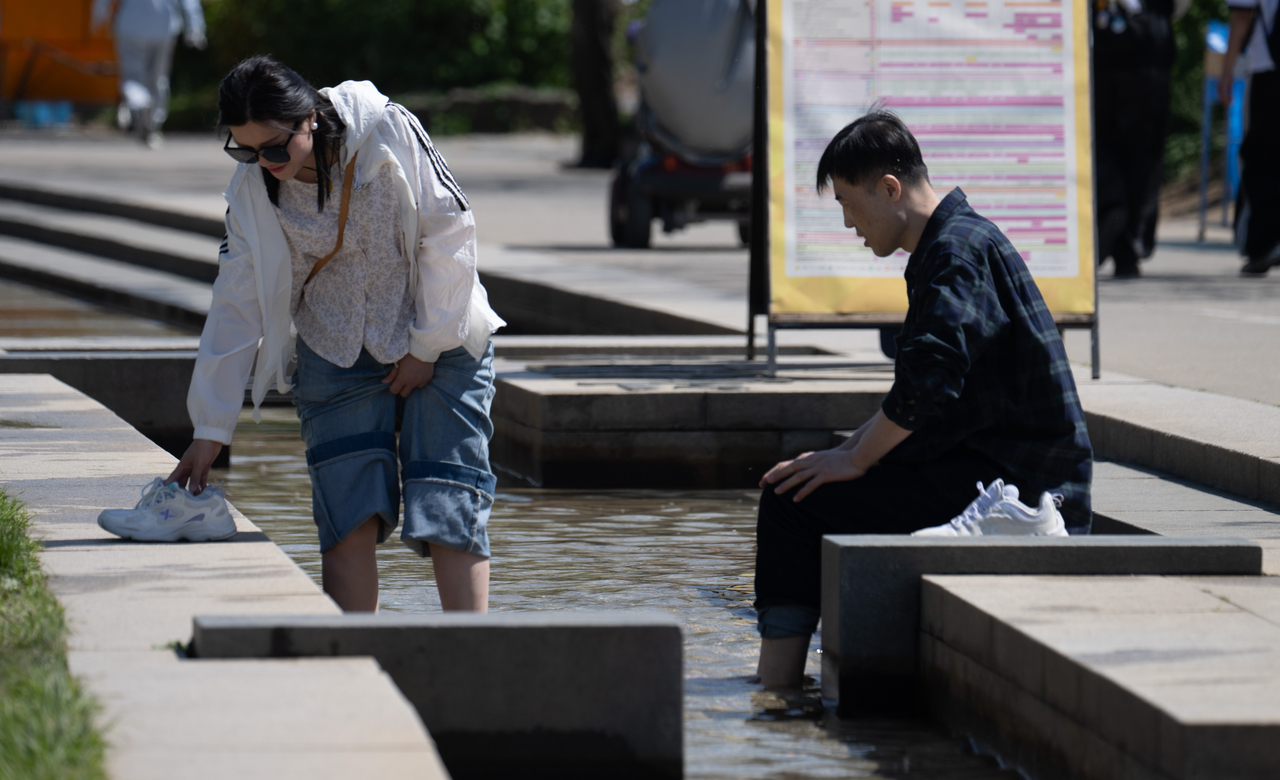
In the 1990s, South Korea's average annual potential labor loss from heat stood at about 388.17 million hours. By 2024, that figure had risen nearly 2.85 times in just over three decades — and was up 59.3 percent from 2023 alone. The spike reflects the fact that 2024 was the hottest year on record.
The "potential income loss" referred to here is a conservative figure that excludes absences and early departures caused by heat. It measures the reduction in physical work capacity due to high temperatures. In plain terms, even workers who showed up and put in the same hours were unable to perform at full capacity because of the heat — and that accumulated shortfall amounts to a labor productivity loss equivalent to 28 trillion won.
The Lancet also found that human-induced climate change bears much of the responsibility. According to the report, of the 19 days per year of life-threatening heat that people around the world experienced on average between 2020 and 2024, 16 would not have occurred without human influence — meaning roughly 84 percent of such extreme heat days are attributable to human activity.
![A construction worker drinks water at a job site. [Getty Images Bank/AI-generated]](https://wimg.heraldcorp.com/news/cms/2026/07/13/news-p.v1.20260713.2e06978c0e90400f9783b2be575951d9_P1.jpg)
Not all workers are equally affected. Those in comfortable indoor office environments are relatively shielded from high temperatures. By contrast, workers in construction, agriculture and the service sector — jobs that require direct exposure to the elements — face far greater potential income losses.
In South Korea, construction is the hardest-hit industry. In 2024, the sector accounted for about 340.01 million hours of potential income loss, or 30.1 percent of the national total. The service sector followed at 28.3 percent, agriculture at 22.1 percent and manufacturing at 18.9 percent. The figures were calculated by applying weather conditions such as temperature and humidity to models that account for the physical intensity and exposure levels of each type of work.
The data put a price tag on how much human-induced heat erodes the capacity to work and weighs on national productivity. It is further evidence that climate change is reaching beyond heat-related deaths and social harm to affect the national economy itself.
South Korea's 28 trillion won loss, however, represents barely 1 percent of the global toll. The Lancet estimated that heat exposure reduced potential working hours worldwide by about 639 billion hours in 2024, generating losses of $1.09 trillion. That was up 17 percent from 2023 and marked the first time the figure has surpassed $1 trillion.
Countries with weaker economies and greater dependence on outdoor labor bore a disproportionate share of the burden. When potential income losses are measured as a share of GDP, nations with low human development index scores averaged 5.3 percent, while those with high HDI scores averaged 1.43 percent. Countries in the very high HDI group — which includes South Korea — averaged 0.7 percent.
The Human Development Index is an annual measure published by the UN Development Programme to assess quality of life and national development. Scored on a scale of 0 to 1, with values closer to 1 indicating higher living standards, South Korea ranks among the top tier of countries surveyed, placing it in the "very high" HDI category.
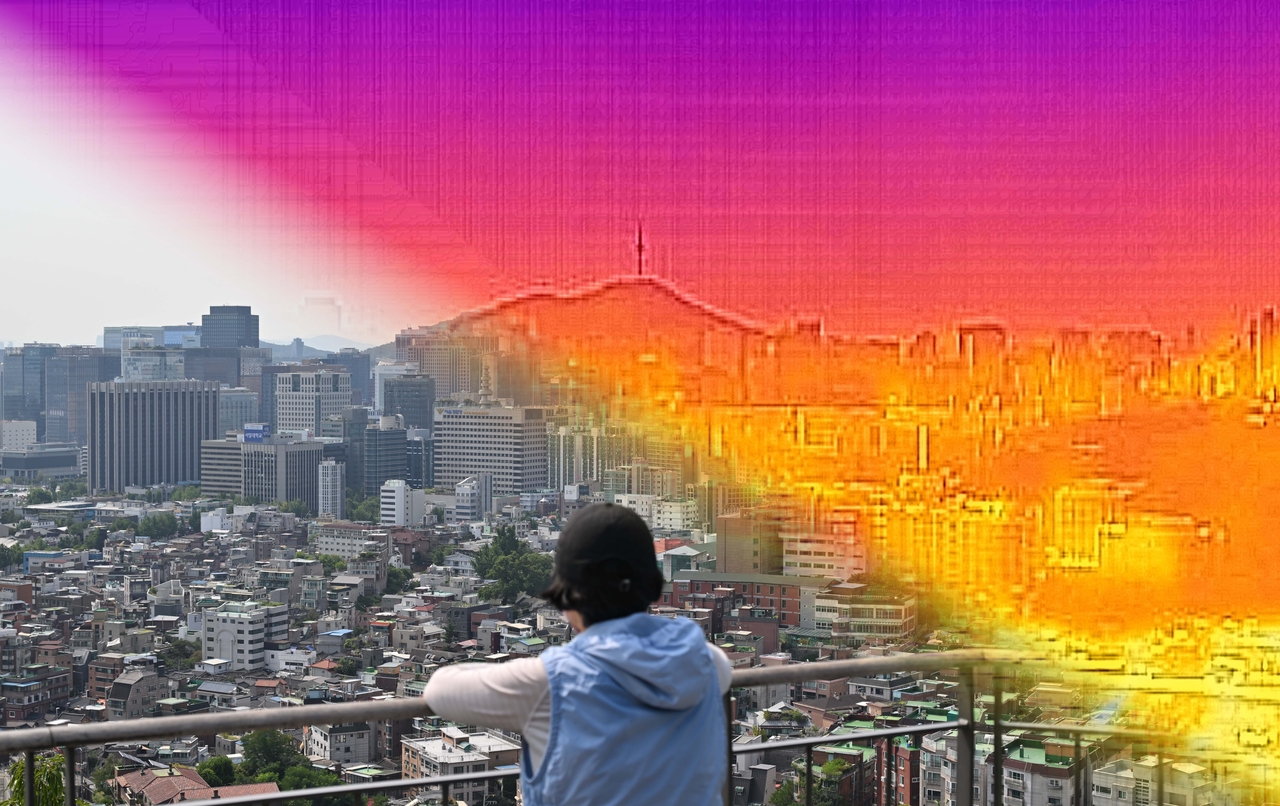
That does not mean South Korea's exposure is minor. Heat-related occupational illness cases are rising sharply. Data obtained from the Korea Workers' Compensation and Welfare Service by Rep. Kim Wi-sang of the People Power Party, a member of the National Assembly's Climate, Energy, Environment and Labor Committee, show that approved workers' compensation claims for heat-related illness jumped from 13 in 2020 to 77 last year — a 5.9-fold increase.
Workers who died and received posthumous workers' compensation recognition for heat-related illness have been recorded every year: 2 in 2020, 1 in 2021, 5 in 2022, 4 in 2023, 2 in 2024 and 5 last year. So far this year, 18 workers' compensation claims for heat-related illness had been filed through May, of which 12 were approved, including 4 fatalities.
Even those numbers capture only a fraction of actual cases. According to the KDCA, 4,460 heat-related illness patients were reported to emergency rooms nationwide in 2025 — the second-highest figure since the monitoring system was established in 2011.
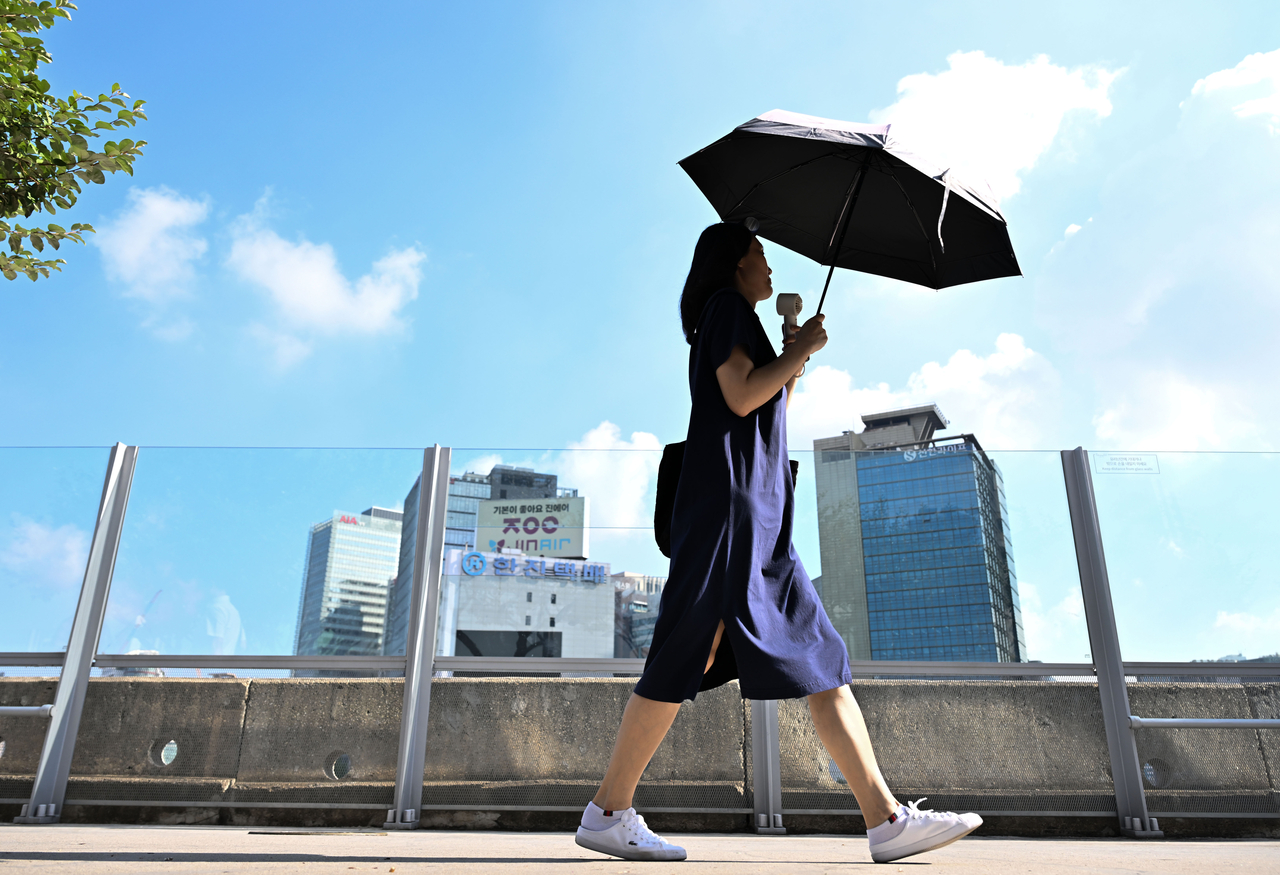
The central problem is that the risk from extreme heat is growing every year, and so are the economic losses. According to the Korea Meteorological Administration's climate change situation map, Seoul currently has 127 summer days per year. If greenhouse gas emissions continue at roughly current levels, that number is projected to rise to 188 days during the late-century period from 2080 to 2100.
Heatwaves — the most damaging extreme for labor productivity — are expected to become far more severe. Seoul currently experiences about 31 heat wave days per year in the 2020s. By the 2080s, that figure is projected to reach 103 days, and by the 2090s, 115.6 days — roughly one day in three. Peak temperatures are also forecast to climb from the current 35.9 degrees Celsius to 43.8 degrees.
Governments around the world are responding with efforts to improve outdoor working conditions. South Korea is no exception. Under the Ministry of Employment and Labor's 2025 heat protection plan for workers, employers must provide a 20-minute rest break every two hours when the apparent temperature reaches 33 degrees Celsius or above. Suspending all outdoor work beyond a certain temperature threshold is also recommended.
![Heat shimmer rises from the road as pedestrians cross an intersection in Jung-gu, Daegu. [Yonhap]](https://wimg.heraldcorp.com/news/cms/2026/07/13/rcv.YNA.20260711.PYH2026071103290005300_P1.jpg)
The problem, critics say, is that such measures remain adaptation policies aimed at limiting damage from a changing climate rather than addressing its root cause. Critics argue that stronger action is also needed to slow the pace of climate change itself — the underlying force eroding labor productivity.
The Lancet report also cautioned that adaptation alone has its limits. Every additional ton of greenhouse gas emitted raises climate risks, increases economic costs and makes adaptation more expensive. Bolder investment in emissions reduction, the report argues, is the key to preserving industrial competitiveness in the future.
"Extreme heat does not merely reduce work capacity and income — the economic shock feeds back into health and resilience, creating a cascade of harm," the Lancet researchers said. "Protecting health and achieving a just and equitable transition requires action from everyone. There is no more time to delay."

woo@heraldcorp.com