
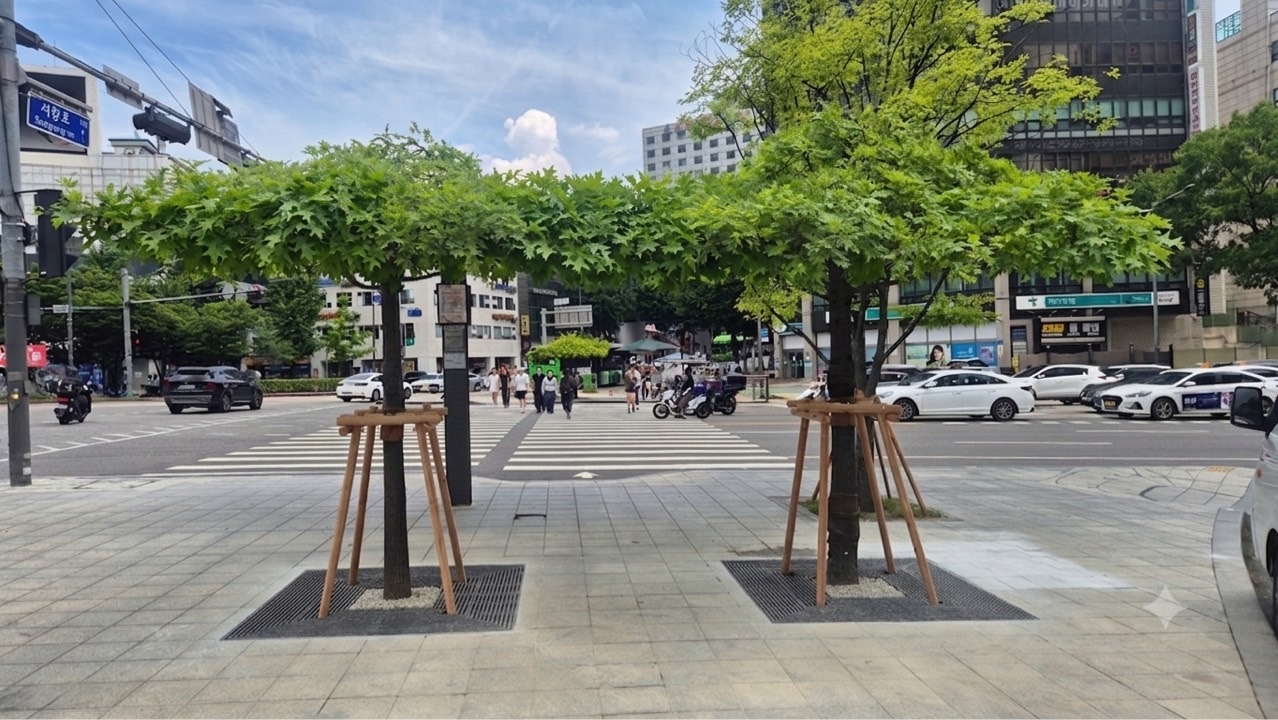
Mapo-gu officially relaunched its natural shade canopy project on June 25, planting a pin oak on the traffic island at Sinchon Rotary (31-123 Nogosan-dong) and designating it "Shade Tree No. 1."
Green space plays a critical role in creating comfortable living environments by lowering surface temperatures. Studies show that every additional square kilometer of green space can reduce surface temperatures by up to 0.25 degrees Celsius.
As heat waves and the urban heat island effect have intensified in recent years, the district revived its shade tree project to expand natural canopy cover in residential areas.
The shade tree initiative involves planting large trees on traffic islands and near crosswalks — high-foot-traffic locations — to provide natural shade for pedestrians.
The pin oak was chosen for its wide-spreading crown, which casts generous shade over walking paths. The species is also expected to deliver a range of environmental benefits, including mitigating the urban heat island effect, reducing fine dust and absorbing carbon — and unlike artificial shade structures, it blends naturally into the surrounding landscape.
The district first pioneered a natural shade policy in 2019, during the seventh elected term, planting eight shade trees using pin oaks at major traffic islands including the World Cup Stadium intersection and Sangam intersection.
The Sinchon Rotary planting marks the first step in resuming the shade tree project, and the district named the tree "Shade Tree No. 1" to reflect that significance.
Building on "Shade Tree No. 1," the district will now push ahead in earnest with its "Plant 5 Million Trees Again" initiative.
"Plant 5 Million Trees Again" extends the seventh elected-term "Plant 5 Million Trees" project, aiming to expand residential green space across the district.
During that earlier drive, the district launched a "1-million-tree clean-air forest" initiative and became the first autonomous district in Seoul to pursue a 5-million-tree planting project, ultimately planting some 2.27 million trees.
Building on that foundation, the ninth elected-term administration will roll out "Plant 5 Million Trees Again" in phases, guided by the policy direction that expanding residential green space — not just sports facilities — is essential to improving residents' health and quality of life.
Plans call for expanding shade tree planting, adding street greenery on idle sites, and broadening resident-participation programs such as a one-household-one-tree campaign and a neighborhood gardener program — all aimed at creating an urban environment where residents can enjoy nature and rest close to home.
"Planting a shade tree is not simply about putting a single tree in the ground — it is about creating an urban environment where residents can walk safely and comfortably," Mapo-gu District Mayor Yu Dong-gyun said. "We will consistently expand residential green space that residents can genuinely feel in their daily lives, while reducing the fiscal burden by leveraging public-private partnerships tied to corporate social responsibility activities."
seouldream01@heraldcorp.com




