17 hazards identified across 4 areas, from vehicle operations to manual clearing
Assessment aims to cut average risk score by 51.7% with tailored safety measures
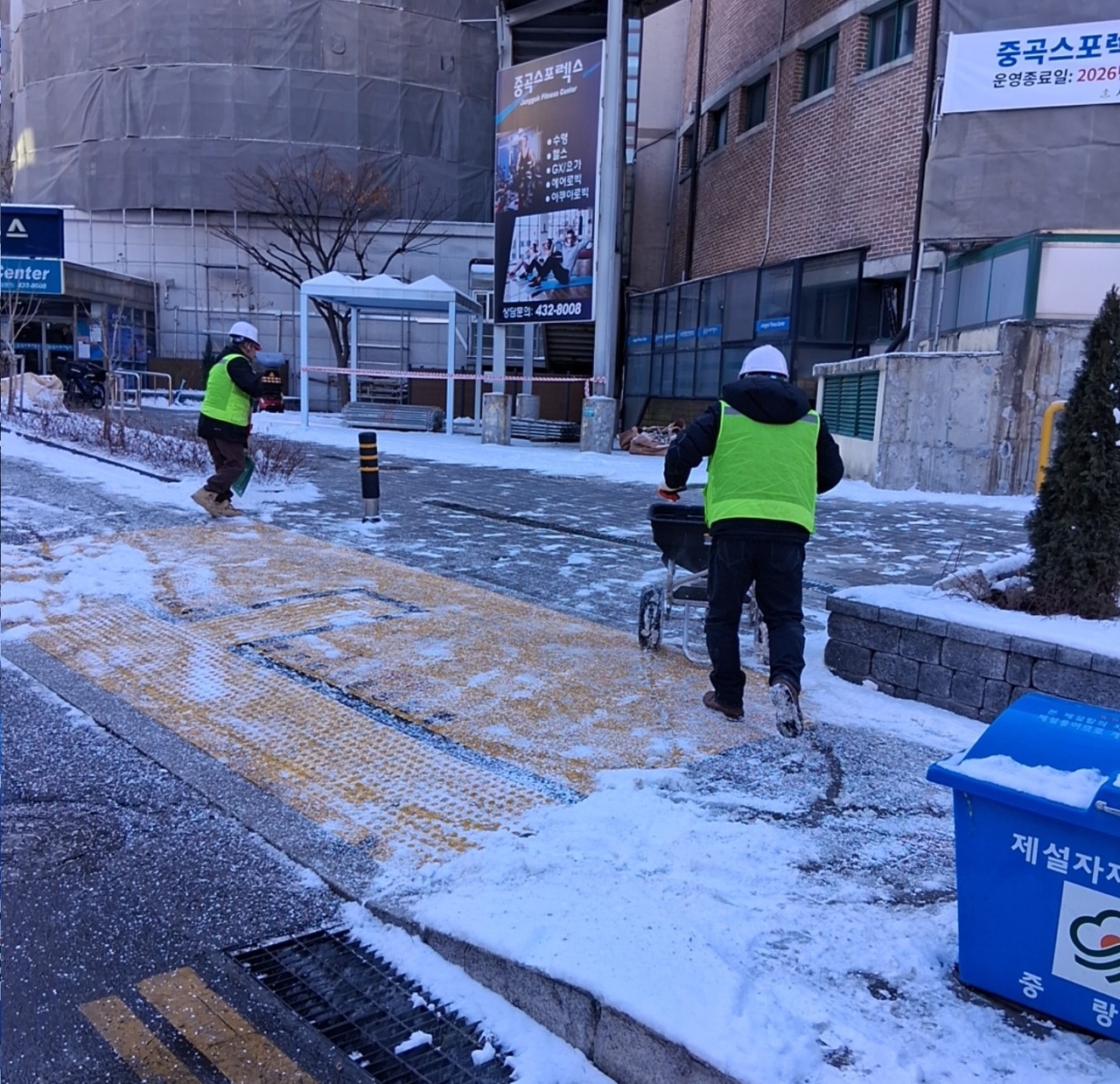
Jungnang-gu has become the first autonomous district in Seoul to conduct a comprehensive risk assessment covering the entire snow-removal process, establishing a safety framework to prevent accidents among field workers and other personnel involved in winter clearing operations.
The district said it analyzed potential hazards in snow-removal work and drew up tailored safety measures ahead of implementing its 2026–2027 winter snow-removal plan.
The assessment was driven by the recognition that ensuring the safety of workers and volunteers is just as important as clearing snow quickly during heavy snowfall. The district held a risk assessment review committee on Nov. 2 to systematically analyze hazards across all snow-removal activities and develop improvement measures.
The assessment covered four areas: snow-removal vehicle and equipment operations, loading and unloading of de-icing agents using excavators, manual clearing of pedestrian walkways, and the handling and storage of de-icing agents as well as emergency response. A total of 17 hazard factors were identified in the process.
Key safety measures include stationing guides during snow-removal vehicle reversals and turnarounds, managing vehicle routes, restricting access to moving parts of equipment such as spreaders and plow blades, and limiting workers from entering the operating radius of excavators. The district also plans to introduce an automatic de-icing agent cutting machine to minimize manual loading work.
Particular attention was paid to on-site hazards facing manual clearing participants — including a newly formed dedicated pedestrian-walkway clearing team operating this year, as well as volunteers and community disaster prevention corps members — with a focus on slip-and-fall risks on icy surfaces, cold-weather exposure and musculoskeletal strain. Safety protocols suited to field conditions were also established, covering the provision of cold-weather gear and protective equipment, pre-work safety briefings, and work stoppages in high-risk sections.
Before the improvement measures were applied, 13 of the 17 identified hazards were classified as moderate risk. Once the measures are implemented, all hazard factors are expected to be brought down to a low-risk rating. The district is targeting a reduction in the average risk score from 6.0 to 2.9 — a decrease of about 51.7 percent.
The district plans to incorporate the assessment findings into its snow-removal operations by strengthening pre-work equipment inspections and safety training, and by continuously monitoring whether field workers comply with safety protocols during snowfall.
"Winter snow-removal efforts must prioritize the safety of the workers and participants on the ground just as much as the speed of clearing," Jungnang-gu District Mayor Ryu Gyeong-gi said. "We will do our utmost to manage hazards across the entire snow-removal process in advance, so that both residents and workers can have a safe winter."
seouldream01@heraldcorp.com