![Han Byung-do, acting leader and floor leader of the Democratic Party of Korea, arrives at a Supreme Council meeting at the National Assembly on Wednesday. [Yonhap]](https://wimg.heraldcorp.com/news/cms/2026/07/08/rcv.YNA.20260708.PYH2026070803910001300_P1.jpg)
The Democratic Party of Korea's convention preparatory committee decided Wednesday to adopt a preferential voting system for the party leader election at the Aug. 17 national convention, but moved to hold additional discussions after some leadership candidates pushed back.
Chief spokesperson Kang Jun-hyeon made the announcement to reporters after the Supreme Council meeting at the National Assembly.
"The preparatory committee initially voted on and announced the preferential voting system, but some Supreme Council members have raised objections, so further discussion appears necessary," Kang said. "The points of disagreement, including legal interpretation, are set to be revisited at the preparatory committee meeting this afternoon."
The preparatory committee had decided Tuesday to determine the party leader through preferential voting rather than a runoff.
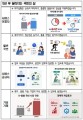
Under the preferential voting system, voters rank all candidates in order of preference. If no candidate wins a majority, the first-preference votes cast for lower-ranked candidates — those outside the top two — are redistributed to those voters' second choices to determine the final winner.
The Democratic Party's internal rules stipulate that preferential voting applies when there are three or more candidates in a primary election.
Some leadership contenders have objected to the plan, however.
Supreme Council member Lee Seong-yun, an ally of Jung Chung-rae, argued at the council meeting that the decision was "a violation of the party constitution and rules, and is null and void as an act beyond the committee's authority," adding that the system "is not suited to a party leader election conducted through regional voting."
Rep. Ko Min-jung, who announced her candidacy for party leader that day, said the preferential voting plan "once again creates a situation that is bound to draw suspicion of being unfair due to a lack of transparency."
sunpine@heraldcorp.com