
A combined K-food fair and hallyu expo held in Vietnam generated $33 million in contracts and memorandums of understanding, the government announced Saturday.
The Ministry of Agriculture, Food and Rural Affairs and the Ministry of Trade, Industry and Energy co-hosted the ASEAN K-Food Fair and the 2026 Hanoi Hallyu Expo from July 2 to 4 at the Hanoi National Convention Center, together with the Korea Agro-Fisheries and Food Trade Corporation and KOTRA.
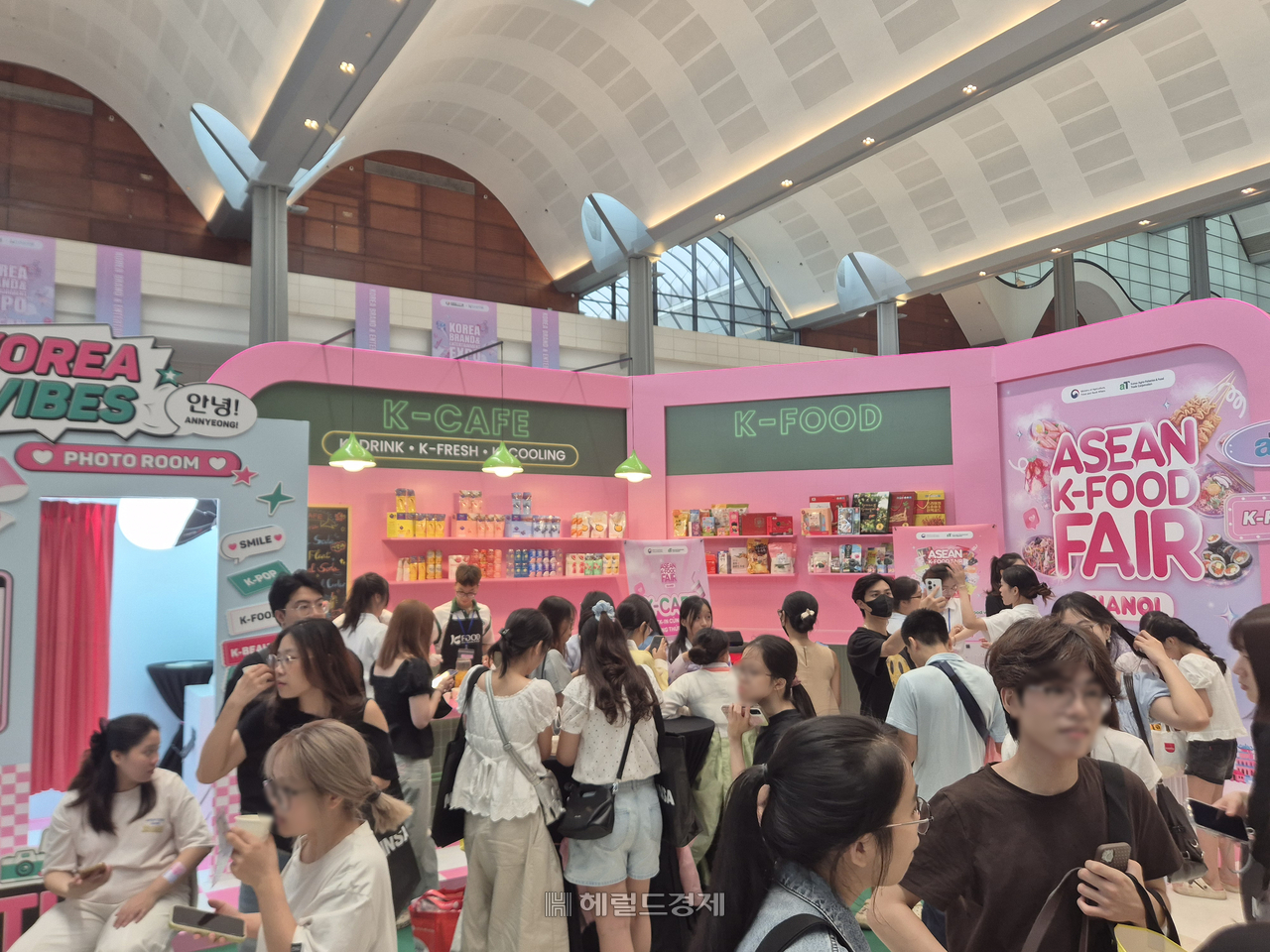
The events were designed to build on the expanded economic and cultural cooperation between the two countries following a South Korea-Vietnam summit in April, and to channel the global popularity of K-content into consumer goods exports including K-food and K-beauty. Organizers merged the previously separate K-Food Fair and Hallyu Expo into a single event, focusing on helping Korean consumer brands enter the ASEAN market by leveraging hallyu.
The program combined business-to-business export consultations with consumer-facing exhibitions and promotional events. A total of 107 South Korean companies in food, cosmetics, lifestyle goods and fashion held trade talks with more than 280 buyers from Vietnam and Southeast Asia, while products were displayed and sold through domestic and local distribution channels. QR codes were set up at each exhibition booth to allow visitors to place cross-border orders on the spot.
Contracts and MOUs signed at the events totaled $33 million — more than double the $15 million recorded at the 2022 Hanoi Hallyu Expo.
Hallyu-linked programming at the venue included performances by Winner and Fifty Fifty, a K-lifestyle talk show and K-beauty experience sessions. The K-Food Fair offered open-kitchen tastings, a kimchi-making experience and live chef shows to let visitors engage directly with Korean food culture and lifestyle.
Among ASEAN K-food strategic items in the street food category, spicy ramyun and frozen cup rice drew strong interest, while tteokbokki and ade-style beverages stood out in the halal food segment. The Ministry of Agriculture, Food and Rural Affairs said the "Han River ramyun" experience at a food-tech special pavilion and items such as sipwon-ppang (a coin-shaped bread) and cream glutinous rice cake at the "Global NEXT K-Food" pavilion also drew an enthusiastic response.
Vietnam is considered a key strategic market for K-food exports. Last year, South Korea's agricultural and food exports to Vietnam reached approximately $570 million, accounting for 5.5 percent of total agricultural and food exports. Shipments of ramyun, sauces and beverages have been growing, as have exports of fresh produce such as strawberries.
Kang Gam-chan, director general for trade and investment at the Ministry of Trade, Industry and Energy, said hallyu is "the most powerful soft power captivating consumers around the world and driving our consumer goods exports." He added that the ministry would work to expand overseas market access for consumer goods including K-food and K-beauty and provide close support to resolve on-the-ground difficulties such as customs clearance and certification.
Jeong Gyeong-seok, director general for food industry policy at the Ministry of Agriculture, Food and Rural Affairs, said ASEAN "is a core market accounting for about 18.2 percent of our total agricultural and food exports." He added that the ministry would continue to actively support Korean agricultural and food exporters seeking to expand into ASEAN through information services, consulting, logistics and marketing, building on the strong interest shown by local consumers and buyers at the expo.
The government said it plans to continue expanding hallyu-linked export marketing to help Korean companies diversify their export markets and enter emerging markets.
y2k@heraldcorp.com




