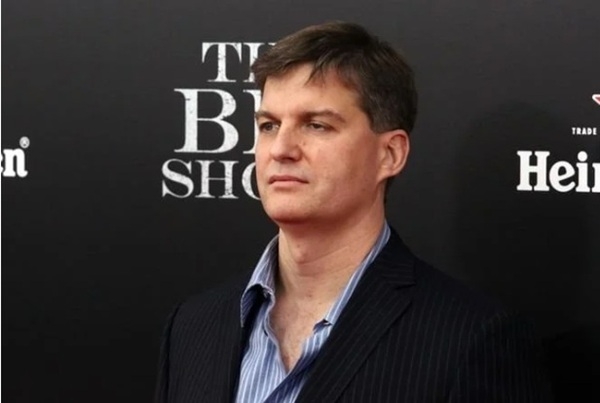
Michael Burry, the Wall Street investor who inspired the film "The Big Short," has disclosed short positions in Nvidia and other major semiconductor-related stocks, interpreting South Korean chipmakers' large-scale investment plans as a signal that the AI investment cycle has peaked.
According to CNBC and Investing.com, Burry said in a Substack post to investors on Monday (local time) that he had shorted Nvidia, Applied Materials, Tesla, the iShares Semiconductor ETF (SOXX) and Caterpillar.
He singled out South Korean memory chip companies' new investment plans as a late-stage signal for the AI rally. "The direct catalyst for Thursday's rally was the large-scale investment plan announced in Korea," Burry wrote, "but I see this as the beginning of the end. It's only a matter of time."
The remarks appear to target the surge in semiconductor equipment stocks on US markets after Samsung Electronics and SK hynix announced plans to build four new chip factories in the Gwangju area and the broader southwestern region, representing a combined investment of 800 trillion won ($515 billion).
The Philadelphia Semiconductor Index rose 3.92% on Thursday on the New York Stock Exchange. AMD gained 6.86%, Intel 7.23%, Applied Materials 6.00%, KLA 5.29%, ASML's American depositary receipts 5.93% and Nvidia 1.27%.
Burry also added Caterpillar to his short list for the first time, describing it as a beneficiary of the AI investment boom. "Caterpillar was a stock that gave me good returns on the long side in the past, but this time it was the first one that caught my eye," he said, adding that the current share price was excessively high. He also noted that Caterpillar's price-to-sales ratio had soared to its highest level in roughly 30 years.
Caterpillar, the world's largest construction and mining equipment maker, is widely regarded as a key infrastructure beneficiary of the data center construction boom. As new data centers have multiplied, demand for civil engineering work and power infrastructure has surged, lifting earnings expectations for the maker of excavators, bulldozers and generators.
Reflecting those expectations, Caterpillar's share price surged 86% in the first half of this year alone, ranking among the top performers in the S&P 500.
Burry also warned of stretched valuations across the semiconductor sector. He noted that the Philadelphia Semiconductor Index was trading roughly 65% above its 200-day moving average — "a divergence not seen since the dot-com bubble of 2000," he said.
He also raised the phenomenon of "window dressing" that tends to appear at the end of each quarter. "Funds tend to dress up their portfolios at quarter-end by holding stocks that have risen sharply and trimming those that have underperformed," Burry wrote. "The end of June is especially significant as it comes ahead of year-end fundraising, making the effect even more pronounced."
"But this end of June is different," he added. "Window dressing has become almost meaningless at this point. I am making trades on Thursday that go against the market's major trend."
The short disclosure came immediately after the Philadelphia Semiconductor Index surged 101% in the first half of the year and 88% in the second quarter alone, posting a record quarterly return. While expectations for continued AI investment have kept pushing chip stocks higher, Burry appears to have concluded that the overheating phase is nearing its end.
Burry rose to prominence by predicting the 2008 global financial crisis and has consistently warned in recent years about overvaluation and excessive concentration in AI-related assets.
His short-selling strategy has not always paid off, however. While he called the financial crisis correctly, subsequent bets — including a short on Tesla and a large put-options position against US equities in 2023 — failed to deliver the expected returns as markets rebounded.
By contrast, his short positions against AI-related stocks such as Nvidia and Palantir last year were credited with short-term gains during a correction in AI shares.
Some market analysts say Burry's latest bet warrants a distinction between direction and timing. He has often moved to short overheated markets relatively early, so even if the AI investment frenzy does eventually unwind, whether he will also get the near-term price moves exactly right remains to be seen.
rainbow@heraldcorp.com