Nominal wages rose 1.5% but consumer prices climbed 2.6%, squeezing purchasing power
Real wages fell 1.0% year-on-year in April, reversing a brief return to positive growth in March
Employment rose by about 202,000 workers and job vacancies turned positive, yet economic sentiment remains cold
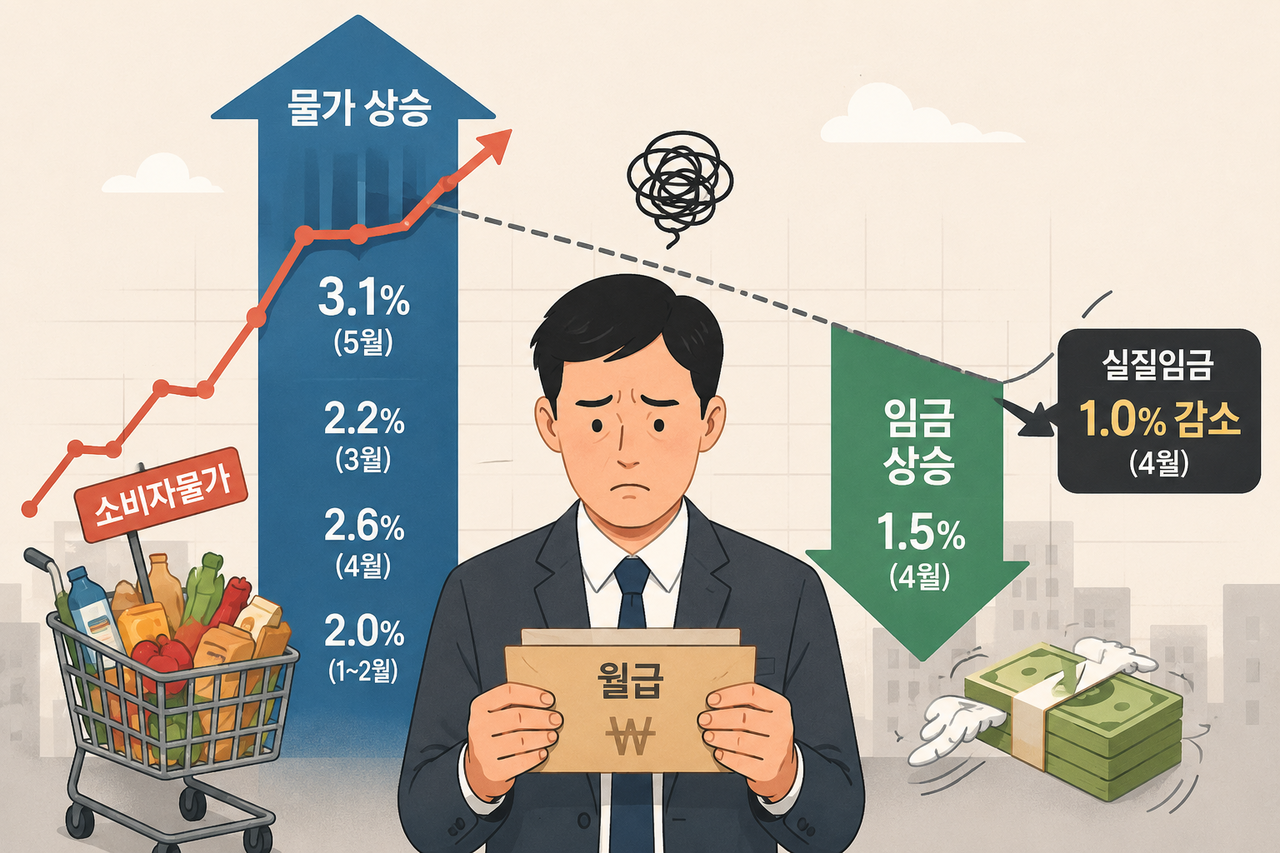
Surging prices have eaten into wage gains, pushing workers' real wages back into negative territory. Nominal wages rose from a year earlier but failed to keep pace with inflation, leaving actual purchasing power weaker. With consumer price inflation jumping to 3 percent in May, the decline in real wages could continue.
According to the Ministry of Employment and Labor's business labor force survey for May 2026, released Tuesday, the average monthly nominal wage per worker at establishments with one or more full-time employees stood at 4.031 million won ($2,610) in April, up 1.5 percent, or 61,000 won, from the same month last year. However, real wages — adjusted for inflation — fell to 3.377 million won, down 1.0 percent, or 35,000 won, from a year earlier.
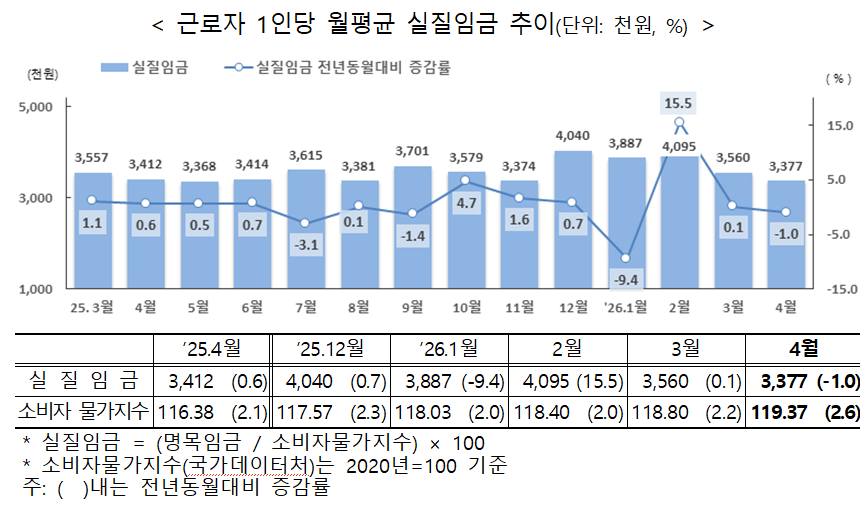
The return to negative real wage growth reflects a renewed acceleration in consumer prices.
The consumer price inflation rate eased from 2.3 percent in December last year to 2.0 percent in January and February, but climbed again to 2.2 percent in March and 2.6 percent in April. It then hit 3.1 percent in May, rising 0.5 percentage point within a month. With nominal wage growth running below the inflation rate, pay increases have in effect been wiped out.
Real wages had barely held in positive territory through March, edging up 0.1 percent year-on-year, but turned negative again in April.
Employment continued to grow at a modest pace. The number of workers at establishments with one or more full-time employees reached about 20.701 million in May, up about 202,000, or 1.0 percent, from the same month last year. Full-time workers numbered about 17.285 million, an increase of 61,000, or 0.4 percent, while temporary and daily workers rose by 132,000, or 6.9 percent, to about 2.052 million — a larger gain in percentage terms.
Job vacancies, an indicator of corporate hiring demand, rose 4.2 percent from a year earlier to 153,000, turning positive. However, the vacancy rate held steady at 0.8 percent, unchanged from the previous year.
Working hours declined. The average monthly hours worked per employee in April came to 163.8 hours, down 1.7 hours, or 1.0 percent, from the same month last year. Full-time workers averaged 172.5 hours, down 1.0 percent, while temporary and daily workers averaged 91.1 hours, up 4.4 percent.
fact0514@heraldcorp.com