Doubts grow over whether promised government support will deliver fresh funding for business attraction and advanced industry
Concerns are mounting that the central government may not deliver the full 20 trillion won ($13 billion) in fiscal support it pledged for the administrative merger of South Jeolla Province and Gwangju, with residents bracing for a sense of betrayal. Reports that the package would count public institution relocations and existing government-subsidized projects — rather than fresh national funding — toward the total have drawn sharp criticism that the promise amounts to little more than a shell game. If the 20 trillion won is disbursed in ways that differ from original expectations, plans to attract businesses and nurture advanced industries could be left without the seed money they depend on.
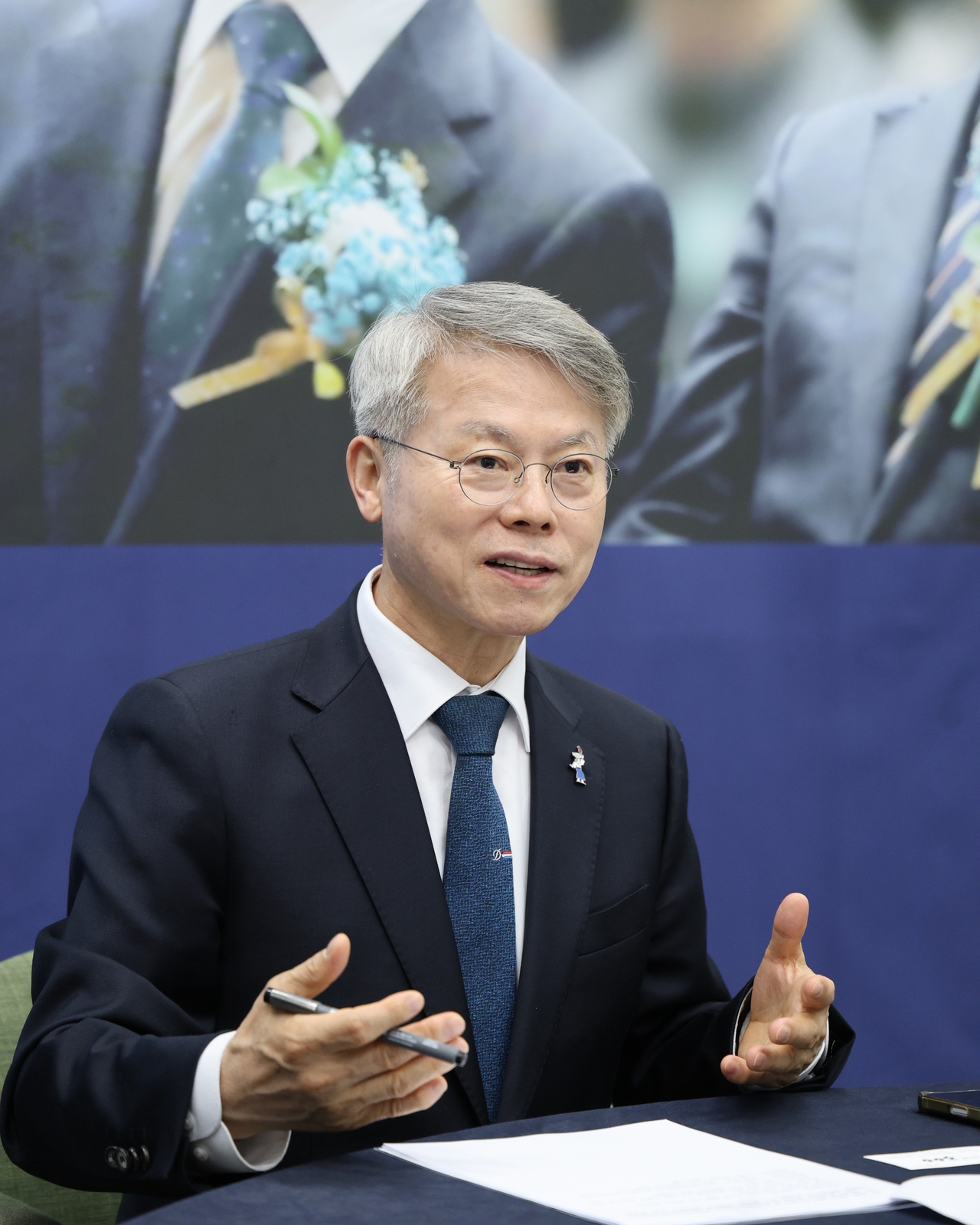
Min Hyeong-bae, mayor-elect of the South Jeolla-Gwangju Special Metropolitan City, said Thursday morning at a public dialogue event at a labor-management co-growth support center in Gwangsan-gu, Gwangju, that he does not expect the full 20 trillion won in government support to come through as promised.
"What will actually be added on top of existing budgets will fall short," Min said. The government's original announcement had described annual support of "up to 5 trillion won" — a phrase he said contained a trap. "There is a catch in the word 'up to,'" he said.
Min said a related meeting took place Wednesday evening, attended by the presidential policy chief and the minister of the Ministry of Planning and Budget, at which he raised the issue of fiscal support. Officials responded by telling him that a support plan for the integrated city was being finalized and would be explained at an appropriate time, but reminded him that "the government has repeatedly said a maximum of 5 trillion won, and that naturally includes the transfer of institutions and projects."
Min said the officials' message was that the central government had never committed to providing 20 trillion won exclusively from the national treasury. "This means there are areas where we need to respond together," he added.
During the push to merge South Jeolla Province and Gwangju, the government announced in January that it would provide "unprecedented fiscal support of up to 5 trillion won per year — up to 20 trillion won over four years — for the integrated special city, and grant the merging local governments clear incentives along with corresponding autonomy and accountability."
The government said the integration support package would pursue a redistribution of national resources, including the creation of a new administrative integration grant and an administrative integration support fund.
The government subsequently formed a joint task force among relevant ministries to work out the details of the fiscal support plan.
Communities in South Jeolla Province and Gwangju have consistently demanded that the integration fiscal incentive take the form of net new funding — fresh cash from the national treasury, not a repackaging of existing budget lines.
Min himself had called for national treasury support, pledging to deploy the 20 trillion won incentive as "seed money for future industries."
His remarks are now widely read as confirming fears that the government, struggling to secure the necessary funds, intends to meet the pledge partly by folding in existing national projects and public institution relocations rather than providing genuinely new money.
Min had envisioned channeling the 20 trillion won through an investment corporation to attract businesses, develop advanced industrial complexes and build strategic industry infrastructure. That plan now appears to be running into trouble from the outset.
A Gwangju city official said the government may explore various ways to economize on the budget, but any approach must be one that residents can accept. "We need to find a legally binding mechanism — such as revising tax laws — that can guarantee the budget support," the official said.
sij@heraldcorp.com