Provincial fisheries institute stocks Seocheon, Hongseong and Taean coastal waters
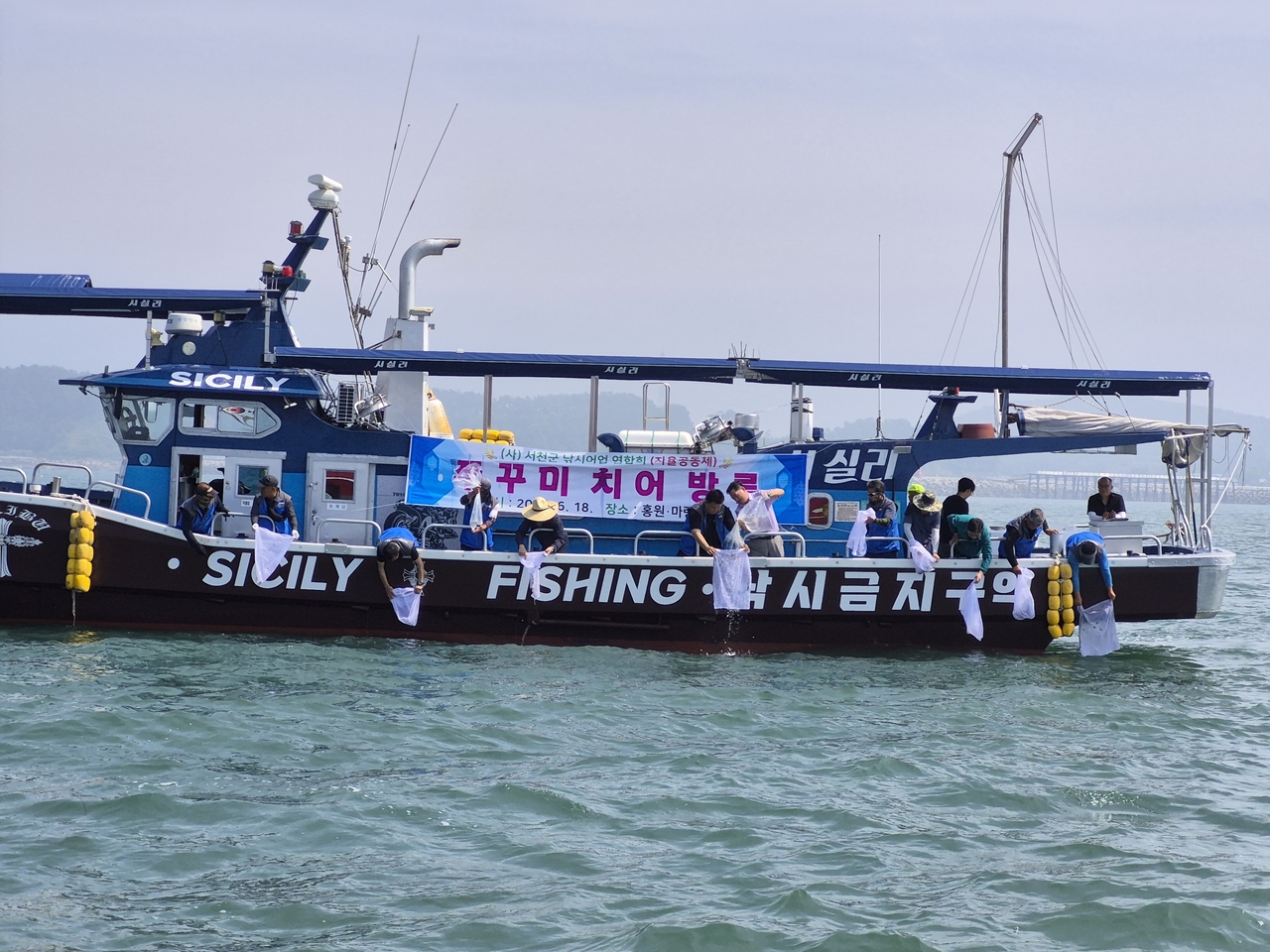
South Chungcheong Province has launched a webfoot octopus stocking project aimed at restoring marine resources and boosting income for local fishers.
The South Chungcheong Provincial Fisheries Resources Research Institute announced Wednesday that it will release a total of 600,000 juvenile webfoot octopus in stages along the coasts of Seocheon-gun, Hongseong-gun and Taean through the end of this month.
The institute had already released about 400,000 juvenile octopus — in waters near Seocheon-gun on June 18 and near Hongseong-gun on Wednesday.
The juveniles released Wednesday were bred by inducing spawning from adult octopus caught off Boryeong in April and weigh approximately 0.05 grams each.
The webfoot octopus is a high-value marine species representative of the West Sea coast, known for its rapid growth rate and short lifespan of about one year.
The institute has been working to restore the species' population and improve fishing productivity through sustained seed production and release programs.
A key feature of this year's release was the use of a custom-designed release net developed in-house to improve the survival rate of juvenile octopus. The net was designed with the sucker-bearing tentacles of cephalopods in mind, addressing a problem with the previous oxygen-filled plastic bag method in which individual octopus would cling together, enabling faster release into the water.
By reducing the time juveniles are exposed to the external environment, the institute expects the new method to improve post-release survival rates.
Following Wednesday's release in Hongseong waters, the institute plans to carry out an additional release in Taean waters later this month.
"We will continue to manage the entire process from seed production to release, and work to restore key marine species that directly affect fishers' livelihoods," an institute official said. "We will also expand stocking of economically viable species suited to the West Sea coast — such as cuttlefish, blood clams and Manila clams — and build a sustainable foundation for the fishing industry."
kwonhl@heraldcorp.com