Survey by workplace harassment watchdog finds nearly 7 in 10 office workers recognize platform workers' dependence on companies; 77.4% of platform workers call for legal protections
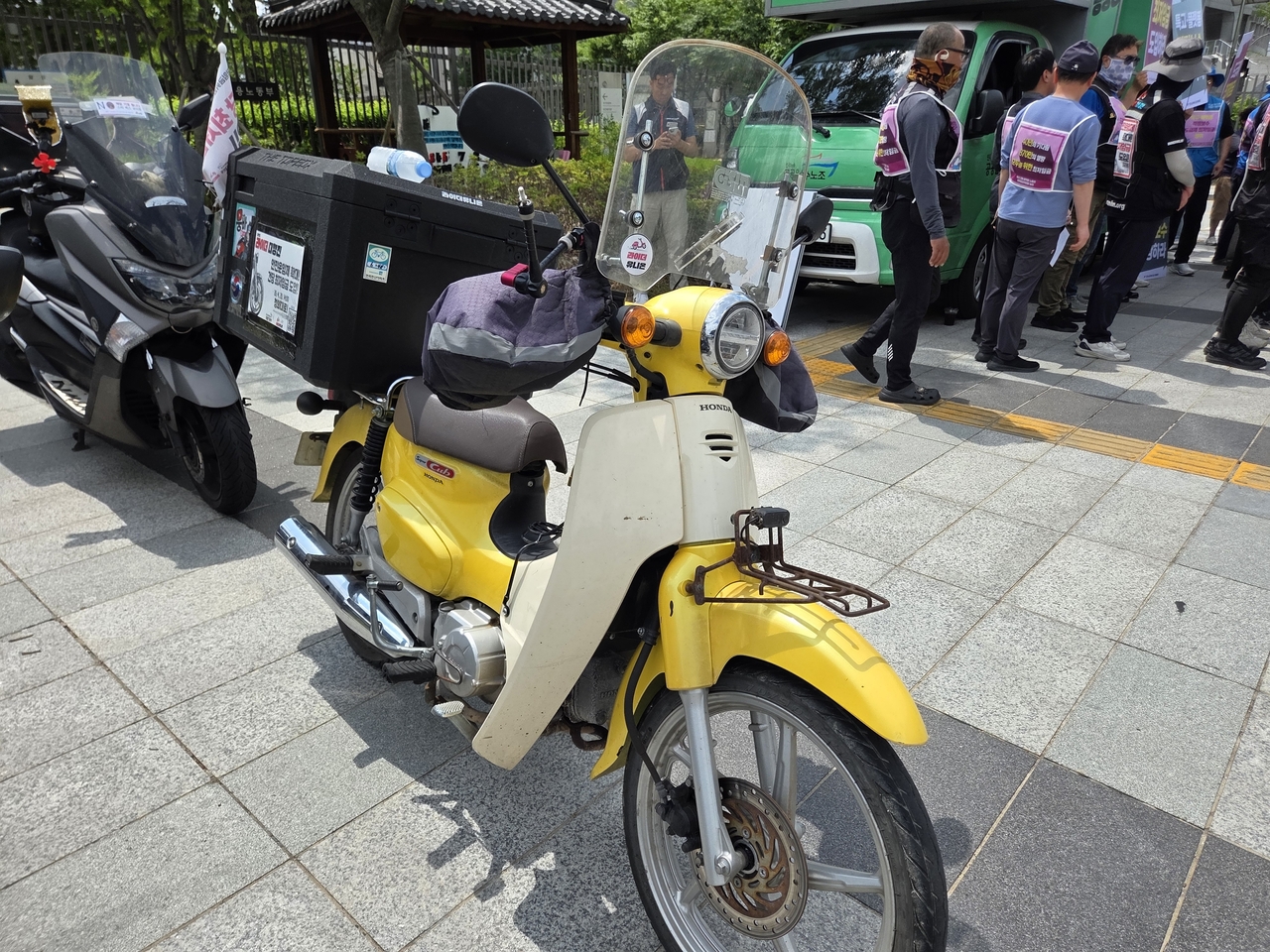
Social awareness is growing that platform workers — including delivery riders, designated drivers and domestic workers — should be protected as employees under the Labor Standards Act.
Nearly seven in 10 office workers said they believe platform workers are subordinate to the companies they work for, and a large majority supported establishing a system to guarantee their labor rights.
According to workplace harassment watchdog Jikjang Gapjil 119, a survey of 1,000 office workers nationwide conducted by pollster Global Research from Feb. 2 to Feb. 8 found that 66.0 percent of respondents agreed that "platform company workers in areas such as dawn delivery, ride-hailing and domestic services are subordinate to the companies they work for."
In addition, 77.4 percent of respondents said a separate system is needed to guarantee the labor rights of platform workers. Jikjang Gapjil 119 cited the findings as grounds for calling for an overhaul of laws and regulations to better protect platform workers.
Platform workers call for protection against contract termination, unpaid wages
Platform workers and freelancers themselves also reported gaps in protection under the current legal framework.
In a separate survey conducted by the same polling firm from March 23 to April 8, Jikjang Gapjil 119 polled 500 freelancers, special-employment workers and platform workers, and found an overwhelming majority demanded that basic rights under the Labor Standards Act be extended to them.
Specifically, high proportions of respondents called for the right to seek redress against unfair contract termination (86.0 percent) and the right to recover unpaid wages or fees (85.0 percent). The results reflect the reality that workers operating under outsourcing or freelance contracts — rather than formal employment contracts — often lack adequate legal recourse when faced with dismissal or unpaid wages.
'Protect workers based on substance, not labels'
Jikjang Gapjil 119 said the current system falls short because platform workers are excluded from labor law protections simply because they are classified on paper as freelancers or sole proprietors.
Shin Hana, an attorney at Jikjang Gapjil 119, said it "can no longer be justified to leave workers who are in a substantive relationship of use and subordination outside the protection of the law merely because their contracts carry the label of freelancer or outsourcing."
She added that "the definition of worker under the Labor Standards Act must be expanded so that platform workers can also be guaranteed basic labor rights."
Platform workers are those who receive work through online food delivery apps, ride-hailing apps and online brokerage platforms. However, legal rulings on whether such workers qualify as employees under the current Labor Standards Act have been inconsistent, and discussions between labor groups and the platform industry over regulatory reform are ongoing.
fact0514@heraldcorp.com