
Deal struck at Korea-EU summit opens door to border-level crackdown on drugs and terrorism
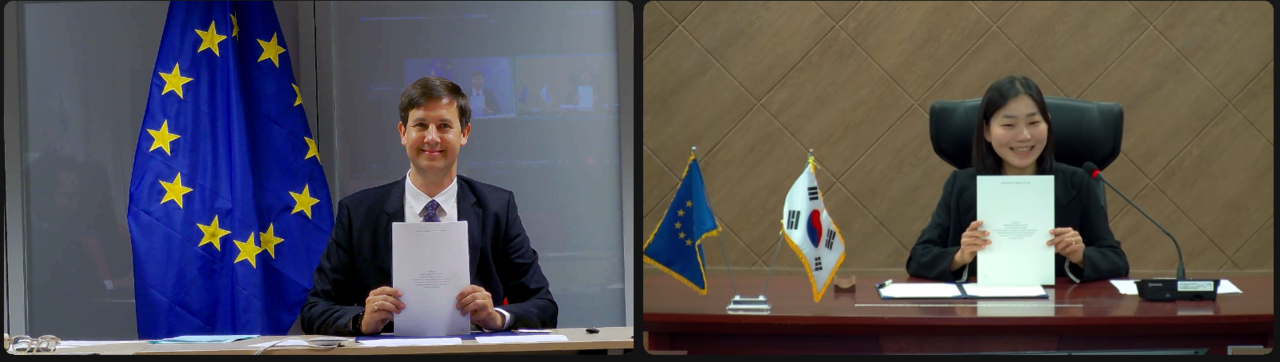
South Korea has completed negotiations with the EU on a mutual Passenger Name Record sharing arrangement, following similar deals with the United States, Canada and Australia, opening the way for border-level action against drug trafficking and terrorism.
The Korea Customs Service announced Monday that it concluded the Korea-EU Passenger Name Record (PNR) Agreement in Brussels on June 10 local time, as President Lee Jae-myung referenced in a joint press statement issued at the Korea-EU summit.
South Korea is the first Asian country to conclude a PNR agreement with the EU. Only a handful of nations — including the United States, Canada and Australia — have comparable arrangements with the bloc, making the deal a sign that South Korea has built a transnational crime response framework on par with advanced economies.
A Passenger Name Record is generated when a traveler books and issues an airline ticket. It contains details such as the ticketing date, travel itinerary, co-passengers and baggage information — data essential for screening high-risk travelers at the border before they arrive.
Some 60 countries, including the United States, EU member states, Australia and Japan, already use PNR data to combat serious crimes such as drug trafficking and terrorism. South Korea has collected PNR data from 92 airlines operating domestic routes since 2006.
However, EU data protection rules allow EU-based carriers to submit PNR data only to countries that have concluded a dedicated agreement with the bloc, leaving South Korea unable to obtain records from EU-flag airlines.
The Korea Customs Service reached an agreement with the European Commission and the EU Embassy in Seoul last year to launch formal negotiations. After multiple rounds of talks, the two sides agreed on the text of the agreement in April and completed the initialing process in May.
Once the agreement is formally signed and enters into force, it will establish the legal basis for South Korea to obtain PNR data from EU-flag carriers, enabling more effective responses to the growing smuggling of drugs, firearms and other dangerous goods through travelers.
At the virtual initialing ceremony on June 4, the Korea Customs Service and the European Commission agreed that the deal represents a significant achievement for border security on both sides. They committed to completing the remaining steps — including formal signing — without delay, targeting entry into force in the first half of 2027. Both sides also plan to strengthen cooperation on preventing transnational crimes such as drug trafficking and terrorism.
"This agreement is an important milestone for enhancing our capacity to counter transnational crime — by obtaining PNR data in advance, we can sharpen the screening of high-risk individuals and elevate our overall risk management," said Jeong Ji-eun, director of the Korea Customs Service's Risk Management Center. "The Korea Customs Service will continue to do its utmost to thoroughly protect the safety and lives of the Korean people."
kwonhl@heraldcorp.com



