New system automates harmful cyanobacteria counts, slashing analysis time by 75 percent
The National Institute of Environmental Research, under the Ministry of Climate, Environment and Energy, announced Monday it has developed the country's first AI-based technology capable of automatically analyzing harmful cyanobacteria cell counts.
Under the current algae alert system, analysts must manually examine grid sections inside a microscope chamber one by one, adjusting focus with each movement and counting cells by eye. The process is time-consuming and prone to variability depending on the analyst's skill level.
Developed in a public-private partnership with measurement and analysis equipment manufacturer iSolutions, the new technology automatically photographs grid images inside the microscope chamber and uses AI to identify algae species and calculate cell counts.
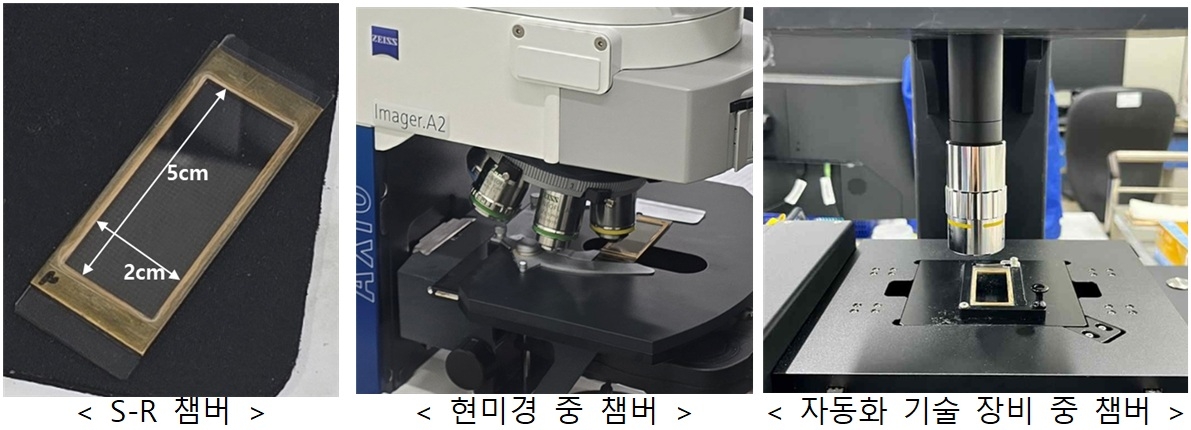
The technology is considered particularly practical because it applies the existing microscope counting method directly, allowing immediate field deployment without any changes to the current regulatory regime.
Researchers assembled 15,080 high-resolution images of harmful cyanobacteria and built a large-scale, high-quality training dataset verified by algae alert system specialists.
The system cuts analysis time from four hours to roughly one hour and minimizes discrepancies caused by differences in analyst proficiency, delivering more objective results.
This year, the institute plans to validate the technology by comparing its automated results against those from conventional manual microscope analysis at three algae alert monitoring sites on Daecheong Lake — Hoenam, Chudong and Munui.
"We have developed an algae analysis automation technology that has long been called for, dramatically cutting the time needed to analyze harmful cyanobacteria," said Kim Gyeong-hyeon, head of the institute's Water Environment Research Division. "This technology will serve as an important milestone in accelerating the response to algal blooms and raising the level of scientific algae management."
thlee@heraldcorp.com