Ministry of Land, Infrastructure and Transport selects cities through 2026 smart city competition; Busan and Seongnam named specialized smart city complex sites
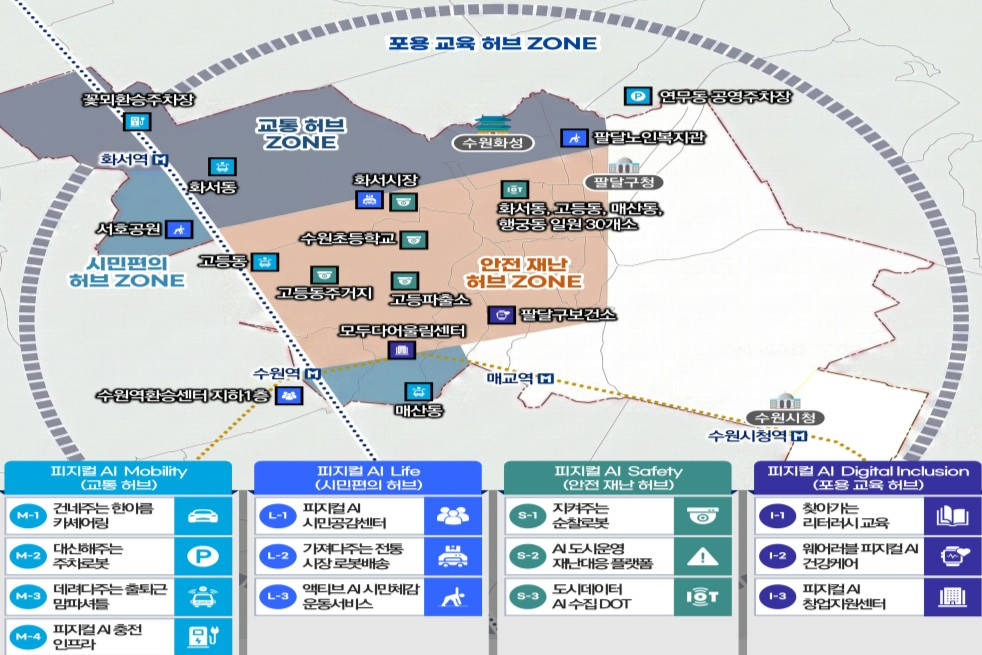
Suwon has been selected to lead a "hub-type smart city development project" aimed at building a smart mobility system featuring car-sharing and parking robots. Busan and Seongnam in Gyeonggi Province were each chosen as sites for the "smart city specialized complex development project."
The Ministry of Land, Infrastructure and Transport announced Thursday it had selected the cities through its "2026 Smart City Development Project" competition. The smart city development project is a three-year initiative supporting the growth of the smart city industry through AI and smart technology, with applications opening in March.
As the hub-type designee, Suwon plans to build citizen-facing smart city services based on physical AI, support corporate demonstration projects, and pursue data-driven urban innovation. The city also aims to establish a public-private governance framework and an AI industry ecosystem to realize a sustainable "Suwon-style smart growth model."
The plan includes building a smart mobility system through car-sharing and parking robots, strengthening everyday convenience and safety through delivery robots and patrol robots, and providing outreach digital literacy education for underserved populations.
Suwon will receive up to 16 billion won (about $10.5 million) in government funding over the next three years.
Busan was selected for the smart city specialized complex project, with the city targeting what it calls an industry-nurturing AX demonstration city — using urban data to support AI-based city management and provide companies with space to test services in a real urban environment. Busan plans to develop the Centum City area in Haeundae-gu into an open AI urban demonstration platform.
The city will streamline urban operations through AI agent-based integrated control and robot network-powered intelligent safety monitoring, while anonymizing and structuring data collected across the city so companies can use it to develop and test new services.
Seongnam in Gyeonggi Province plans to build a medically validated health management support model for elderly residents and develop the area around Pangyo Technovalley and Bundang Seoul National University Hospital into a life-mobility specialized complex using next-generation mobility solutions.
Busan and Seongnam will each receive 8 billion won in government funding over three years.
The ministry also selected South Gyeongsang Province and Taean-gun in South Chungcheong Province through its "2026 Smart City Data Hub Pilot Solution Discovery Project" competition. Each will receive 1 billion won in government funding over one year.
South Gyeongsang Province plans to build "Gyeongnam Moduda," a wide-area shared platform that links tourist movement and stay data to boost the resident population and revitalize the local economy. Taean-gun will develop a data hub-based AI coastal safety management system and create "Taean Ansimhae," a marine safety smart operations support solution designed for nationwide rollout.
"The project proposals submitted at the competition stage are not the final product, so the process of refining specific designs and operational models suited to each region will be even more important going forward," said Lee Gi-bong, the ministry's urban policy director. "The government plans to maintain open communication and provide ongoing support so that local governments can take the lead in building solid operational frameworks."
smh@heraldcorp.com