Introduced in the 1950s, the chamoe has been refined through decades of Korean breeding while Japan shifted its focus to melons
"Koreans live on chamoe in summer. They eat it while walking down the street, and squat by the roadside to eat it. Of all the foods Koreans enjoy most throughout the year, chamoe is what they devour with the greatest ferocity."
The passage comes from "Joseon Manhwa," a Japanese traveler's account of life on the Korean Peninsula. Like the wisdom of generations past, chamoe — the Korean oriental melon — is well suited to beating the summer heat. The variety Koreans eat today is itself a product of that enduring affection: unlike neighboring countries, South Korea has consistently invested in developing new chamoe cultivars.
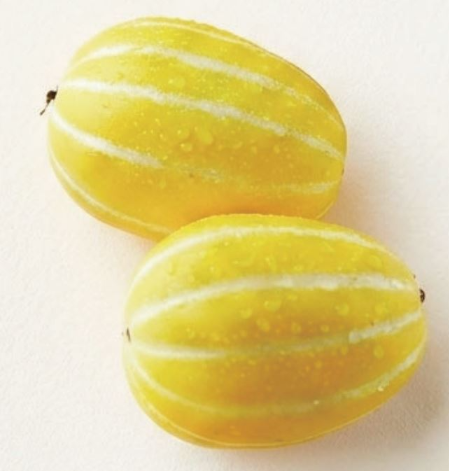
According to the Rural Development Administration, as recently as the 1920s the Korean Peninsula was home to a remarkably diverse array of chamoe varieties — the mottled "frog melon," the dark "ink melon," the red-fleshed "persimmon melon" and the "watermelon melon," among others. Of these, the yellow chamoe that dominates the market today traces its lineage to a Japanese cultivar called "Euncheon," introduced in 1957.
Commercial cultivation of Euncheon began in Seongju, North Gyeongsang Province in 1970, and by 1985 breeders had developed "Geumsaragieuncheon" — a refined variety with better shelf life, higher sugar content and a crisper texture. It remains the foundation of modern Korean chamoe cultivation.
Through continuous research, South Korea has systematically improved the fruit's sweetness, appearance and storability. That legacy is why English speakers now call it the "Korean melon." Among all melon-family cultivars, the Korean chamoe is a domestically developed variety regarded as genetically distinct, with South Korea as both its primary producer and consumer.
Japan, by contrast, lost the chamoe as it turned its attention to melon cultivation. After the Prince melon arrived in Japan in the 1960s, chamoe farming there declined sharply, and today only a handful of growers still cultivate it.
After a long history, chamoe has firmly established itself as a flagship "K-fruit." In season from June through July, it is rich in nutrients that quench thirst and prevent dehydration, with a water content of roughly 90 percent. It is also high in potassium — 394 milligrams per 100 grams, according to the Ministry of Food and Drug Safety, surpassing the banana (355 milligrams), long regarded as a potassium-rich food.
Chamoe is also one of the richest dietary sources of folate. A 2010 report by the North Gyeongsang Province Agricultural Research and Extension Services found that chamoe contained more folate than any other major domestic fruit. A single chamoe weighing 400 grams provides about 530 micrograms of folate — exceeding the 500-microgram daily recommended intake for pregnant women. "Chamoe contains more than twice the folate of oranges, which are considered a leading folate source in the United States," the researchers said, adding that the fruit is nutritionally beneficial not only for pregnant women but for the general public.
Most of that folate is concentrated in the placenta — the seed-bearing inner cavity. Vitamin C levels are also highest in that same section. Eating chamoe whole, including the seeds and skin, is the healthiest approach: a 2009 paper from Kyungpook National University, published in the Journal of Bio-Environment Control, found that polyphenol antioxidants are most abundant in the peel.
gorgeous@heraldcorp.com