Keynote address at KR founding anniversary seminar
'Clinging to current methods risks same fate as Japan,' CEO says
Shipbuilding sector can leap straight to copilot, autonomous-operation stage
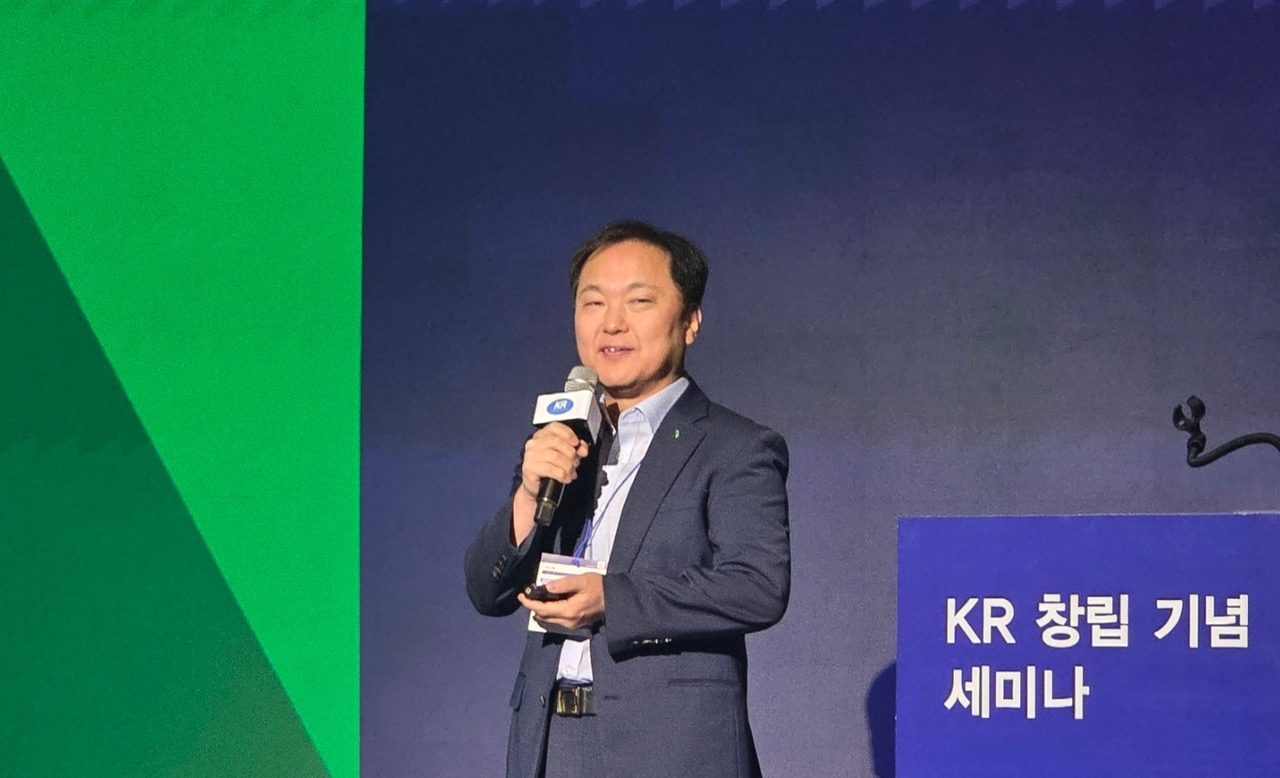
"The era of easily finding unskilled labor is over, driven by a sharp population decline and rising education levels. If nothing changes, South Korea's shipbuilding industry will hit a wall within five years and face extinction within ten. We must urgently pursue AI- and platform-driven production innovation to keep pace with the structural shifts in our workforce."
Kim Hyeong-gwan, president of HD Korea Shipbuilding & Offshore Engineering, delivered those remarks Thursday in a keynote address at the Korean Register founding anniversary seminar at Four Seasons Hotel Seoul. Speaking on the theme "HD Hyundai's New Voyage in the AI Era," Kim diagnosed the demographic cliff confronting the shipbuilding sector and called for fundamental production reform through automation and AI transformation.
Labor crunch deepens as population shrinks, workforce ages
Kim pointed to a falling domestic birth rate and a college enrollment rate approaching 80 percent as evidence of rapid credential inflation, warning that the pipeline of young workers entering regional manufacturing is dangerously thin. He said the retirement of the first and second baby boom generations — expected to be complete within seven to eight years — would leave a workforce gap on the shop floor that cannot be filled by conventional means.
He also cited the acute labor shortages that followed the post-COVID-19 order recovery, when daily wages for undocumented workers surged to 240,000 won (about $158) as yards scrambled for hands. "We have become a country where unskilled labor is simply no longer available," Kim said. He drew a direct parallel with Japan, which lost its dominance in LNG carrier construction roughly 30 years ago because of the same manpower problem. "If Korea's shipbuilding industry clings to its current methods, it could disappear within a decade," he warned.
Kim also expressed concern that price competition with China — which commands four to five times Korea's order volume, backed by massive state support and expanding construction capacity — is in effect unwinnable.
Unified platform and FOS integration accelerate 'AI shipyard' push
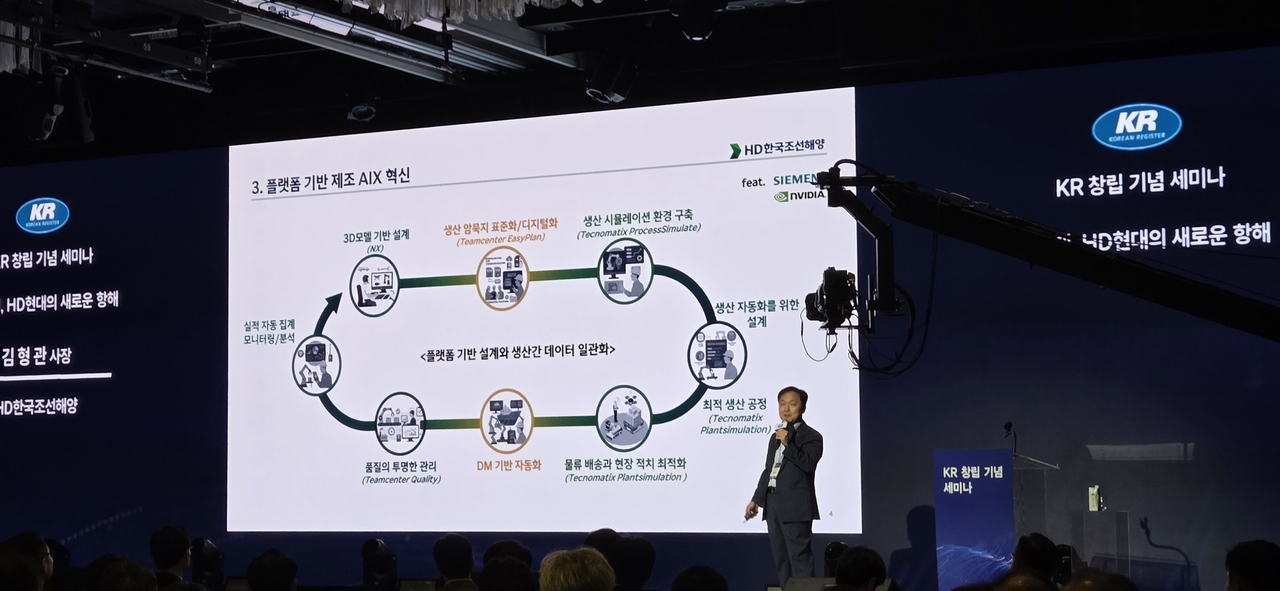
Kim proposed "single-platform production innovation" and automation as the twin solutions to the crisis — framing them not merely as a substitute for scarce labor but as an essential tool for bridging the skills gap among entry-level and foreign workers.
To that end, HD Hyundai Group is working with Siemens to build a shipbuilding-specific system that connects all data — from design and PLM (product lifecycle management) through digital manufacturing and post-delivery maintenance — on a single source of truth platform. The core goal is to move beyond the fragmented, drawing-centric analog workflow and create an environment where both vessels and factory conditions can be built and simulated digitally through digital twins.
Kim also argued that because South Korea holds global leadership in shipbuilding, the industry is well positioned to leverage cutting-edge technology from major tech companies such as Microsoft, Google and Nvidia through direct open innovation. Unlike other industries still limited to partial simulation, he said, "shipbuilding can leap straight to the copilot and autonomous-operation stage."
Physical AI takes hold on the shop floor, pointing toward a sustainable industry
Tangible results from AI adoption are already emerging on the ground. According to a video Kim shared during the address, HD Hyundai Mipo has built what it says is the world's first AI-based autonomous manufacturing system for "lugs" — a critical shipbuilding component — combining 2D image-based AI vision technology with digital twins. The system has cut processing time, significantly boosted output and improved workplace safety.
Kim said HD Hyundai aims to develop its own Software Defined Vessel technology — which defines a ship through software — to differentiate itself from China and secure the industry's long-term viability. "We will proactively respond to demographic change through a next-generation shipyard that verifies productivity in advance on a computer and optimizes processes on a platform basis," he said. "Physical AI and humanoid robots are also emerging as options, and we will do our utmost to ensure the shipbuilding industry can address its labor challenges and serve as a pillar of the maritime sector."

keg@heraldcorp.com