US production capacity to double, with further expansion under review
Tariff headwinds sharpen competitive edge for local manufacturers
US subsidiary sales seen reaching 1.5 trillion won next year
Overhead lines, nuclear power plant cables to broaden product lineup
Company moves to secure growth drivers beyond 2029
The tightening of US product-specific tariffs, combined with surging global investment in power infrastructure, is sharpening the competitive edge of companies with established US production bases — among them Gaon Cable. Demand for electricity driven by AI data center investment is cascading into grid expansion and new generation capacity, with analysts projecting the power industry will sustain growth for 15 years or more.
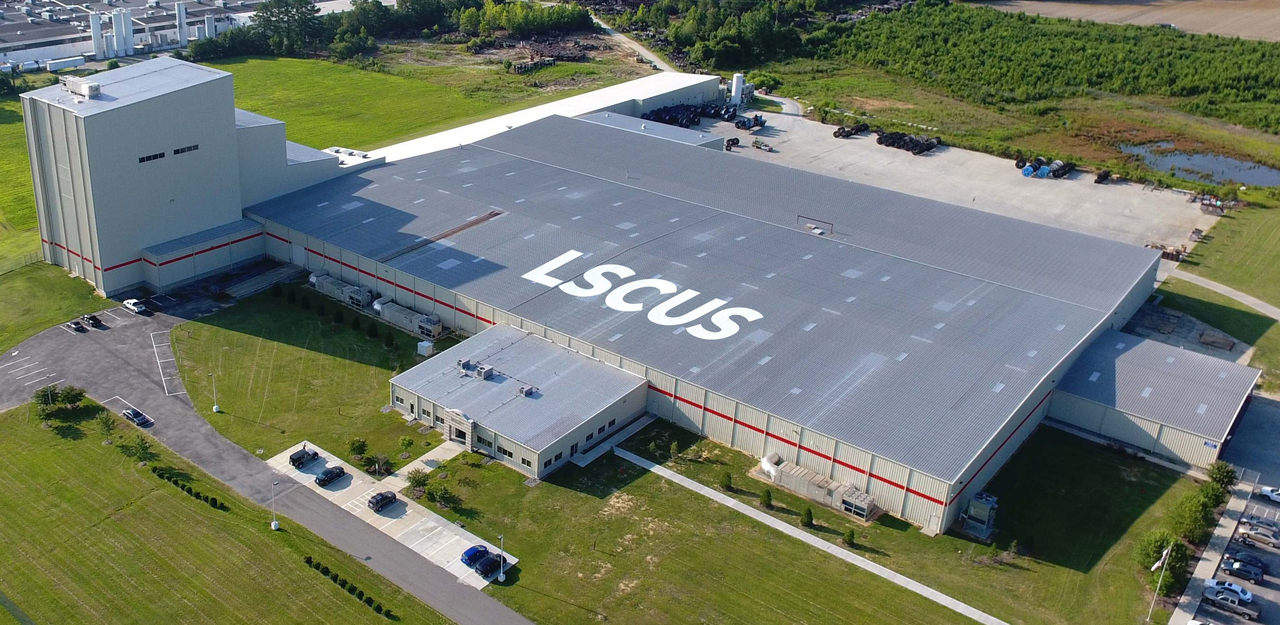
According to industry sources Friday, Gaon Cable, a subsidiary of LS Cable & System, is scaling up production at LSCUS, its manufacturing subsidiary in Tarboro, North Carolina. The company is also broadening its product scope — from distribution cables and bus ducts to overhead lines and cables for nuclear power plants — to capitalize on growth in the North American power market.
The strategic value of its US production base has come into sharper focus as Washington tightens product-specific tariffs on steel, aluminum, copper and related derivatives. Goods manufactured domestically avoid the tariff exposure that comes with importing finished products, while also allowing the company to meet customers' growing demands for supply chain localization and shorter lead times.
Gaon Cable plans to invest roughly $50 million to add two production lines at the LSCUS Tarboro factory, doubling cable production capacity by 2027. "We are also reviewing further capacity expansion to meet rising demand from North American customers," the company said.
LSCUS sales seen tripling in two years
Growth at the US operation has been steep. LSCUS sales are estimated to rise from about 440 billion won ($328 million) last year to roughly 870 billion won this year, reaching approximately 1.5 trillion won by 2027 — a roughly 3.4-fold increase in just two years.
AI data centers are the single biggest growth driver. LSCUS has secured a long-term bus duct supply framework worth more than 5 trillion won ($3.73 billion) with global big-tech companies through 2030, and is also expanding distribution cable supply to global cloud providers.
Longer-term investment is being driven by the replacement of aging US transmission and distribution networks, new generation capacity to meet rising power demand, and grid connections for renewable energy and nuclear power plants. Power grids require ongoing maintenance and upgrades even after generation facilities and data centers are completed, meaning transmission and distribution buildout and aging-infrastructure replacement will continue even if new AI data center investment slows.
US electric utilities plan to invest about $178 billion in transmission infrastructure from 2025 through 2028, according to the Edison Electric Institute. "Growth in the power infrastructure market could extend well beyond the near-term AI investment cycle," an industry official said.
US business scope widens; nuclear cable among new ventures under review
Gaon Cable is expanding its US business from distribution into transmission and generation in step with these market shifts. The company is pursuing investment in overhead line production equipment at LSCUS, targeting initial sales in early 2029. Cables for nuclear power plants are also under review as a new business line aimed at the post-2029 period. Both product categories could form a new revenue base if the North American power market's growth phase proves prolonged.
Through expanded US production capacity and a more diversified high-value product portfolio, Gaon Cable aims to build an integrated supply presence spanning the full power infrastructure chain — from AI data centers to transmission grids and generation facilities. "Companies that proactively secure local production capacity and a broad product portfolio will be best positioned to benefit from the long-term expansion of power infrastructure investment," an industry official said.
keg@heraldcorp.com