Automated system triggers evacuation alerts at 5.0m water level and secures rainwater storage capacity at 6.5m; new operational manual targets 597 flood-vulnerable households in semi-basement housing
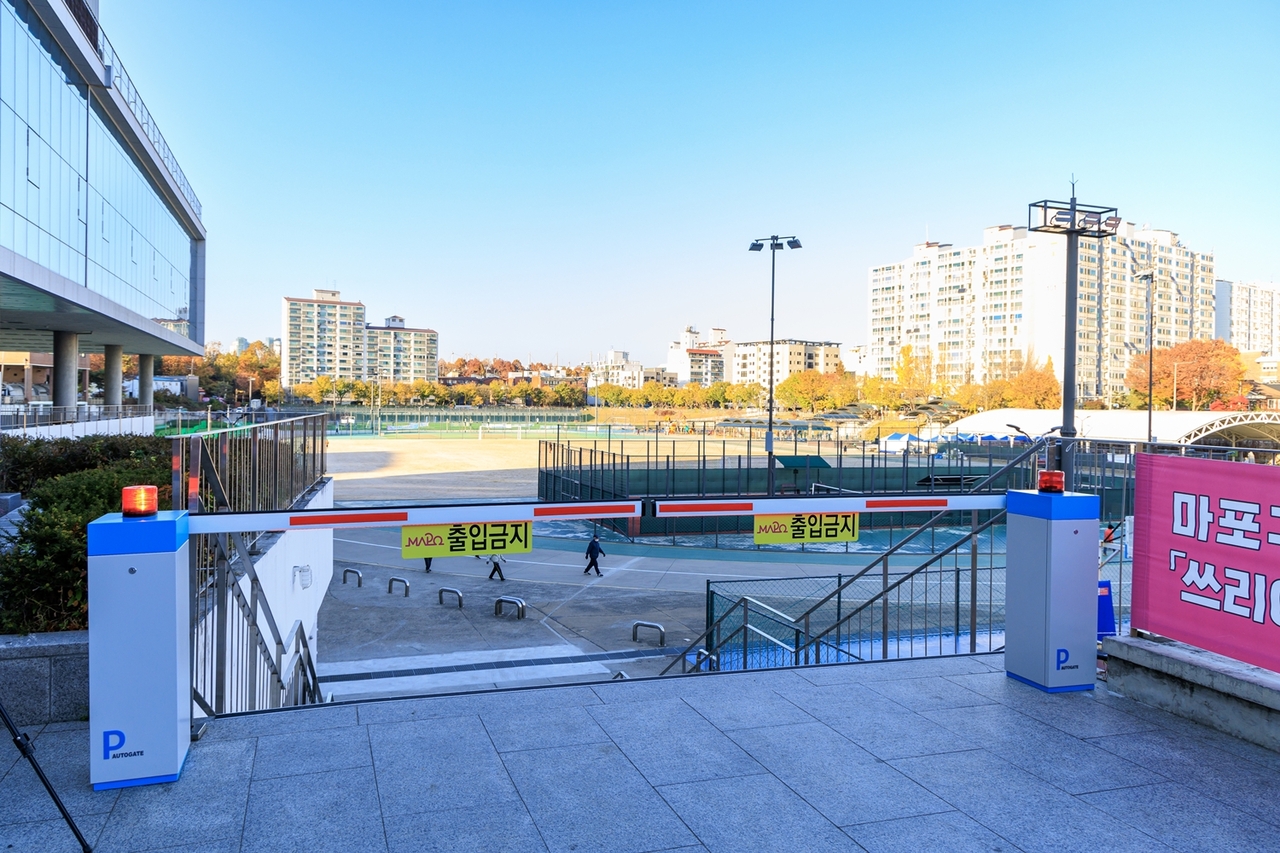
Mapo-gu (district mayor Park Kang-su) has completed the installation of an automated control system at Mangwon retention basin and established a new operational manual for flood response in semi-basement housing, launching an integrated flood-defense framework that combines advanced technology with on-the-ground response ahead of the summer monsoon season.
As localized downpours reaching tens of millimeters per hour have grown more frequent in recent years, the need for rapid drainage response and preemptive resident evacuation has become increasingly urgent.
In response, the district built a two-pronged system centered on automating flood-control facility operations and protecting residents most vulnerable to flooding.
Mangwon retention basin has served as a large-scale disaster-prevention facility since its installation in 1973, temporarily storing rainwater during heavy downpours to prevent flooding in low-lying areas.
The existing setup, however, required on-site personnel to manually operate the facility as water levels changed, limiting the district's ability to respond immediately to sudden, intense rainfall.
To address this, the district introduced an automated control system.
The system analyzes sewer water-level data in real time to forecast the volume of rainwater flowing into the basin and automatically operates flood-control facilities in response to changing water levels.
When the water level reaches 5.0 meters, access barriers activate automatically and evacuation announcements are broadcast, prompting users of sports facilities within the basin and nearby vehicles to evacuate quickly.
Once the level reaches 6.5 meters, rubber weirs lower to secure additional rainwater storage capacity.
The system is expected to enable uninterrupted 24-hour response even during nighttime or sudden downpours, significantly improving the stability and efficiency of flood-control facility operations.
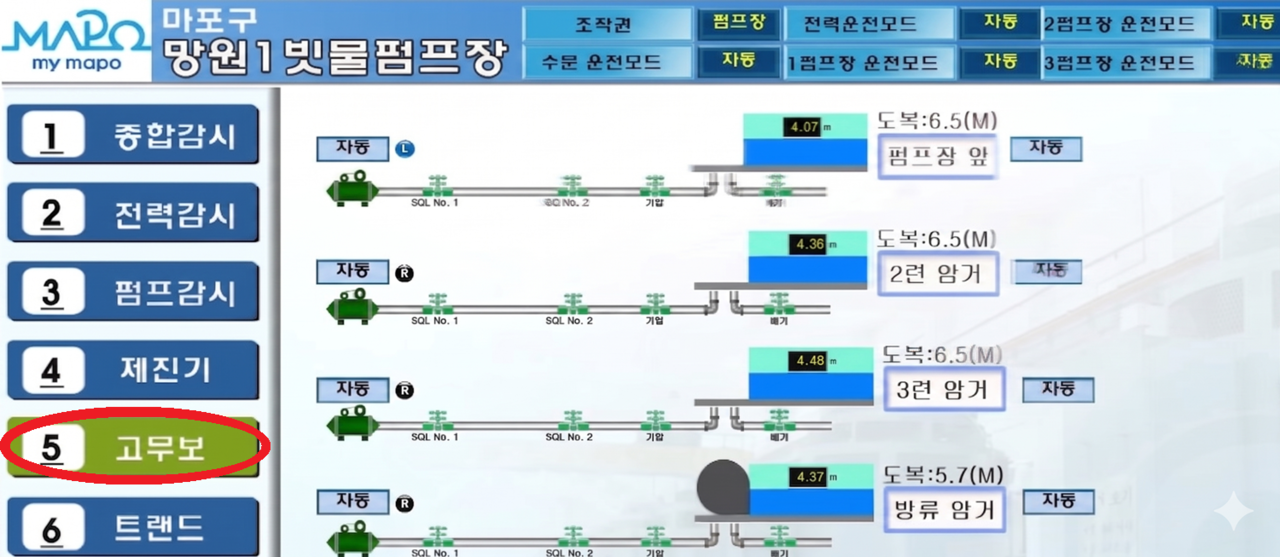
The district has also strengthened its response framework to protect residents most vulnerable to flooding.
Separate from the existing storm and flood response manual, the district has drawn up a new flood-response manual focused specifically on ensuring the swift evacuation of semi-basement housing residents and preventing casualties.
Of the 9,030 semi-basement households in the district, 597 — those with a history of flooding or residents who would have difficulty evacuating on their own — have been designated as top-priority cases, and the manual will be applied to them first.
The manual outlines step-by-step response criteria from the issuance of weather alerts through actual flooding, a situation-notification chain, the roles of care civil servants and accompanying partners, and a coordination framework with related agencies including police and fire departments.
The district also plans to subdivide flood forecast and warning stages to deploy field response personnel earlier and to prioritize resident evacuation as soon as warning signs are detected, with a focus on securing the critical window for safe evacuation.
"As climate change makes the patterns of heavy rainfall increasingly unpredictable, disaster response must also become faster and more precise," a Mapo-gu official said. "We will do our utmost to protect the lives and property of our residents through the automation of Mangwon retention basin and a tailored response system for semi-basement housing."
seouldream01@heraldcorp.com