MOU targets core technologies for Korean-style innovative fusion reactor; partners aim to build fusion technology ecosystem and secure global competitiveness
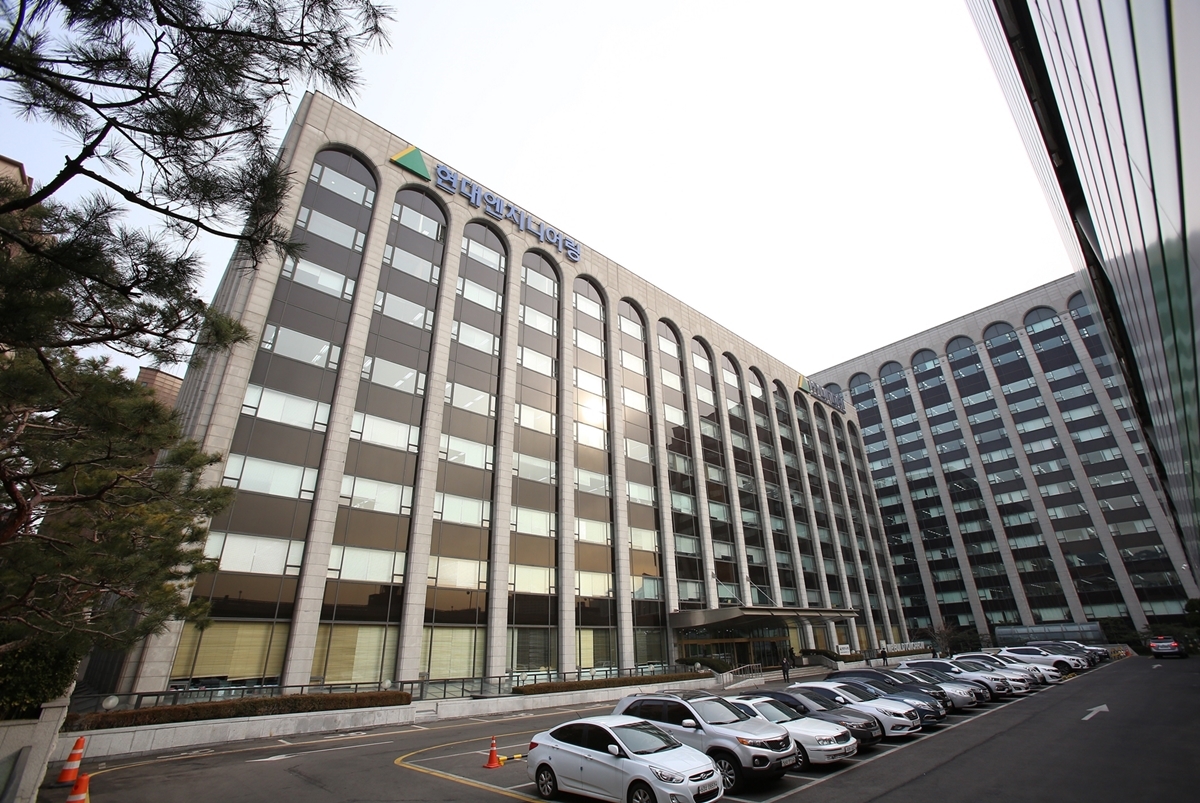
Hyundai Engineering is moving into the development of future fusion energy production facilities in earnest.
The company signed an MOU with the Korea Institute of Fusion Energy on Wednesday to jointly develop core technologies for a Korean-style innovative fusion reactor aimed at accelerating the realization of fusion energy.
The two organizations plan to combine Hyundai Engineering's design, construction and licensing capabilities with the institute's foundational fusion research to speed up development of the Korean-style innovative fusion reactor. Their strategy is to respond jointly to global fusion technology competition and secure technological and industrial competitiveness in the future fusion energy market at an early stage.
The Korea Institute of Fusion Energy is the country's sole government-funded research institution in the fusion field, operating under the Ministry of Science and ICT. It conducts research on core fusion energy technologies using ultra-high-temperature plasma, centering its domestic fusion research and development on KSTAR, a superconducting fusion research device. The institute also participates in the ITER project — the International Thermonuclear Experimental Reactor — involving seven member countries including South Korea.
Fusion energy generates power on the same principle as the sun and has drawn attention as a future energy source because it produces almost no carbon emissions and runs on a virtually limitless fuel supply. Commercialization requires resolving a series of technical challenges in stages: sustaining ultra-high-temperature plasma stably over long periods, ensuring the durability of key materials and components, establishing safety and regulatory frameworks, and verifying the integrated performance of heat recovery and power generation systems.
Major countries have moved beyond the basic research reactor and experimental reactor phases to accelerate development of demonstration reactors that verify the feasibility of electricity generation for practical energy use. South Korea has also laid the groundwork for developing a Korean-style fusion demonstration reactor, drawing on KSTAR operating results and core fusion technology research.
The Korea Institute of Fusion Energy aims to build a fusion demonstration reactor with a capacity of approximately 100 megawatts electric (MWe). It began conceptual design work in April and plans to break ground in 2030, with completion and power generation demonstration targeted by 2035.
The MOU is significant as a cooperation model that aligns foundational elements — including design, construction technology and licensing — at an early stage in preparation for building future fusion energy production facilities, while accumulating integrated implementation capabilities for key equipment.
Meanwhile, following the merger of the research and development organizations of Hyundai Engineering and Hyundai E&C on June 1, a nuclear energy research team has been established under the newly launched HMG Construction Technology Research Institute to further accelerate research in the field. Hyundai Engineering has designated this year as the first year of its push to become a key player in a technology-driven energy value chain, as outlined in its 2026 management strategy.
"We will build up technology together from the earliest stages to realize future fusion energy production facilities," a Hyundai Engineering official said. "We will work to foster a domestic technology ecosystem in the fusion sector — which has the potential to transform the future energy paradigm — accelerate the path to commercialization, and contribute to securing global competitiveness."
lucky@heraldcorp.com