Happiness built through high-quality, tangible governance — returning as a driving force for the district's future
An emphasis on fundamentals, attention to what others overlook — residents ultimately recognized the effort that made even ordinary things better
The local elections are over. Newly elected officials are busy preparing to take office, and voters are looking ahead to another four years. Every election season, candidates talk about the future. But the reality district mayors face after winning is not the future — it is the present. Resolving the inconveniences residents experience right now, maintaining the basic fabric of the city, and working through immediate problems one by one: that is the essence of local governance.
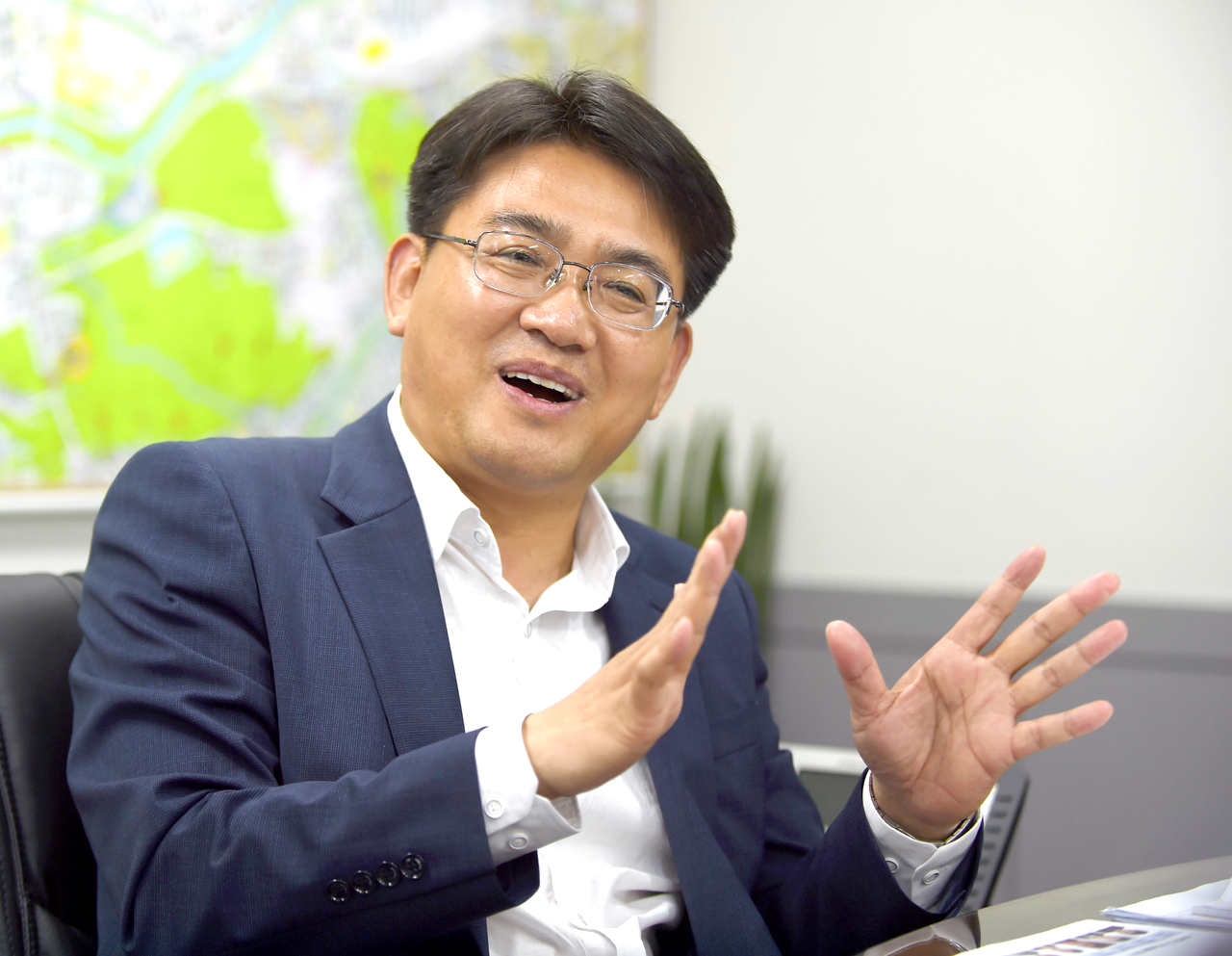
Against that backdrop, the recent decision by Nowon-gu District Mayor Oh Seung-rok — choosing a "new path" rather than seeking a third term — gives much to think about.
In political circles, the logic that "you should go for one more term while you still can" tends to prevail. A third term is widely seen among local government heads as the symbol of a complete political career. Yet Oh announced early this year that he would not seek re-election and focused instead on wrapping up unfinished business as he closed out his second term.
From a politician's perspective, it is an unusual choice. From an administrator's perspective, however, it may be the most responsible one possible.
Looking back at his eight years in office, <style ref="s0">Oh's tenure shows what high-quality governance looks like — beyond flashy slogans.</style>
Nowon-gu was long known as a quintessential residential district in Seoul's northeastern corridor. It had a strong image in education and welfare, but received comparatively little attention for culture, leisure or urban appeal. Oh made "healing" and "culture" the central keywords of his administration, aiming to break that stereotype.
At the time, the criticism was considerable. "Why spend money on festivals?" "Can parks and gardens solve people's livelihood problems?"
The results told a different story.
Surak Recreation Forest, known as Surakhu, became a nationally recognized destination, and an Impressionist art exhibition offered a new model for cultural governance among Seoul's autonomous districts. Most importantly, residents' daily lives changed in ways they could actually feel.
People no longer had to travel far to find rest — they could unwind near home. They no longer had to seek out expensive venues to enjoy quality culture.
Oh's emphasis on "governance where residents feel the value of their taxes" ultimately came down to making people sense real change in their everyday lives.
The visible achievements were not the whole story.
What deserves even closer attention is the fundamentals. <style ref="s0">Safety and sanitation are the textbook duties of local government.</style> Do them well and you rarely get credit; let them slip even slightly and complaints flood in.
Oh began his first day in office at the scene of flooding caused by Typhoon Prapiroon. Nowon-gu subsequently built the nation's first GPS-based smart stormwater drain system and pursued ongoing improvements to landslide-prone areas.
The same approach applied to sanitation.
Being named Seoul's top district for urban cleanliness in 2021 was no accident — the district had transformed its environment to a degree residents could feel directly.
<style ref="s0">Residents do not encounter grand visions in their daily lives.</style>
Instead, they notice the condition of the road on their morning commute, the changes in the park near their home, the cleanliness of the alley outside their door.
Governance is ultimately judged in the details of everyday life.
That is also why Oh was able to win re-election.
The 2022 local elections were held immediately after a change of government, when the People Power Party wave was running strong. Yet in Nowon, Oh won in all 19 dong across the district.
It was a rare case in which administrative performance outweighed party affiliation.
Through lifestyle-oriented policies — including distributing masks to every resident during the COVID-19 pandemic — he gave residents the lived experience that "the district office actually helps my life."
Trust in government is built exactly that way.
<style ref="s0">What deserves even more attention is how he pursued long-term projects.</style>
The Gwangwoon University transit-oriented development, the GTX-C line, the S-DBC biotech cluster and reconstruction revitalization — most of the projects set to transform Nowon's future had stalled for decades.
Oh's formula for moving them forward was simple: "Do what can be done at the time it can be done."
When a labor-management dispute threatened to halt the entire Gwangwoon University transit-oriented development, he stepped in personally to lead negotiations. For the S-DBC project, rather than simply talking up the biotech industry, he flew to Boston, met with experts and gave the initiative real substance.
It was a demonstration that governance is ultimately a matter of timing and execution.
The true keyword running through Oh Seung-rok's eight years is therefore neither healing nor culture.
<style ref="s0">It is "governance faithful to the present."</style>
Not deferring the problems that need solving today, getting done what can be done right now, and creating change that residents can feel.
Ironically, that kind of governance builds the future faster than any other approach.
That is precisely what incoming district mayors beginning their ninth term of civilian-elected government should take from Oh Seung-rok's example.
<style ref="s0">Fundamentals matter more than flashy campaign pledges.</style> Thoroughness matters more than headline-grabbing projects. The change residents actually feel matters more than political calculation.
Choosing to step off the stage voluntarily — forgoing a third term — is not something anyone can easily do.
But it was a decision made possible by the confidence that, over the past eight years, he had done what needed to be done.
Good politics is remembered for a beautiful beginning; great governance is judged by a graceful ending.
That is why Oh Seung-rok's exit — in search of a "new path" — leaves such a lasting impression. Governance is ultimately about changing people's lives, and its results remain embedded in the character of a city long after a term ends.
seouldream01@heraldcorp.com