Biggest Siri overhaul since 2011 launch
Context-aware, on-screen recognition powers cross-app tasks
'The best is yet to come,' Cook says
But overlap with Gemini draws mixed reviews
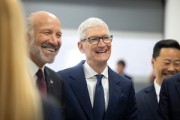
![Apple CEO Tim Cook greets attendees at the Worldwide Developers Conference (WWDC26) held at Apple Park in Cupertino, California, on Monday. [AFP]](https://wimg.heraldcorp.com/news/cms/2026/06/09/rcv.YNA.20260609.PGT20260609009801009_P1.jpg)
Apple CEO Tim Cook took the stage at his final Worldwide Developers Conference and unveiled a smarter Siri — the company's answer to the generative AI race. The new "Siri AI" can understand personal context drawn from a user's messages, emails and photos, recognize what is on screen, and carry out tasks across apps. Apple calls it the biggest overhaul of Siri since the assistant's 2011 debut, and the centerpiece of a broader push to embed AI capabilities throughout its ecosystem.
Apple introduced Siri AI on Monday at WWDC26, held at Apple Park in Cupertino, California.
The revamped assistant significantly raises the bar on intelligence, conversational ability and app control compared with the previous Siri. It reads personal context from messages, emails and photos, recognizes on-screen content, and executes tasks that span multiple apps. Web-based search for up-to-date information is also supported.
"We're introducing a smarter, more knowledgeable and more capable Siri AI," said Craig Federighi, Apple's senior vice president of software engineering. "It helps users accomplish tasks across apps more naturally than ever before." Siri AI will roll out across Apple's major operating systems — iOS 27, iPadOS 27 and macOS 27. However, the iOS 27 and iPadOS 27 versions will not launch in the EU initially due to Digital Markets Act compliance issues.
A dedicated Siri app is also coming. Users will be able to review past conversations or start new ones, with chat history synced privately across Apple devices via iCloud. Apple said Siri AI runs on a combination of on-device models and private cloud computing to strengthen privacy protections.
![Siri AI is unveiled at WWDC26. [AFP·Reuters]](https://wimg.heraldcorp.com/news/cms/2026/06/09/rcv.YNA.20260609.PRU20260609034001009_P1.jpg)
Apple Intelligence features are also expanding to key apps — image editing in Photos, tab-based browsing in Safari, image generation in Image Playground, and personalized writing tools in Messages and Mail.
Parental controls received an upgrade as well. Parents can apply age-appropriate protections during child account setup and manage app screen time, contacts and exposure to harmful content. Apple also said it improved app launch speeds, photo loading, AirDrop transfers, and the stability of Wi-Fi and cellular switching.
The update marks the most sweeping revision to Siri since its 2011 launch. It drew particular attention as the move came at Cook's final WWDC, with Apple under pressure to prove it can compete in the generative AI era.
Apple has long trailed Samsung Electronics in the smartphone AI race. While Samsung pushed on-device AI features — real-time translation, Circle to Search and photo editing — under the Galaxy AI banner, Apple Intelligence drew criticism for delayed rollouts and limited support coverage.
Cook struck a confident tone about the overhaul. "Apple has always been driven by the goal of making the best products and enriching people's lives," he said. "I truly believe the best is yet to come."
The market's reaction was cautious, however. While Apple highlighted Siri AI's personal context understanding, on-screen recognition and cross-app task execution, foreign media noted that many of the features overlap with competing services such as Gemini on Android. Concerns were also raised that Apple's privacy-first, closed-ecosystem approach could slow its pace of AI expansion. Apple's share price closed down 1.89 percent after the WWDC26 keynote.
Meanwhile, Monday marked Cook's 15th and final WWDC. Large crowds gathered to witness the occasion, with attendees throughout the venue raising their iPhones to photograph him as he took the stage.
Cook did not hide his emotions. Before beginning the keynote, he repeatedly said "thank you" and waved to the audience, patting his chest and bowing with his hands clasped together in gratitude.
Cook is set to step down from day-to-day management in September and move into the role of board chair. John Ternus, Apple's vice president of hardware engineering, has been named as his successor.
rim@heraldcorp.com