
Han Byung-do: parliamentary investigation committee vote set for next week
Jang Dong-hyeok presses Jung Chung-rae to begin special counsel talks immediately
Parties split on special counsel, by-elections
Election commission launches fact-finding panel under acting chair
The ruling and opposition parties have both called for swift accountability and electoral reform in the wake of the ballot shortage that marred the June 3 local elections, but sharp divisions over a special counsel investigation and by-elections are already emerging.
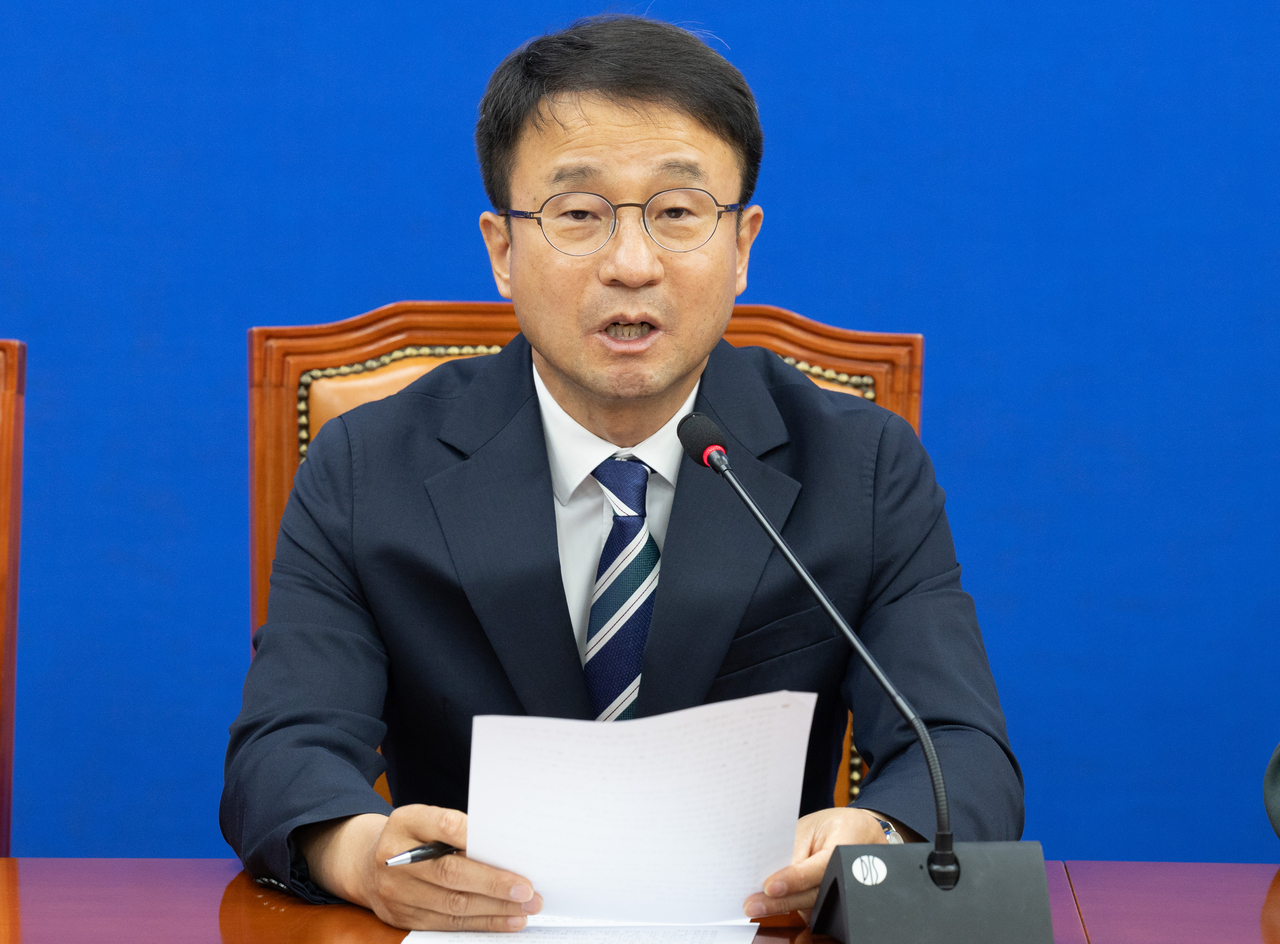
Democratic Party of Korea floor leader Han Byung-do said Tuesday at a floor strategy meeting that the party would convene a plenary session this week to report the parliamentary investigation plan on the ballot shortage, and would put it to a vote at next week's plenary session to stand up a special committee as quickly as possible.
Han added that the party would immediately begin revising the Public Official Election Act and the election commission law to overhaul the electoral management system, and would set up a separate task force on electoral reform alongside the parliamentary investigation.
He also took aim at the People Power Party, saying it should "stop irresponsible demagoguery" by demanding that the president and Cheong Wa Dae be included in the investigation's scope. He called on the PPP to enter Assembly organization negotiations as soon as its new floor leader is elected on Wednesday.
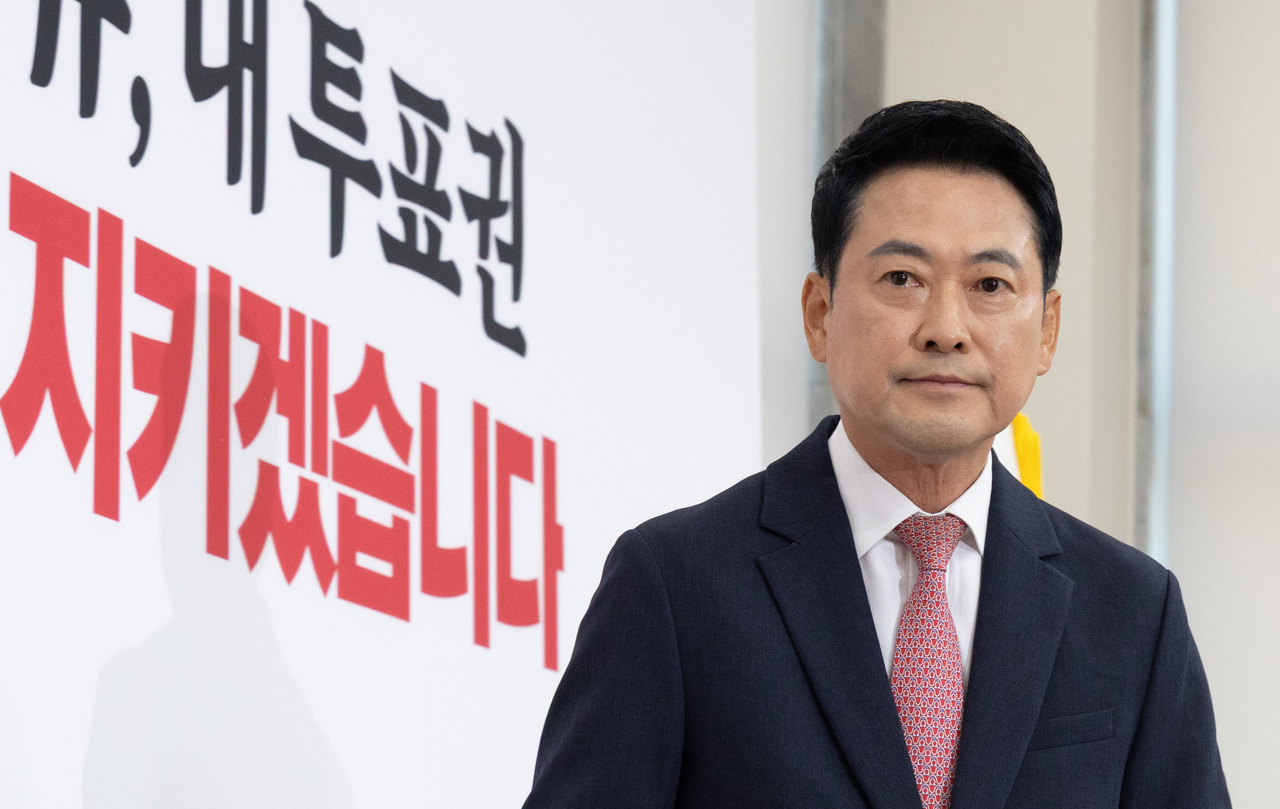
People Power Party leader Jang Dong-hyeok struck a harder line at a separate press conference at the National Assembly on Tuesday, saying a nationwide by-election was "ultimately the only way" to fundamentally resolve what he called a deprivation of voting rights. He pressed Democratic Party leader Jung Chung-rae to begin special counsel discussions immediately, saying the Assembly must also start talks on both a by-election and a special counsel without delay.
Jang also linked the ballot shortage to early voting, saying that cases where candidates received identical vote counts and vote-share figures all came from early voting, and that early voting was one of the causes of the voting-rights crisis. He said election commission staff had themselves flagged problems with the system, and suggested the Democratic Party had ulterior motives if it moved to block abolition of early voting.
Both parties submitted separate parliamentary investigation requests to the National Assembly's bill-processing office on Monday. Disagreements over the investigation's duration and scope, the allocation of committee seats, and which party should chair the panel are expected to fuel an intensifying power struggle in the negotiations ahead.
The PPP called for equal representation — nine members from each party — on the special committee, with the chairmanship going to the largest opposition party. The Democratic Party, by contrast, specified in its request that committee seats should be allocated in proportion to each party's share of Assembly seats.
The two parties are also far apart on a special counsel and by-elections. Democratic Party Secretary-General Jo Seung-rae said at an Assembly briefing that the party's official position was to pursue "whatever is necessary, whether a parliamentary investigation or a special counsel," but added that he could not understand why the opposition was "out of nowhere" dragging the president and Cheong Wa Dae into the matter.
A faction within the PPP centered on the party leadership has been pushing for a full nationwide by-election. Seoul Mayor Oh Se-hoon, however, said on a political talk show Tuesday that a by-election legally requires grounds sufficient to have affected the outcome, and that the Seoul mayoral race — already decided by more than 60,000 votes — was structurally unlikely to meet that bar. He said by-elections were feasible for ward council, city council and proportional representation seats.
Reform Party floor leader Cheon Ha-ram said the party would begin election nullification petition procedures targeting some polling stations in Seoul, and that selective by-elections limited to stations where ballots actually ran short were "the only solution."
The Democratic Party has maintained a cautious stance, saying the question of by-elections is for the courts to decide and is not something the political sphere can determine on its own.
Meanwhile, the number of polling stations confirmed to have run short of ballots on election day has grown from 50 to 91. The election commission said Monday it had sent additional ballots to 140 of the country's 14,288 polling stations, and that 91 of those stations had in fact exhausted their original supply and used the supplementary ballots.
A full survey conducted over the weekend found that the number of affected stations in Seoul rose to 42, with additional cases identified in Gyeonggi Province (23), North Chungcheong and North Jeolla provinces (one each), and South Jeolla Province and South Gyeongsang Province (two each).
To investigate the causes and assign responsibility, the election commission will operate a "Ballot Shortage Fact-Finding Committee" from Wednesday through June 19. The six-member panel of outside experts will be chaired by Cho Hyeon-ok, former president of the Korean Women Lawyers Association, and will examine the full process of ballot printing, allocation and supply management.
Separately, the Supreme Court accepted the resignation of election commission chairman Noh Tae-ak, with standing commissioner Wi Cheol-hwan taking over as acting chairman.
bigroot@heraldcorp.com
thanks@heraldcorp.com
cook@heraldcorp.com




