Old-hen replacement cycle squeezes supply of shell-code 1 eggs; highly pathogenic AI (avian influenza) outbreak adds to uncertainty; average retail price of a 30-egg tray nears 9,000 won in Seoul
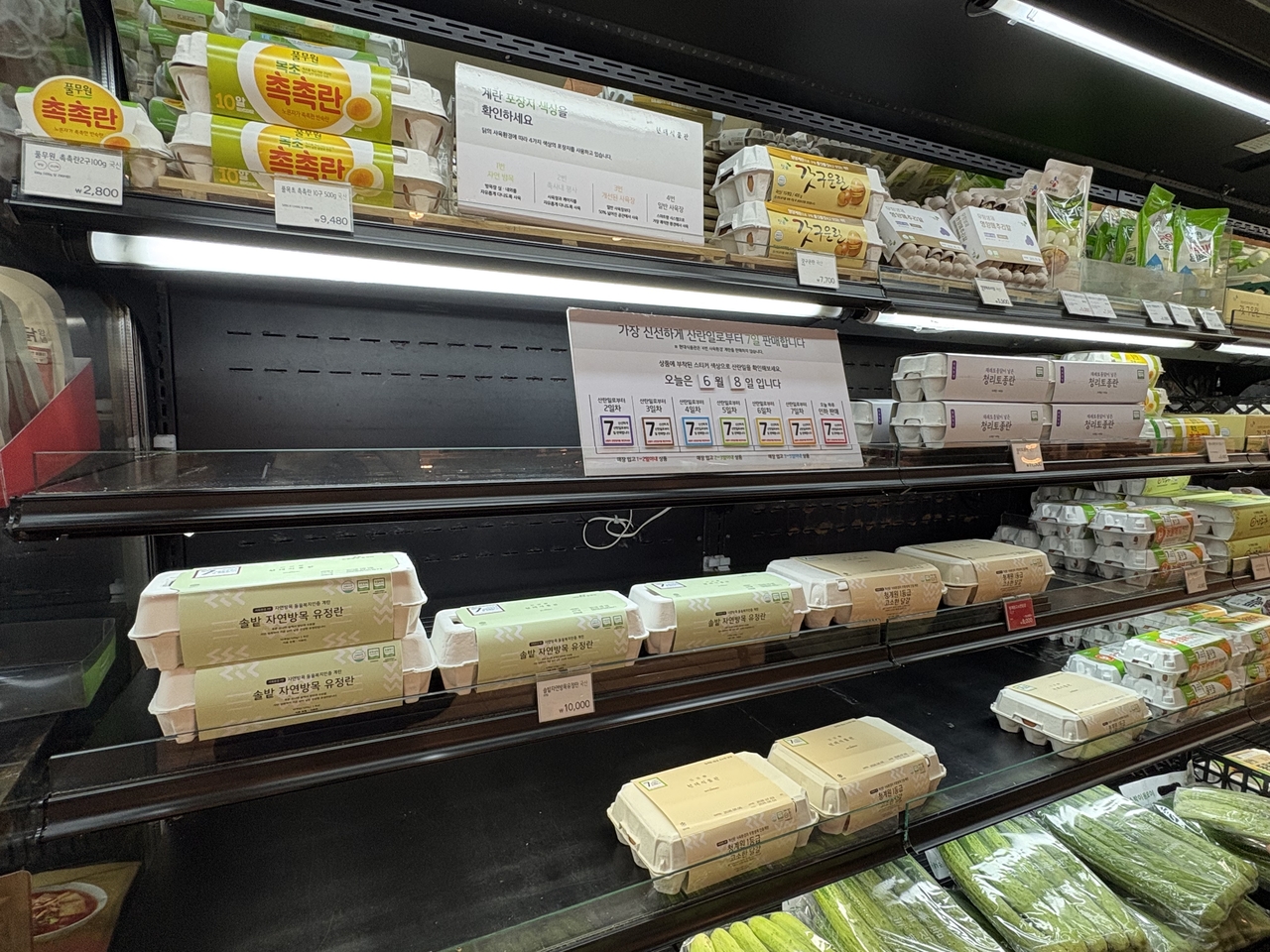
<style ref="s0">"The 15-egg pack of shell-code 1 eggs has completely disappeared."</style>
A 67-year-old homemaker surnamed Oh visited the food hall of a Hyundai Department Store in Seoul on Saturday afternoon hoping to buy shell-code 1 eggs — and left empty-handed. The store receives only 10 cartons of the 10-egg variety per day, and all had already sold out. The 15-egg pack was not stocked at all. "I'll come earlier next time," Oh said as she turned to leave.
The final digit "1" on an egg's shell code indicates the hen was raised in a free-range environment, making it the preferred choice for consumers who care about animal welfare and farming conditions.
Hyundai Department Store has recently begun varying pack sizes for shell-code 1 eggs across its branches. The price of a 10-egg carton, previously in the 8,000-won range, has risen to 10,000 won (about $7). A store official said supply had tightened because June and July are typically when old laying hens are replaced, adding that the situation should normalize after July.
Outlets carrying shell-code 1 eggs are dwindling. Coupang Inc., which is running its large-scale food discount event "Rocket Food Festa" from Monday through Sunday, excluded eggs from the promotional lineup. On Kurly, a significant number of shell-code 1 fertilized egg products are also listed as sold out.
A 39-year-old homemaker identified only as A, who has been buying shell-code 1 eggs through a group-purchase channel on a parenting community forum, said she was notified this week that prices would rise 10 percent, bringing a tray to 16,000 won. "I only buy code 1 because they're for my child, but it's becoming a real burden," she said.
The supply crunch stems from the convergence of AI (avian influenza) fallout and the seasonal old-hen replacement cycle. According to the Agricultural Outlook Center at the Korea Rural Economic Institute, the number of spent laying hens culled last month jumped to 2.03 million — up 13.4 percent from a year earlier and 23.4 percent above the historical average. Daily egg output for June is estimated at 47.05 million eggs, down 3.3 percent year on year.
Prices for standard eggs are also rising. According to the Korea Institute for Animal Products Quality Evaluation, the average retail price of a 30-egg tray of large standard eggs stood at 7,590 won as of Monday, up 7.8 percent from a year ago and 9.4 percent above the historical average. In Seoul, the average retail price surged to 8,637 won, up from the 6,000-won range just last week.
<style ref="s1">The Agricultural Outlook Center forecast that prices will continue to rise as output falls due to a declining number of laying hens aged six months or older. It projected the average monthly farm-gate price of eggs would climb from 1,978 won per 10 eggs in May to around 2,050 won in June — up 6.7 percent from a year ago and 15.4 percent above the historical average</style><style ref="s2">.</style>
![Shell-code 1 fertilized egg products on Kurly's platform are marked as sold out. [Kurly capture]](https://wimg.heraldcorp.com/news/cms/2026/06/09/news-p.v1.20260609.e33d63a1213746aeb439cca4edd33d35_P1.jpeg)
spa@heraldcorp.com