
Regulators hold foreign exchange meeting with banks as won-dollar rate surges; authorities stress need to bring offshore NDF trading into domestic market
South Korea's financial authorities convened a meeting with banks Monday to address the sharp rise in the won-dollar exchange rate, urging cooperation and warning of strict action against any market-disrupting behavior. Regulators expressed concern over herding in offshore non-deliverable forward (NDF) derivative trading and said they would take firm measures against any conduct that distorts the market.
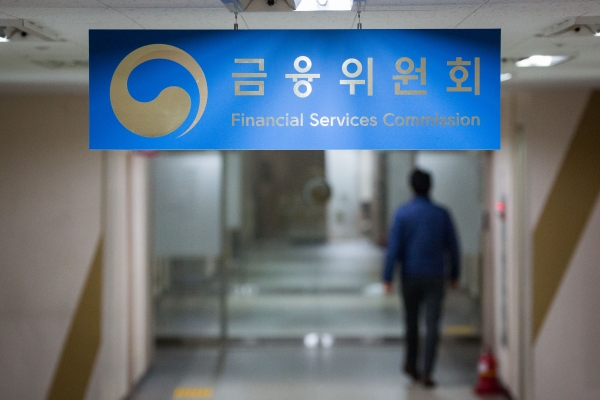
According to the financial authorities, the meeting was chaired by Shin Jin-chang, secretary-general of the Financial Services Commission, and served as a follow-up to an emergency joint market review held by relevant agencies the previous day. The session was held to assess recent trends in the foreign exchange and foreign currency funding markets and to share with banks the outcomes of Sunday's discussions.
Attendees included officials from the Financial Services Commission, the Ministry of Economy and Finance, the Financial Supervisory Service and the Bank of Korea, as well as senior executives from KB Kookmin, Shinhan, Hana, Woori and NH NongHyup Bank, and representatives from domestic branches of foreign banks including State Street Bank, HSBC and Standard Chartered.
Participants assessed that exchange rate volatility had increased in the foreign exchange market as foreign investors rebalanced positions and took profits amid a strong rally in the domestic stock market, while global uncertainties — including rising tensions in the Middle East and expectations of US interest rate increases — added further pressure.
They agreed that South Korea's economic fundamentals and external credibility remained solid, noting that profit outlooks for domestic companies including semiconductor firms had been revised upward and that the current account surplus had widened on the back of strong exports. Participants also shared the view that excessive volatility and one-directional herding in the foreign exchange market were undesirable.
The financial authorities said offshore NDF derivative trading could affect the domestic foreign exchange market and called on banks to cooperate actively in developing measures — through close analysis — to bring offshore NDF transactions into the domestic foreign exchange market.
On top of that, authorities said they would use Bank of Korea and Financial Supervisory Service inspections to check for speculative moves or market-disrupting behavior exploiting the won's weakness, and would take strict action based on the findings. The message was that banks should rigorously comply with foreign exchange market codes of conduct and strengthen internal controls to prevent market-disrupting behavior.
"Given that market volatility could rise again, the government and relevant agencies plan to monitor market conditions around the clock with a high level of vigilance," the financial authorities said.
The won opened Monday's Seoul foreign exchange session at 1,555.2 won per dollar — the highest since March 6, 2009, when the rate stood at 1,590 won during the global financial crisis — before closing at 1,535.0 won following verbal intervention by currency authorities.
That marked a decline of 4.1 won from the previous trading day's daytime closing price, the first time the daytime session had ended lower in four trading days.
ehkim@heraldcorp.com



