
Oh's fifth term gives fresh momentum to signature projects
Han River ferry expected to continue and expand
Sewoon district redevelopment locked in standoff over Jongmyo
Dialogue channels remain open as both sides seek compromise
![Seoul Mayor Oh Se-hoon speaks at Seoul City Hall after his election victory. [Yonhap]](https://wimg.heraldcorp.com/news/cms/2026/06/07/news-p.v1.20260607.540631d31f2a45fe873a656487da8718_P1.jpg)
Seoul Mayor Oh Se-hoon's victory in the June 3 local elections — securing a fifth consecutive term — is expected to breathe new life into several of his signature city projects that had become flashpoints during the campaign. Chief among them are the Han River ferry service and the plan to redevelop the Sewoon district near Jongmyo with supertall towers. Rather than being scrapped, both projects are now expected to move forward through a mix of continuation, expansion and negotiation.
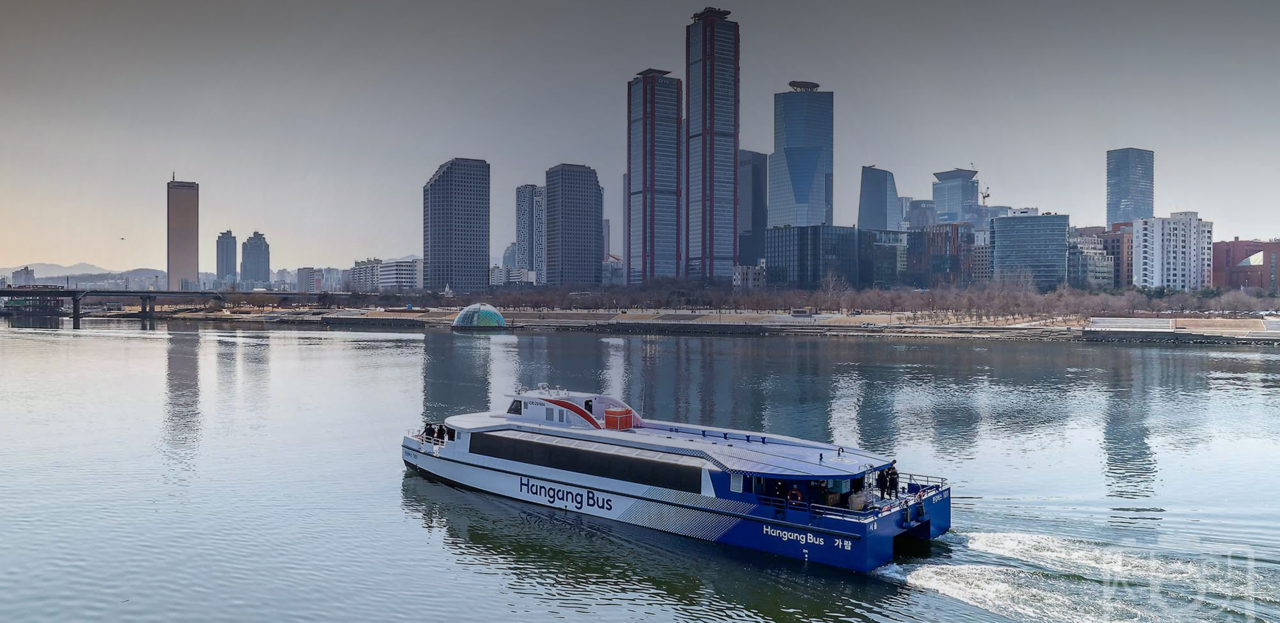
The Han River ferry, one of Oh's most prominent brand projects, appears set to continue and expand. Opposition candidates attacked the service during the campaign as an inefficient use of public funds and called for a full review, but Oh's re-election has shifted expectations firmly toward sustaining and improving the program.
Rising ridership and high satisfaction scores are bolstering the case for continuation. According to the Seoul Metropolitan Government, the ferry carried 91,126 passengers in May — a monthly record and roughly 19 percent more than the previous month. Average daily boardings have also climbed from around 2,000 to approximately 2,900 over the past three months. A survey of 3,115 passengers conducted in April found that 96 percent said they were satisfied with the service.
The city is now moving to expand routes and improve operational efficiency. Starting Monday, Seoul will add a stop at Seoulsup Pier and restructure the eastern route to run from Jamsil through Ttukseom, Seoulsup, Oksu·Apgujeong and on to Yeouido. The city plans to introduce a 16-stop-per-day schedule and strengthen ties with the Seoul International Garden Expo, focusing on growing tourism and leisure demand.
However, debate over the ferry's fundamental purpose is unlikely to fade. Current usage skews heavily toward tourism and leisure rather than daily commuting, which means the project's cost-effectiveness could face renewed scrutiny when the Seoul Metropolitan Council takes up the city budget.
![The Jongmyo Daeje royal ancestral rite held at Jongmyo Shrine [Yonhap]](https://wimg.heraldcorp.com/news/cms/2026/06/07/news-p.v1.20260607.8d9beb998bbf4f0fb41b70a451fde018_P1.jpg)
The redevelopment of Sewoon District 4, directly across the street from Jongmyo, faces a far more contentious path than the ferry. The Seoul Metropolitan Government is pushing to raise the maximum building height in the zone from 71.9 meters to 141.9 meters, enabling supertall construction on a site separated from the UNESCO World Heritage shrine by a single road.
The Cultural Heritage Administration has moved to block the project, citing concerns about damage to Jongmyo's historic landscape. Last month, the agency ordered the Seoul Metropolitan Government, Jongno-gu and SH Corporation to complete a World Heritage Impact Assessment before any permits are issued — the first administrative order of its kind under the revised World Heritage Act. SH Corporation responded by filing an administrative lawsuit challenging the order, escalating the dispute from bureaucratic negotiation into a courtroom battle.
The Seoul Metropolitan Government maintains there is no legal obstacle, arguing that the development site lies roughly 180 meters from Jongmyo and outside the protected buffer zone. The city has also pushed back against the impact assessment requirement, warning that it would delay the project significantly.
In a video posted in December, Oh said the city had "absolutely no desire to damage the value of Jongmyo" but argued that demanding residents of the Sewoon district — who have already waited more than 20 years — to undergo an impact assessment that could take four or more years was, in his words, "simply telling them to abandon the project."
Beyond the courtroom, international pressure adds another layer of uncertainty. The UNESCO World Heritage Committee is scheduled to meet in Busan in July, and the Jongmyo issue could be placed on the formal agenda. If the development is found to threaten the site's Outstanding Universal Value, Jongmyo could be placed on the List of World Heritage in Danger — and in the worst case, face proceedings to strip its World Heritage status.
Despite the legal confrontation, the door to a negotiated settlement remains open. The Cultural Heritage Administration, while stressing its commitment to upholding principles, said it would "continue to seek dialogue and work toward an amicable resolution."
![Seoul Mayor Oh Se-hoon speaks at Seoul City Hall on Thursday. [Yonhap]](https://wimg.heraldcorp.com/news/cms/2026/06/07/news-p.v1.20260607.a9ea12eca4df41b691172d7907c43d89_P1.jpg)
Oh has signaled a similar willingness to find common ground. In an April interview on the KBS current affairs program "Sasageon-geon," he said a direct conversation with the head of the Cultural Heritage Administration had revealed "what appear to have been some misunderstandings along the way," and that he believed it was "possible to find a point of agreement that both respects Jongmyo's value as a cultural heritage site and allows development of Sewoon District 4 to proceed."
terry@heraldcorp.com




