Japan Special Day draws 1,500 visitors to Haman-gun
Premium travel package sells out, signaling high-value tourism potential
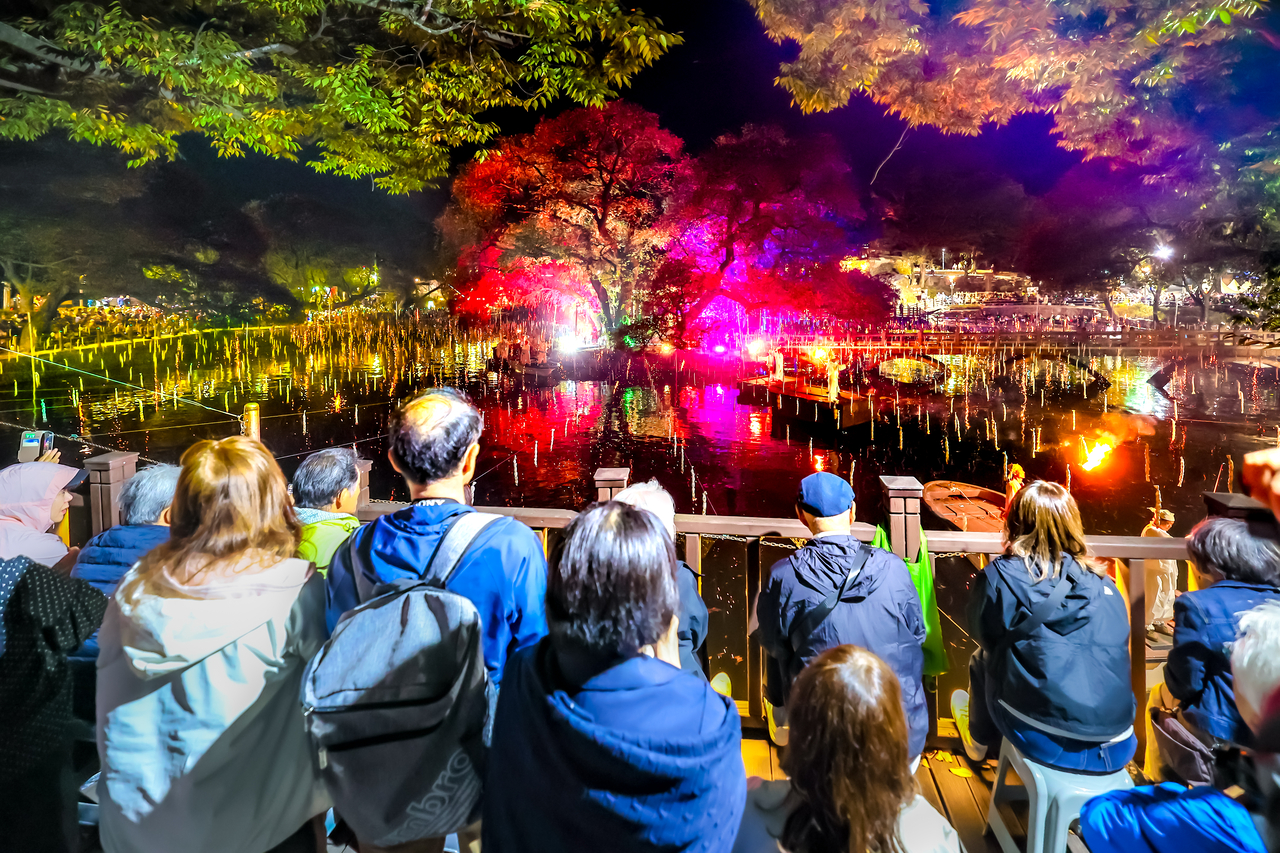
A traditional fire ritual that once nearly died out has become a flagship tourism draw pulling foreign visitors into a rural corner of South Gyeongsang Province.
About 1,500 Japanese tourists took part in the 2026 Haman Nakhwa Nori Japan Special Day on Thursday, according to the Korea Tourism Organization. The turnout is triple the roughly 500 who attended in 2024 and double the 1,000 who came in 2025, demonstrating that foreign visitors concentrated in Seoul can be drawn to regional destinations when compelling content is on offer.
The Korea Tourism Organization organized the event, with South Gyeongsang Province, Haman-gun and the South Gyeongsang Tourism Foundation co-hosting. Participants purchased packages sold through more than 20 travel agencies in Japan. Following the itinerary, visitors toured the Marisan Ancient Tombs, the Goryeo-dong Historic Site and Akyang Ecological Park during the day before gathering at night to watch the nakhwa nori.
Haman nakhwa nori is a traditional fire display in which thousands of small bundles — charcoal powder wrapped in hanji, or traditional Korean paper — are suspended over a pond and lit, sending cascades of glowing embers drifting down onto the water like flower petals. The folk ritual dates to the reign of King Seonjo of the Joseon Dynasty, when it was performed to pray for the peace and prosperity of local residents. It is now designated an intangible cultural heritage of South Gyeongsang Province.
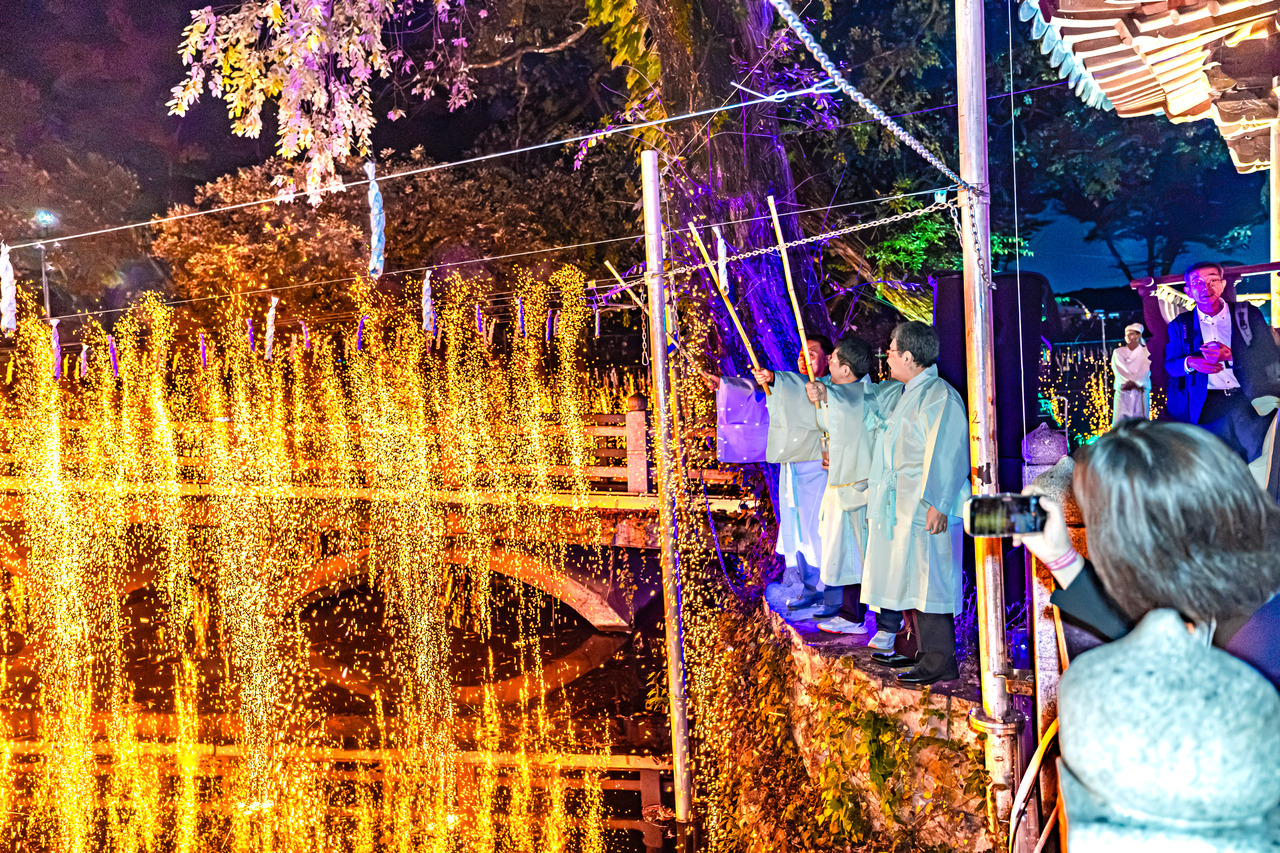
A premium package priced at 3.2 million won ($2,370) — combining the nakhwa nori with visits to Jeonju, Daegu and Busan — sold out entirely, pointing to the potential for high-value inbound tourism. Organizers also expanded beyond a single-night experience by linking the event to nearby cities and counties in the Yeongnam region, including Tongyeong, Sancheong and Hapcheon, creating multi-day itineraries that extend visitors' stays. The approach has been credited with addressing the chronic shortage of nighttime attractions in smaller regional cities while using traditional cultural assets to keep foreign tourists in the area longer.
"I was able to feel the charm of traditional Korean culture, which is quite different from Japanese fireworks," one Japanese participant said after the event. "I think this is a meaningful occasion for introducing regional Korean culture and tourism to Japanese visitors."
The event's international reach is also growing. Haman-gun said overseas tourism products built around the nakhwa nori have expanded from Japan — where they launched in 2024 — to Taiwan and Hong Kong. The 2026 Haman Nakhwa Festival with MyK FESTA, held in July, drew 710 foreign visitors from 32 countries. Haman-gun is now developing tailored packages targeting Southeast Asian markets, including Thailand and Singapore, for next year.
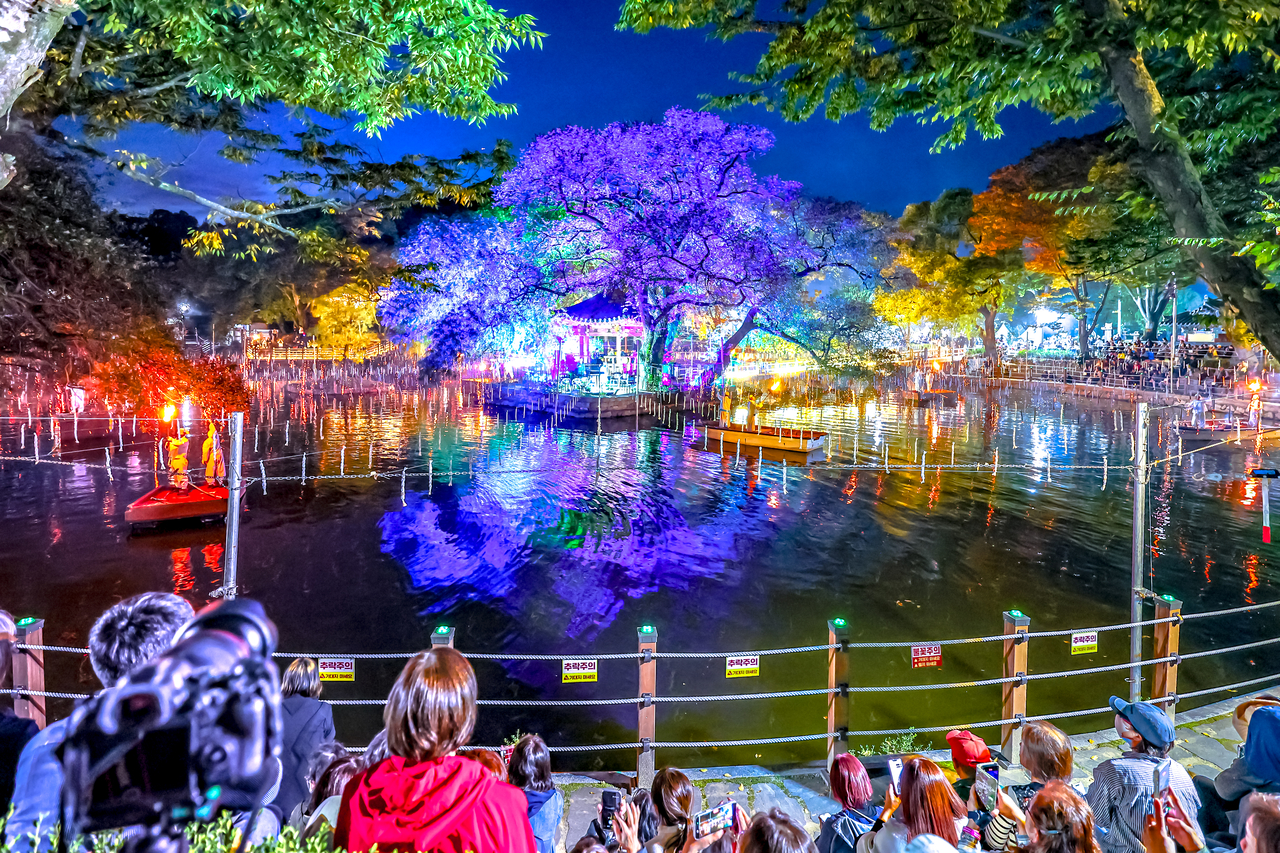
The Korea Tourism Organization, which transformed what had been an annual one-day local event held on the fourth day of the fourth lunar month into a regular product for international visitors, said it will build on three years of results to strengthen the event's self-sufficiency and diversify its markets.
Jeong Seok-in, head of the Korea Tourism Organization's international tourism division, said the agency aims to shift toward a model in which local communities take the lead while the organization provides direct and indirect support. "We are discussing ways to move beyond the current Japan-only format — either by incorporating Chinese-speaking markets such as China and Taiwan, or by broadening participation into a 'Global Day' format," Jeong said.
terry@heraldcorp.com