
City targets 40 flood-prone underpasses; 24 completed so far
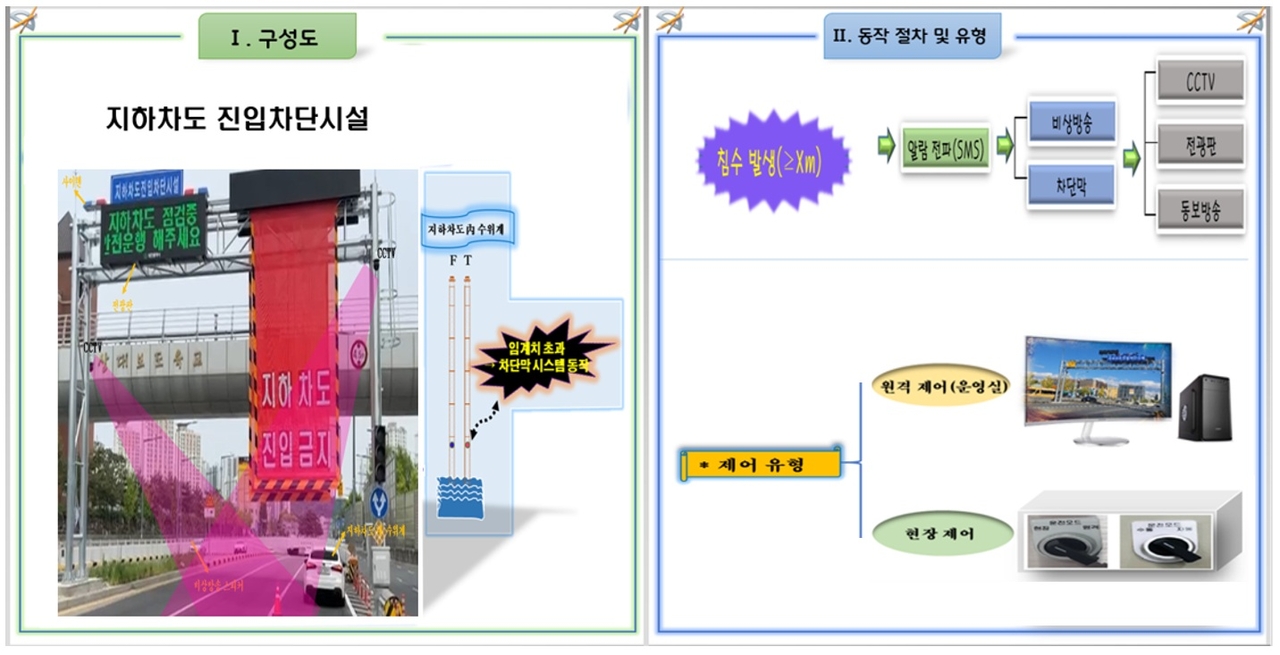
Daejeon's project to install flood-blocking barriers at underground roadways — aimed at preventing disasters like the underpass flooding that caused massive casualties in North Chungcheong Province — is making steady progress.
The city announced Monday that it has completed installation of vehicle entry barriers at 24 flood-prone underground roadways to prevent flood damage from summer downpours.
The barriers monitor water levels inside underground roadways in real time. When levels rise above a set threshold, the system automatically lowers a blocking gate and triggers a vehicle entry warning. The facilities are designed to prevent vehicles from becoming trapped and to reduce casualties and property damage during heavy rainfall.
Daejeon began pursuing the project before the Ministry of Land, Infrastructure and Transport revised its guidelines on road tunnel disaster prevention and ventilation facility installation and management.
To fund the effort, the city secured a total of 15 billion won (about $10.9 million) — 11 billion won in special grants from the Ministry of Interior and Safety and 4 billion won in municipal funds — and has been installing the barriers in phases since 2021.
Through last year, the city completed installations at 15 locations, including the Gwanjeo, Mannyeon, Daedong, Hongdo and Gapcheon underpasses. This year, it added nine more, including the Doan, Noeun and World Cup underpasses.
Daejeon currently has 48 underground roadways. Of those, 40 require barriers — the remaining eight have natural drainage and are exempt. With 24 now equipped, the city plans to install barriers at the remaining 16 locations in sequence.
"We will continue expanding the installation of vehicle entry barriers at underground roadways to prevent damage from typhoons and heavy summer rains," said Lee Seon-min, head of Daejeon's construction management division. "We will also maintain close cooperation with police and other relevant agencies to do our utmost to create a safe urban environment where residents can feel secure."
kwonhl@heraldcorp.com




