Kyung Dong Navien opens 'Heating Electrification Center' on Jeju Island
Pilot project launches on Jeju as blueprint for national rollout
Zero fossil fuels: low-carbon, cost-competitive heating
Company targets annual sales of 210,000 units by 2035
"On the mainland, people want their rooms blazing hot — but here in Jeju, as long as the chill is gone, we're fine. No smell of oil, and it's easy to maintain."
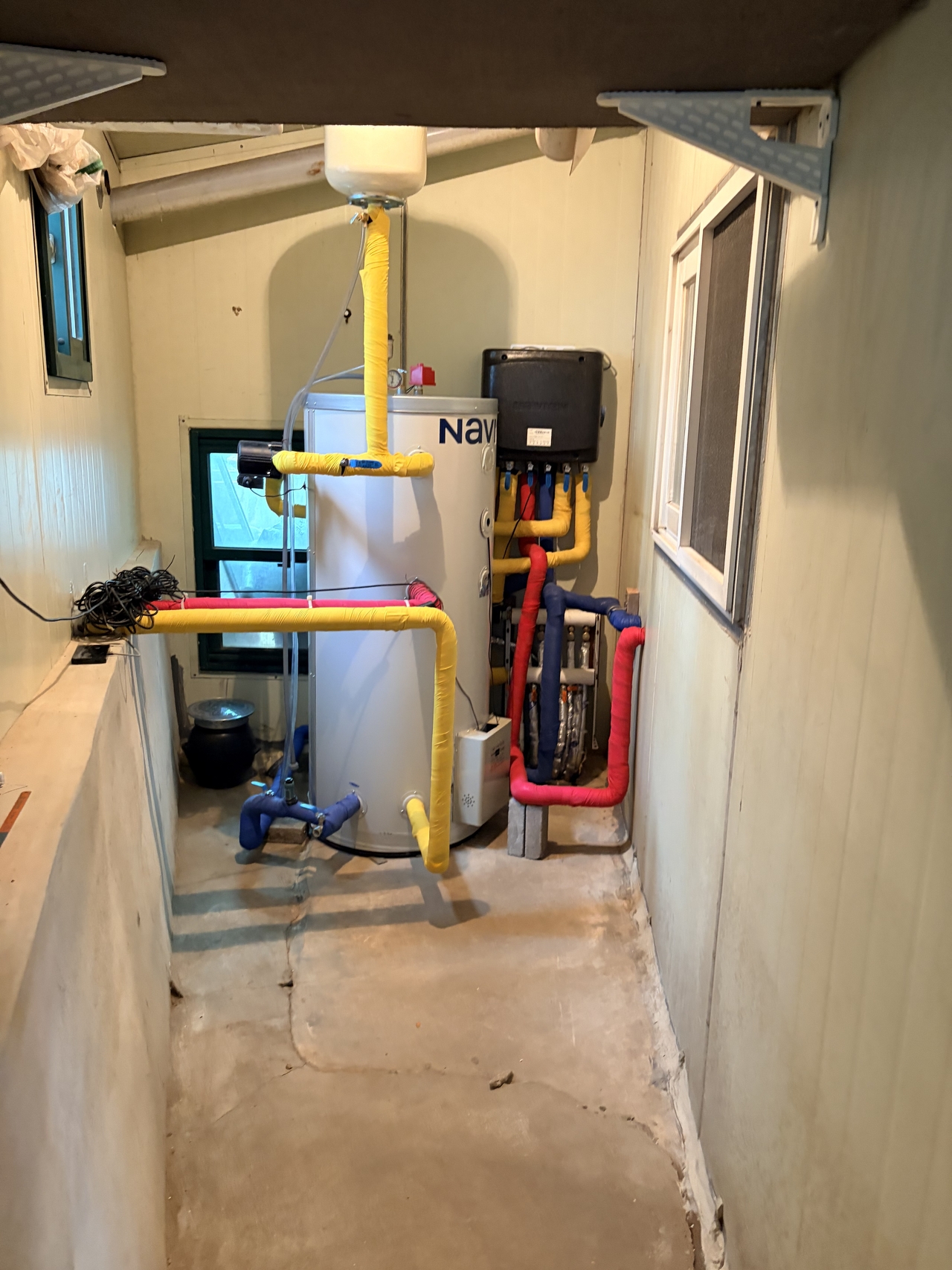
Park Yong-gyu, 73, a Jeju native, switched from an oil boiler to a Kyung Dong Navien air-source heat pump this year, driven by rising fuel costs and the hassle of upkeep. "Last year I spent nearly 1 million won (about $665) just on oil — four drums of it," he said. "With a heat pump, that's not going to happen." A conventional boiler heats water directly as a thermal energy source; a heat pump instead transfers heat that already exists in the surrounding air. Because it does not burn fossil fuels directly, it significantly cuts carbon emissions.
Kyung Dong Navien opened a "Heating Electrification Center" at its Navien House showroom on Jeju on May 28 and unveiled a blueprint to sell roughly 210,000 heat pumps a year by 2035. The market is expanding after the Lee Jae Myung administration recognized air-source energy as a form of renewable energy. The Ministry of Climate, Environment and Energy is actively pushing heating electrification projects this year, and major conglomerates including Samsung Electronics and LG Electronics have entered the space, becoming new rivals for Kyung Dong Navien.
Kyung Dong Navien plans to anchor its expansion around Jeju Special Self-Governing Province, the first local government to launch a pilot program. The company intends to compile the results of the Jeju demonstration by 2028 and use them to build a standard model for a national rollout. Kim Yong-beom, executive vice president for sales and marketing at Kyung Dong Navien, said the company holds about a 70 percent share of the boiler market on Jeju Island. "Heating electrification is not a business that wraps up in a year or two," he said, explaining why the company took a long-term view in establishing the center.
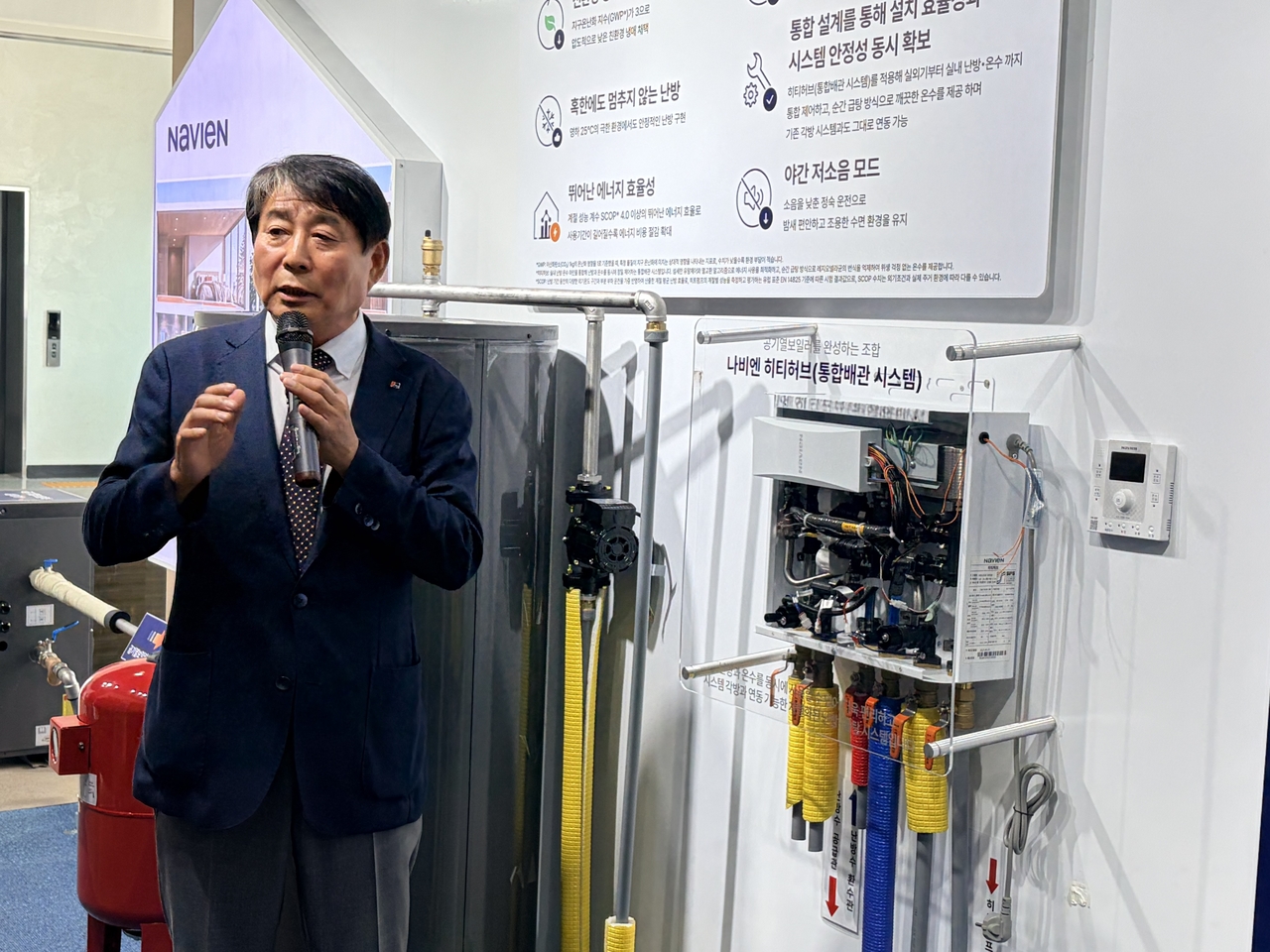
He added that the center would serve as a sales venue where customers curious about the technology can see firsthand which products are available and how they operate. Kyung Dong Navien runs the Navien House facility on Jeju — a model-home-style showroom spread across one below-ground floor and three above-ground floors, displaying the full range of the company's products, from various boilers to induction cooktops and air circulation systems. Park Nam-gyu, head of Navien House Jeju, said local architects and interior designers use the space to walk customers through products and close contracts.
Kyung Dong Navien launched South Korea's first compact square oil boiler in 1979 and has been making boilers for nearly 50 years. The company is widely known domestically through its long-running advertisement featuring the line, "Honey, we should get a boiler for your father's house." Building on half a century of expertise, the company now aims to usher in an era of electrified heating — much as the electric vehicle has transformed the automotive industry.
A heat pump is a heating solution that uses air-source thermal energy and electricity to supply indoor heating and hot water. With low carbon emissions and high energy efficiency, it has long been recognized in European markets pursuing carbon neutrality as a next-generation home appliance. The global residential heat pump market is projected to reach approximately $150 billion (about 225 trillion won) by 2032, according to industry sources — a market Kyung Dong Navien, which derives roughly 70 percent of its sales from overseas, cannot afford to miss.
The name "pump" captures the concept precisely: the device draws heat upward. Thermal energy naturally flows from warmer areas to cooler ones, and a heat pump collects that energy and pushes it toward higher temperatures. In winter, for example, if the indoor temperature is 20 degrees Celsius and the outdoor temperature is minus 10 degrees Celsius, heat naturally escapes outside — that is simply physics. A heat pump captures even the thermal energy present at minus 10 degrees and redirects it indoors.
Kyung Dong Navien's heat pump achieves a heating Seasonal Coefficient of Performance (SCOP) of 4 or above, reducing energy consumption compared with conventional boilers. Ease of use is another selling point: the unit works with existing heating systems already installed in a home. A further differentiator is the "HeatiHub," an integrated piping unit for both heating and hot water. It reduces the number of components — including pipes and heating buffer tanks — and simplifies installation. Flow sensors and various valves built into the HeatiHub enable precise control of flow rate and temperature.
Kyung Dong Navien particularly emphasizes its integrated capabilities spanning system design, installation and after-sales service. "Samsung Electronics and LG Electronics are entering the business, but Kyung Dong Navien has half a century of know-how in systems integration," Kim said. "A boiler is not a home appliance you can simply set down like a TV or a refrigerator — it is equipment that has to be connected to water and piping." The company plans to accelerate preparations for the Ministry of Climate, Energy and Environment's product selection process scheduled for July, leveraging that competitive edge.
By Boo Ae-ri from Jeju
boo@heraldcorp.com