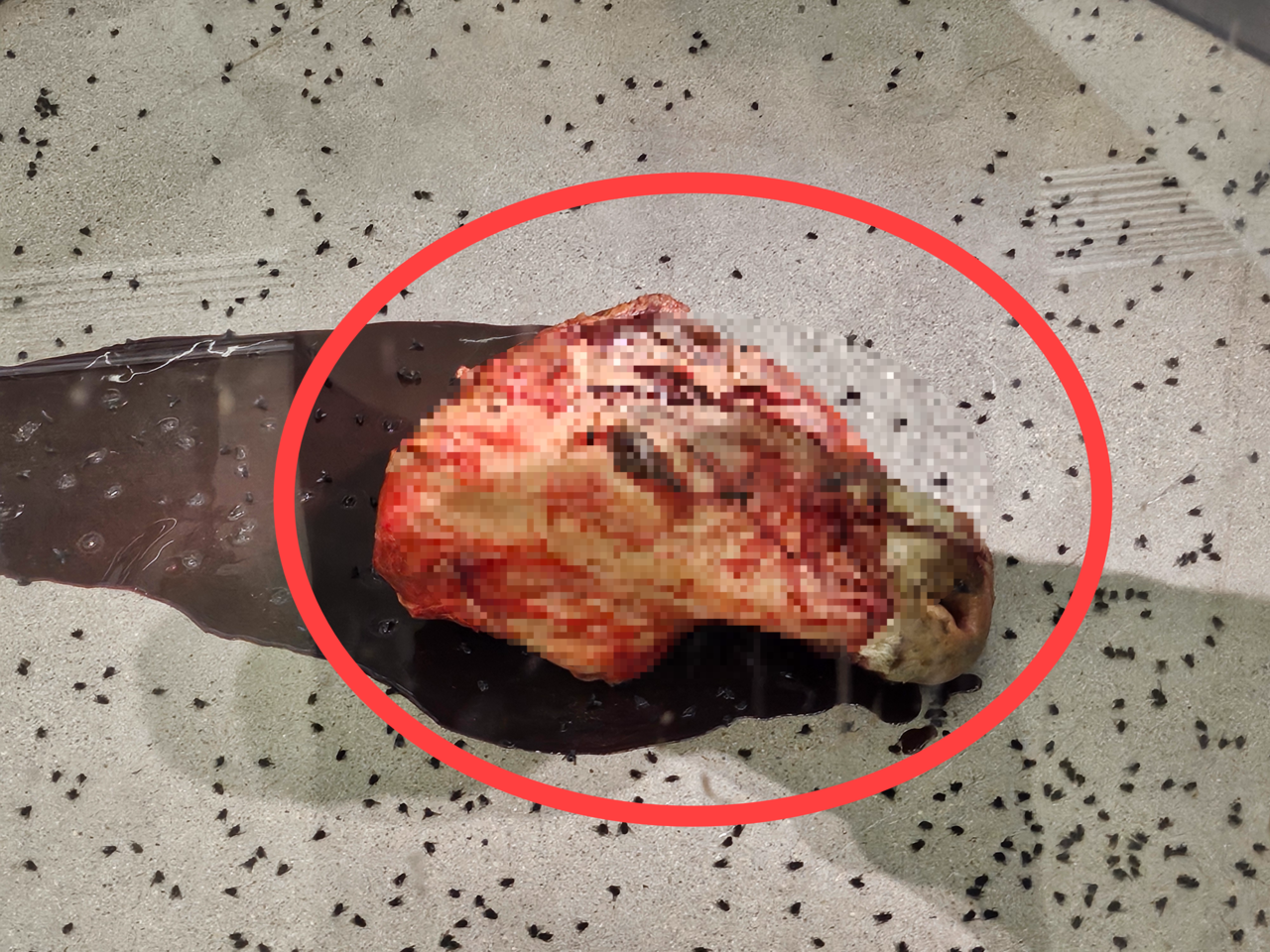
"I can't bring myself to look at this."
A visitor at the National Museum of Modern and Contemporary Art in Seoul grimaced and whispered to her companion. Another grabbed a friend by the arm: "Let's just take a photo and go."
Not everyone reacted that way. Plenty of visitors lingered around the same work, snapping photos with wide-eyed curiosity or debating the piece with their companions while listening to the audio guide. One thing was clear: the work drew a crowd.
The piece provoking such extreme reactions is "A Thousand Years" — a glass vitrine enclosing a rotting cow's head, a swarm of flies and an electric insect killer. The flies, slowly losing their vitality beside the decomposing head, are impossible to ignore.
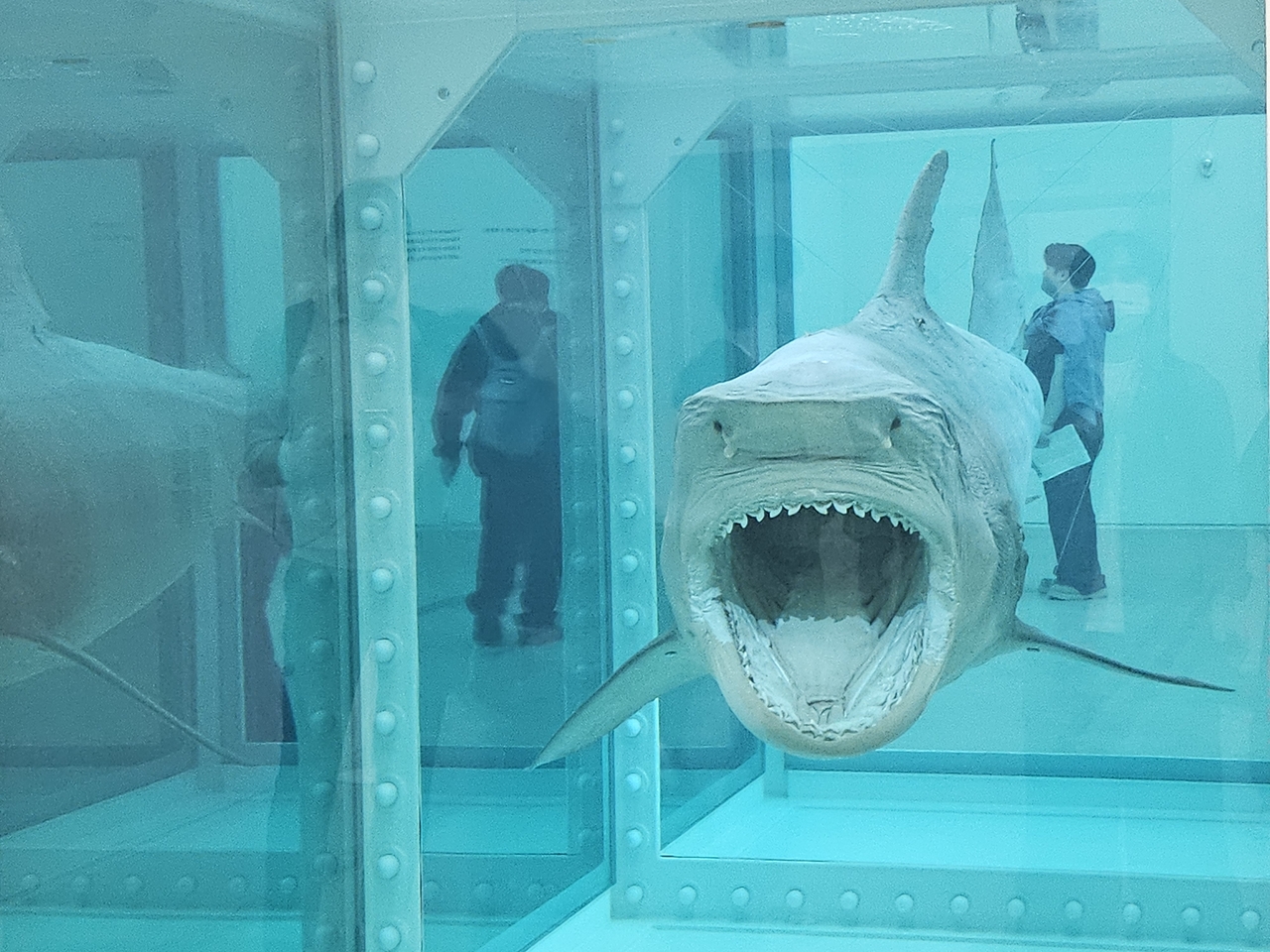
Nearby, another signature work draws similarly divided responses: "The Physical Impossibility of Death in the Mind of Someone Living," a tiger shark suspended in a formaldehyde tank.
Both works are centerpieces of the first large-scale Damien Hirst retrospective in Asia, now open in Seoul — and both have become flashpoints for controversy.
Even as the show basks in the prestige of a celebrated artist's name, the works themselves have become the subject of fresh debate.
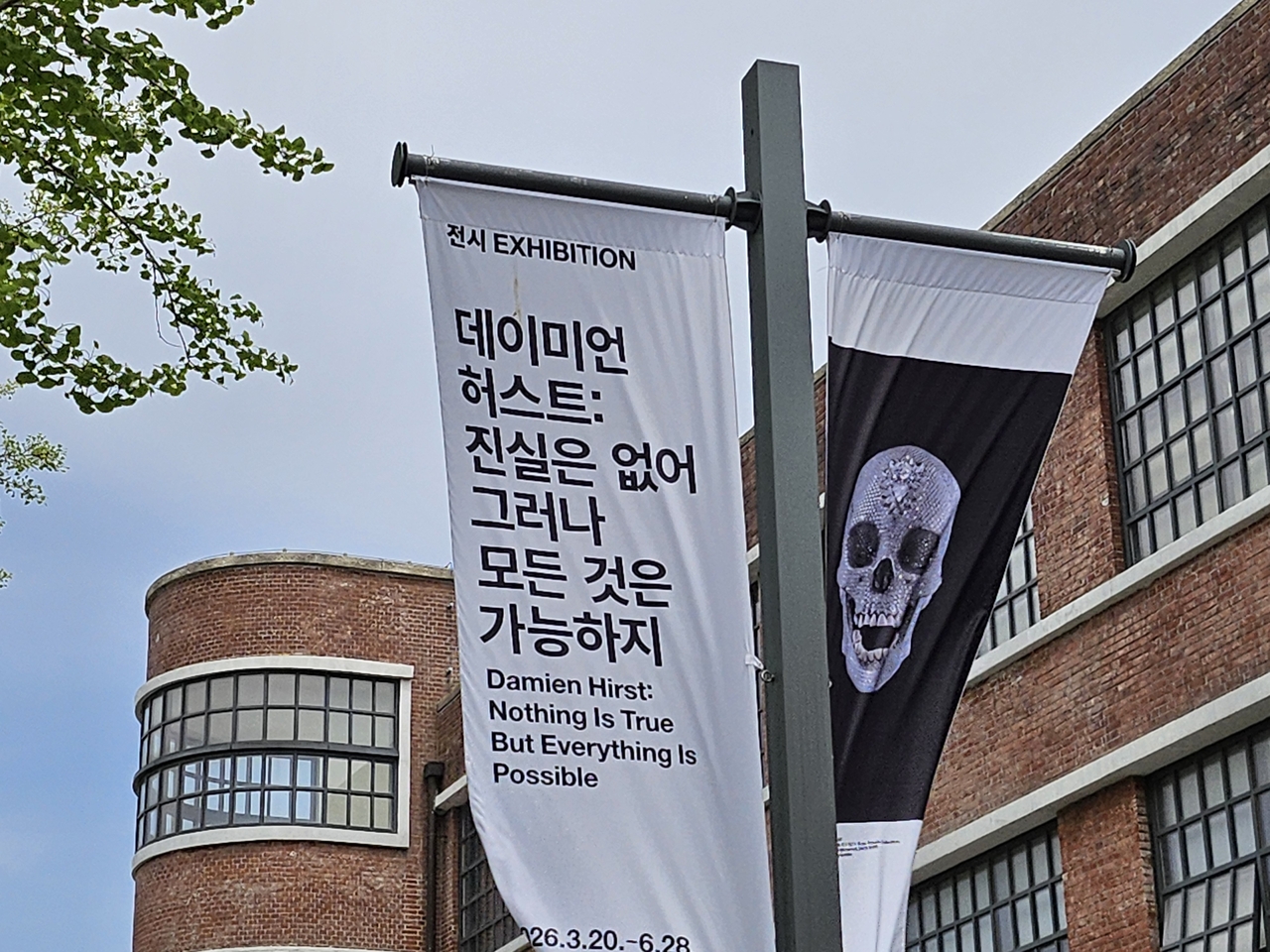
The National Museum of Modern and Contemporary Art's Seoul branch opened the exhibition "Damien Hirst: No Truth But Everything Is Possible" on March 20. The show — Hirst's first major solo exhibition in Asia — features 50 works, including early pieces, and runs through June 28.
Hirst is a defining figure of the Young British Artists movement that emerged in the 1990s. His work, which often submerges animal carcasses in formaldehyde or incorporates living creatures, has long been interpreted as a meditation on death, decay and human mortality — delivered through deliberate visual shock.
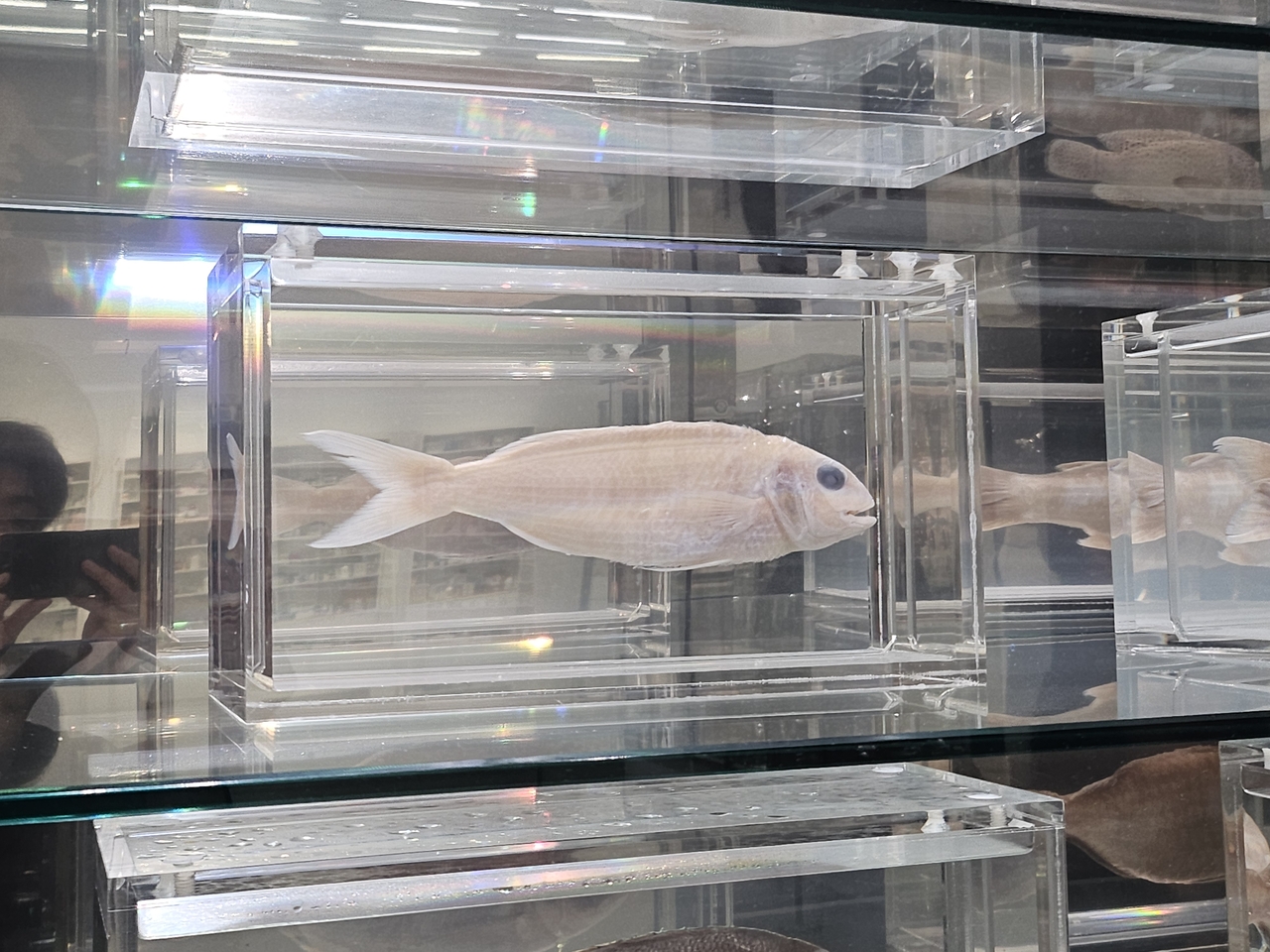
At the same time, Hirst has faced persistent criticism for treating living things as artistic raw material and for prioritizing provocation and commercial appeal. More recently, controversy over the dating of certain works has added to his complicated reputation, casting him as a symbol of both the prestige and the ethical limits of contemporary art.
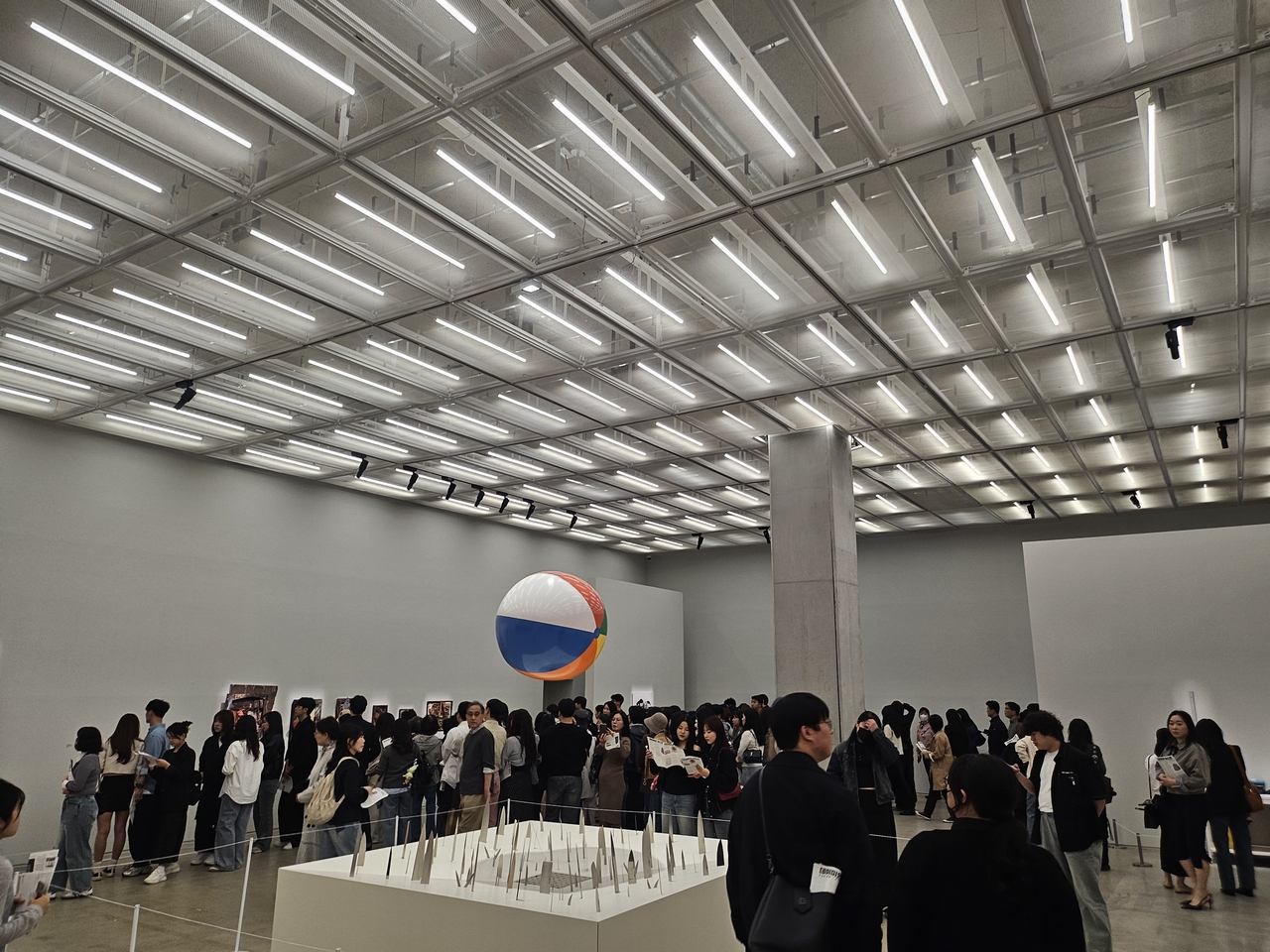
Despite the debate, the exhibition has been a box-office success. Most time slots this weekend are sold out. When a reporter visited Tuesday afternoon around 1 p.m., visitors were queuing to get in.
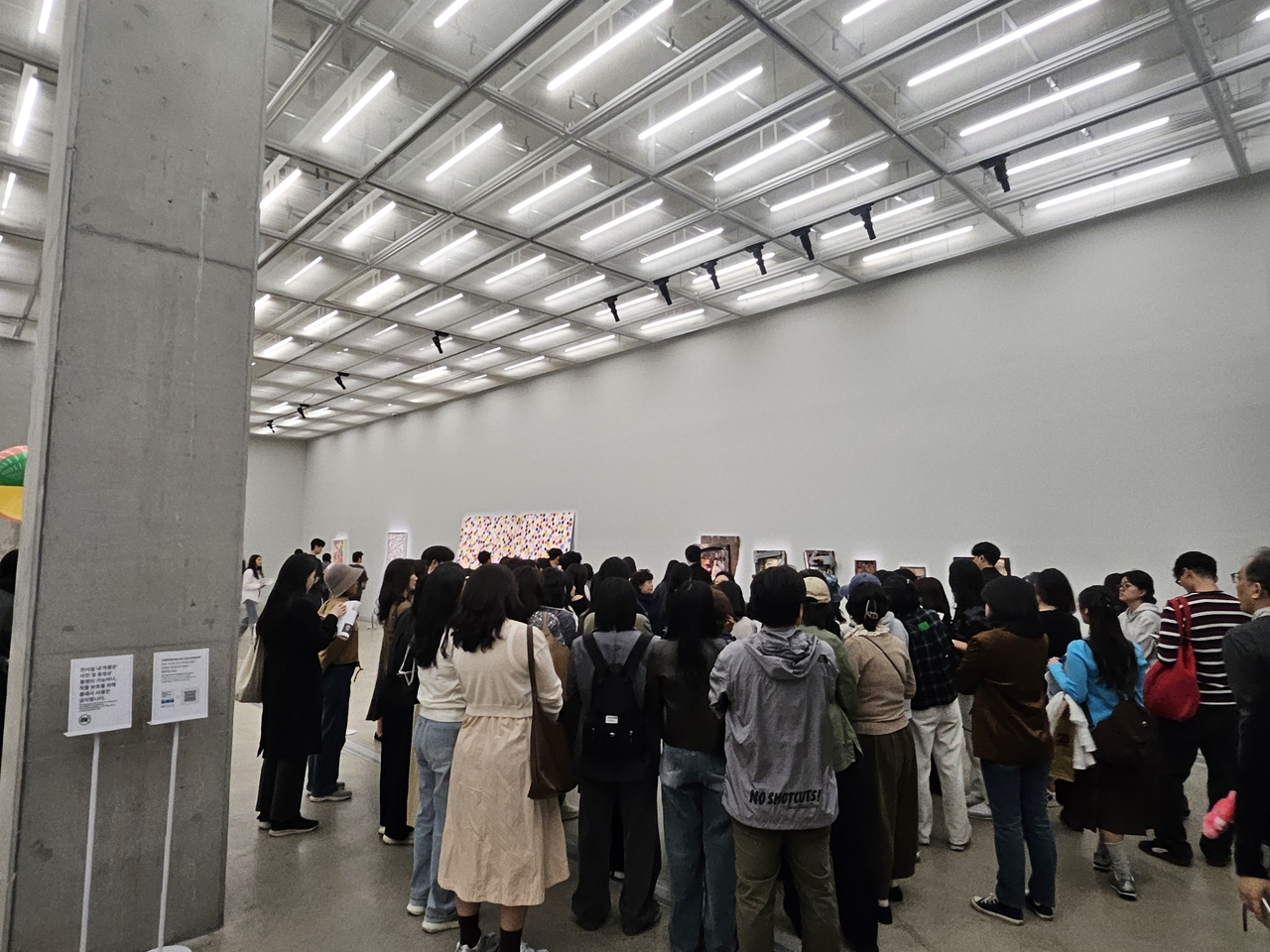
But the stronger the show's commercial performance, the louder the debate over its appropriateness has grown. Particularly amid ongoing controversy over Hirst's disregard for animal life and alleged animal abuse, critics have questioned the decision by a public institution to spend roughly 3 billion won (about $2.03 million) staging the exhibition.
An animal protection coalition calling itself the "Group Thinking of Animals Killed by Hirst" issued a statement on April 3 opposing "the artist who exhibits animal death in the name of art, and the museum that institutionally approves that violence." The statement was signed by 1,280 people.
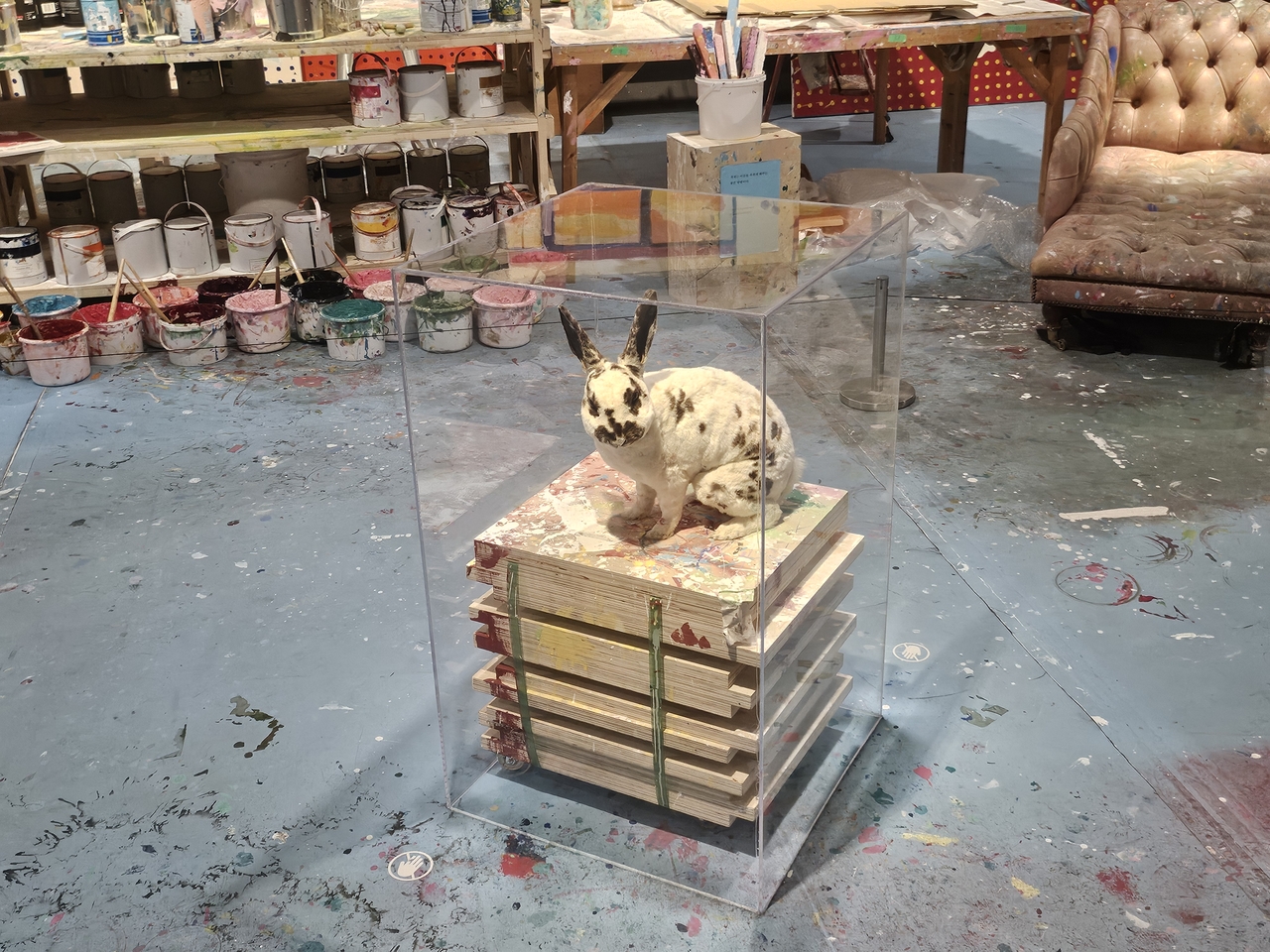
The coalition also criticized the nature of Hirst's practice itself. "Hirst's work is built on a system that produces, procures, arranges and consumes animal death — before any reflection on mortality even begins," the group said, estimating that at least 900,000 animals have been used in his work.
The controversy over his treatment of animals stretches back to his earliest pieces. Beyond "A Thousand Years" and "The Physical Impossibility of Death in the Mind of Someone Living," both on view in the current exhibition, Hirst drew sustained criticism in 1993 for works in which a cow and calf were bisected and displayed.
At a 2012 retrospective at Tate Modern in London, his work "In and Out of Love" — which filled a room with live butterflies — drew criticism after an estimated 9,000 butterflies died during the run.
"These precedents show that the violence in Hirst's work is not a matter of interpretation but of actual practice," the coalition said. "His work is completed on the basis of mobilizing and killing living animals, and those deaths have been repeated countless times."
The group said the National Museum of Modern and Contemporary Art, by hosting the large-scale retrospective, had institutionally sanctioned Hirst's exploitation of animals and lent it cultural legitimacy.

"An exhibition at a public institution sends a message about what matters in our time, what work deserves public scrutiny, and what values belong in the cultural public sphere," the coalition said. "The ethical controversies surrounding Hirst's practice were well known, yet the museum actively conferred meaning on his work through its curatorial framing and exhibition apparatus — without any explicit critical examination or critical distance."
The group also accused the museum of leaning on an exhausted myth of artistic celebrity. "This project looks like a choice that relies on the box-office appeal of a 'large-scale solo exhibition' and an already-depleted artist mythology, rather than any genuine contemporary critical consciousness," it said. "It reveals an outdated sense of what constitutes a meaningful cultural event."

woo@heraldcorp.com