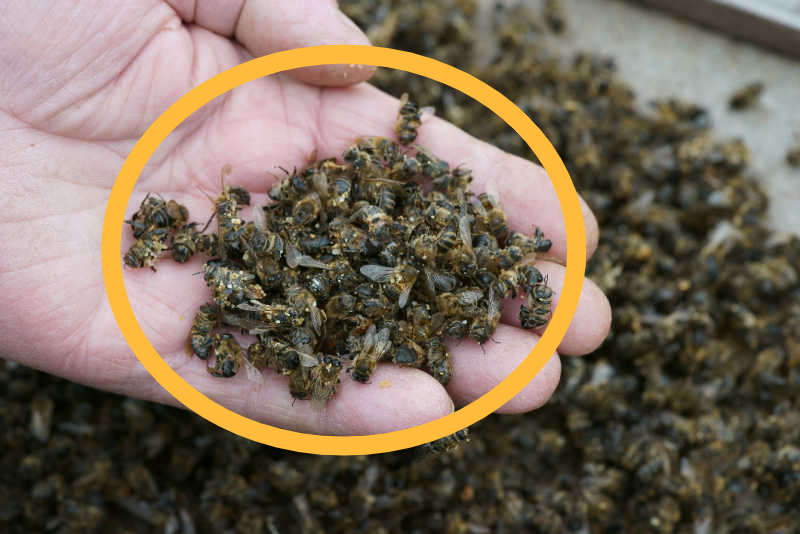
'Suddenly spring — a welcome surprise, but ...'
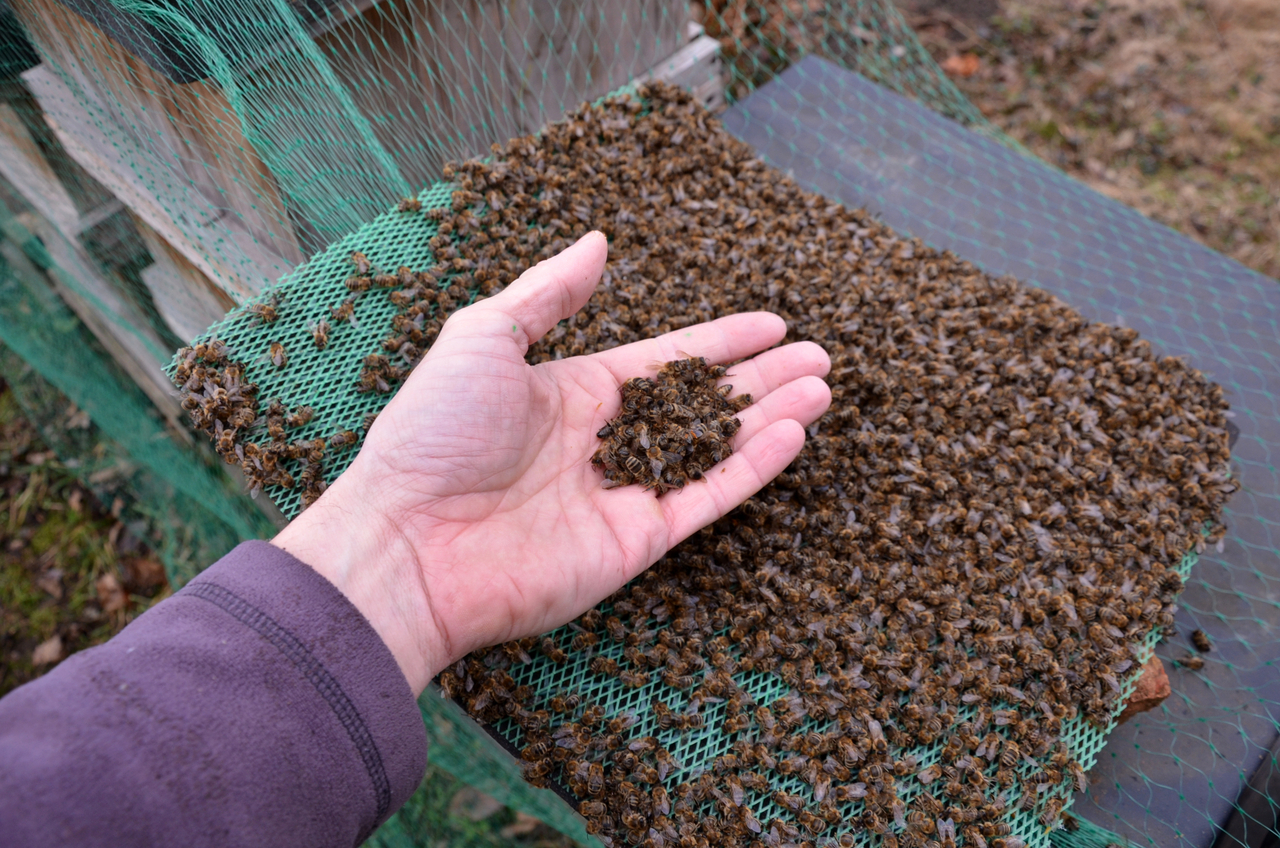
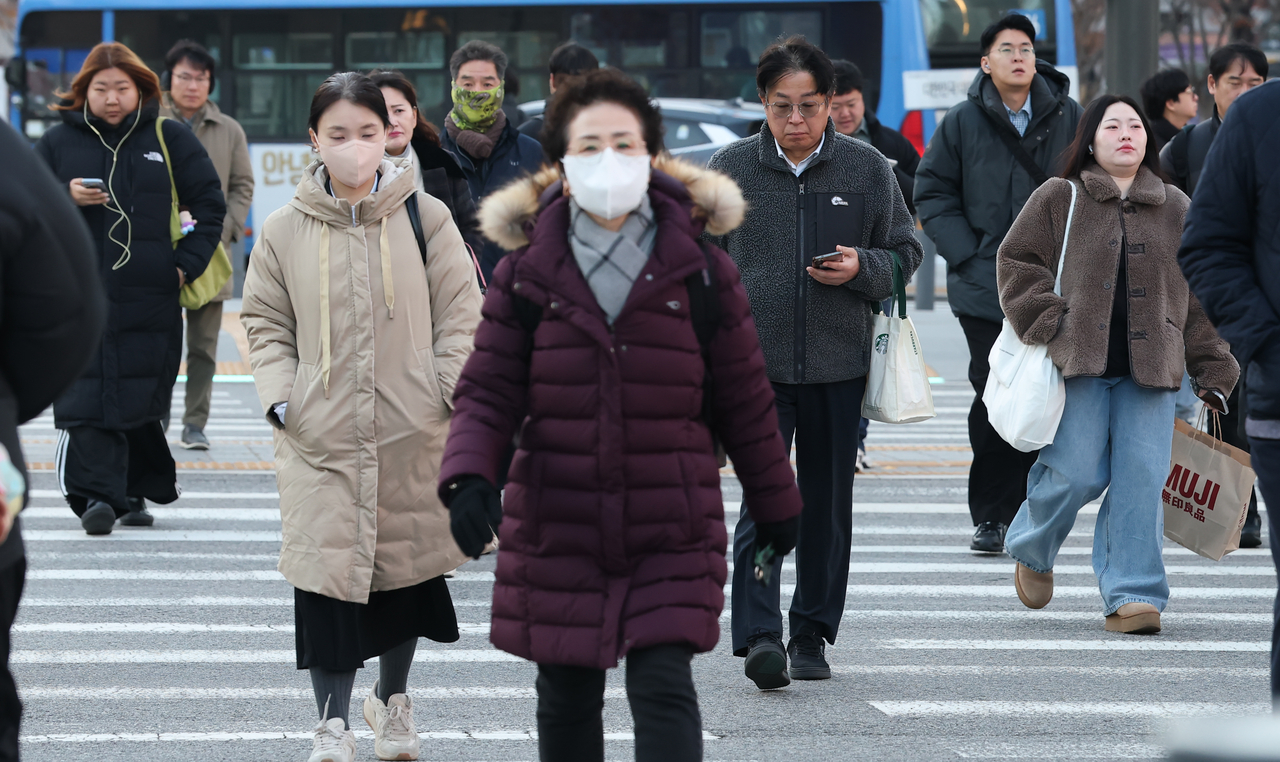
After days of near-freezing cold, a sudden stretch of mild weather arrives. For most people, it is a relief. For honeybees, it can be a death sentence.
When a few warm days arrive in the middle of winter, honeybees stir from their dormancy, mistaking the warmth for the onset of spring.
Then the cold returns — and the colony collapses. The consequences extend well beyond the hive.
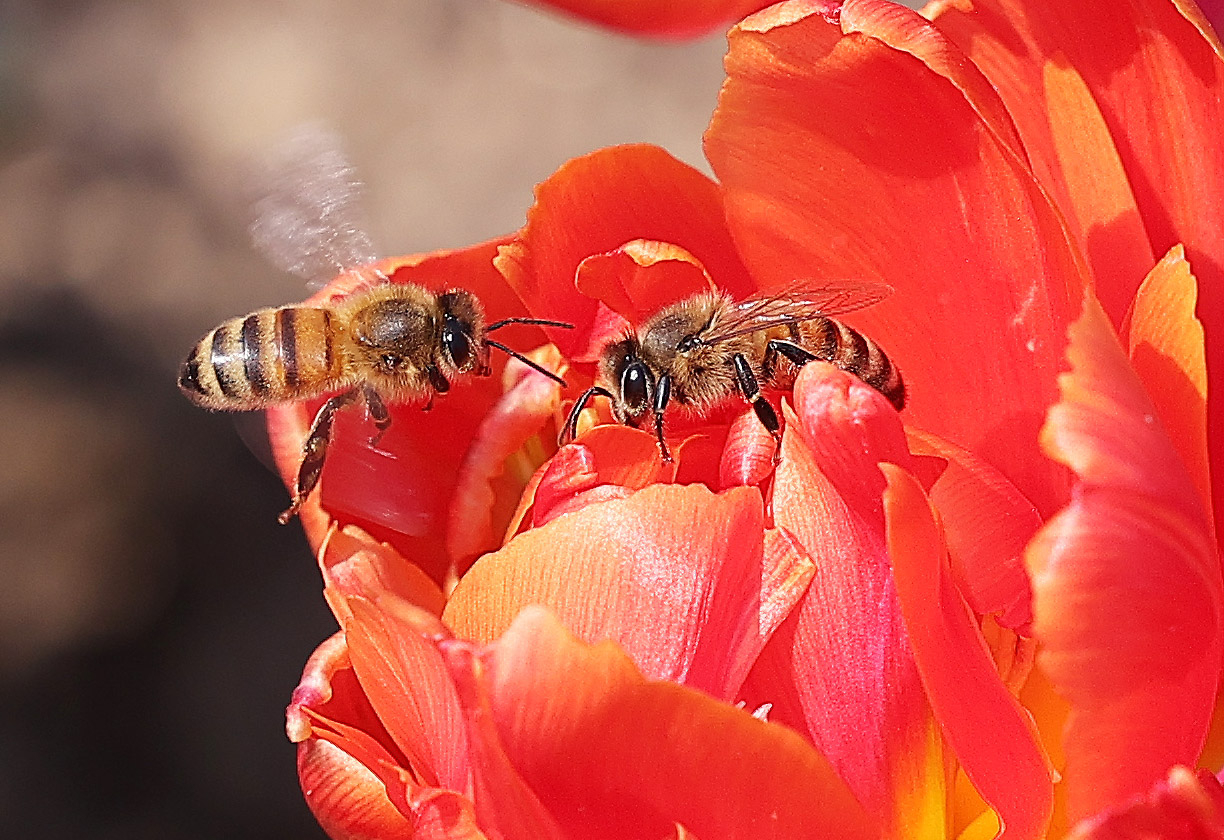
Honeybees are directly tied to what ends up on our tables. A single strawberry, a whole watermelon — none of it forms without bees carrying pollen from flower to flower. When bees disappear, farming stops.
The problem is increasingly erratic weather. The winter "false spring" events that trigger mass bee die-offs have doubled in frequency over the past 40 years, a new analysis shows.
If the trend continues, experts warn, fruit and vegetables could become luxuries that ordinary households can no longer afford.
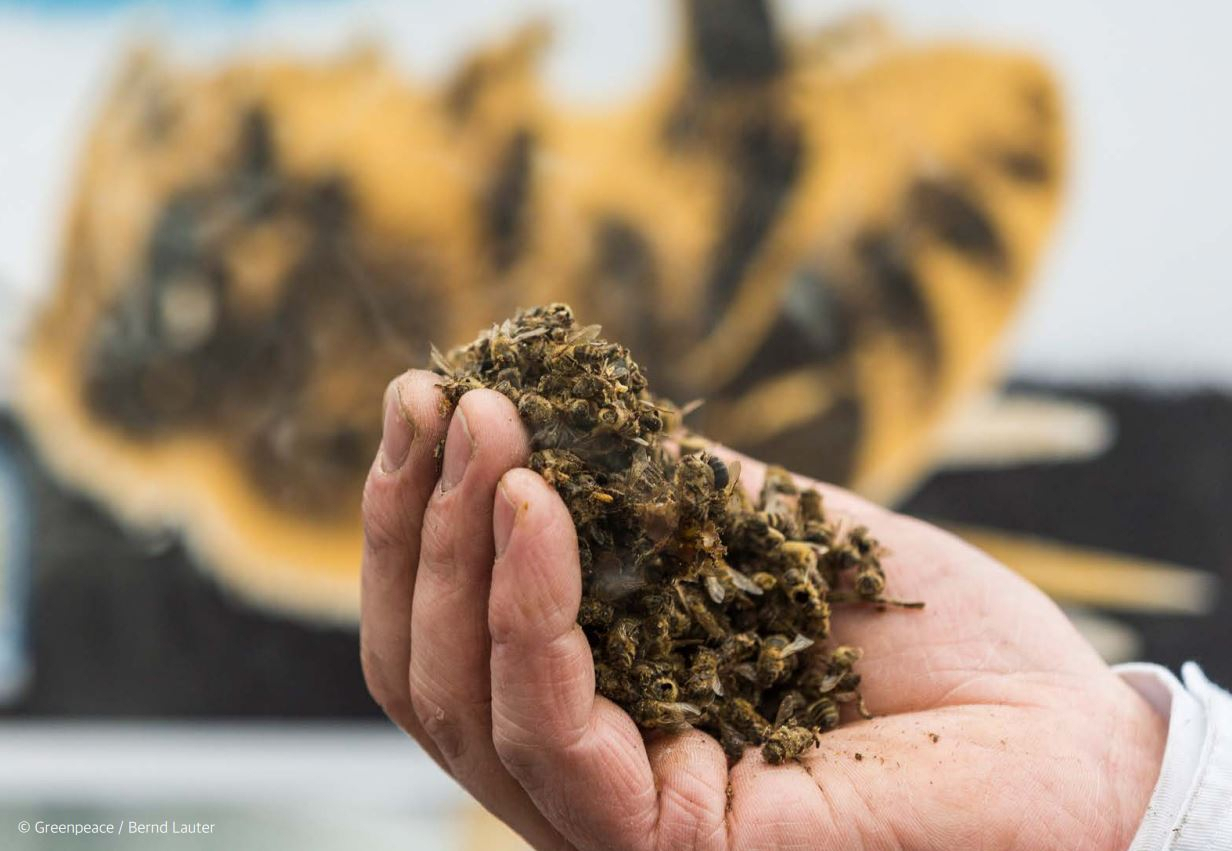
'False springs' keep multiplying as winters grow warmer
An analysis of Korea Meteorological Administration synoptic weather observation data for seven cities — Seoul, Cheongju, Daejeon, Jeonju, Gwangju, Daegu and Busan — found that winter "false spring" events have doubled compared with 40 years ago. The analysis covered daily high temperatures from December through February at each location from 1973 to this year.
A false spring is defined as three or more consecutive days on which the daytime high reaches at least 12 degrees Celsius. The Rural Development Administration established that threshold in March as the condition under which overwintering honeybees mistake the season for spring and resume activity.
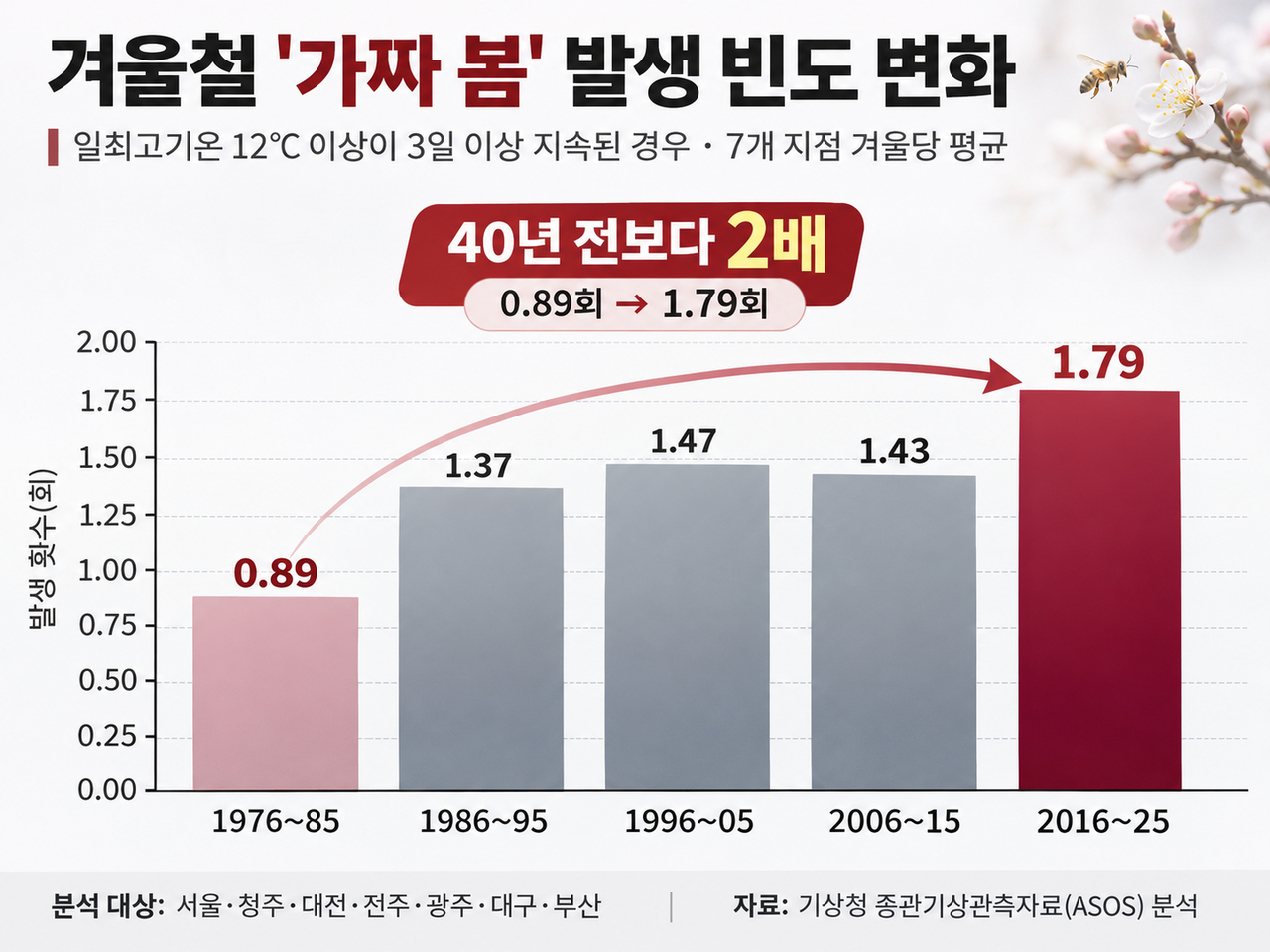
Over the most recent 10-year period (December 2016 through February 2026), false spring events occurred an average of 1.8 times per winter — double the 0.9 times recorded 40 years earlier (December 1976 through February 1986). The number of individual winter days reaching 12 degrees or above also rose, climbing from an average of 8.4 days per year four decades ago to 14.1 days in the most recent decade, a 1.7-fold increase.
Last winter (December 2025 through February 2026) was particularly extreme. Across the seven monitoring stations, the average number of days with a daytime high of 12 degrees or above reached 20.4 — the highest figure in any of the 53 winters since 1973, and nearly double the 53-winter average of 10.8 days.
The second-highest count was 19.4 days, recorded during the winter of 2023 (December 2023 through February 2024), which coincided with the previous El Niño episode. The phenomenon is also spreading northward into colder central regions. In Seoul, false spring events occurred just once across 10 winters four decades ago; in the most recent 10 winters, they occurred nine times.
Fooled by warmth, then frozen — sudden cold snaps have doubled too
Warm weather alone does not kill honeybees. The real danger is the deep-winter cold that follows close behind.
According to the Rural Development Administration, when daytime temperatures stay at or above 12 degrees for three or more consecutive days, the queen bee mistakes the conditions for spring and begins laying eggs. Worker bees follow suit, shifting into brood-rearing mode.
Worker bees that overwinter normally live about 150 days, but once they begin rearing brood, hormonal changes cut their lifespan to roughly 40 days. Bees that should survive until spring age prematurely.
When cold then strikes, the effect is lethal. Newly awakened bees burn their remaining energy trying to maintain body heat, and the entire colony ultimately perishes.
The frequency of sharp cold snaps — defined as the daytime high dropping 10 degrees or more within a week of a false spring ending — has also doubled, rising from an average of 0.57 times per year four decades ago to 1.17 times over the most recent decade.
In roughly two out of every three false spring events, such a sharp temperature drop followed. As false springs have grown more frequent, so too have the instances of bees awakening only to be caught by sudden cold.
A real-world example is the winter of 2021, when 7.8 billion honeybees perished across the country. In Gwangju, one of the hardest-hit areas, false springs followed by cold snaps struck three times in a single winter. Daytime highs that had climbed to around 15 degrees over six days in December dropped to 2 degrees within a week, then rose again twice more before falling below freezing each time.
The Rural Development Administration at the time attributed the mass die-off to a combination of varroa mite and hornet damage compounded by the extreme weather swings. The following winter brought more of the same. In Gwangju in January 2023, daytime temperatures climbed to around 16 degrees from Jan. 11 to Jan. 13 before dropping to 2 degrees three days later. More than 40 percent of all bee colonies nationwide failed to survive that winter.
The crisis is not unique to South Korea. A research team at Auburn University in the United States found that American beekeepers lost 55.6 percent of their colonies in 2024-2025, the highest figure on record since surveys began. This year's survey put the loss rate at 39.9 percent. In the Netherlands, 24 percent of bee colonies did not survive last winter — the fourth consecutive year the figure has exceeded 20 percent.
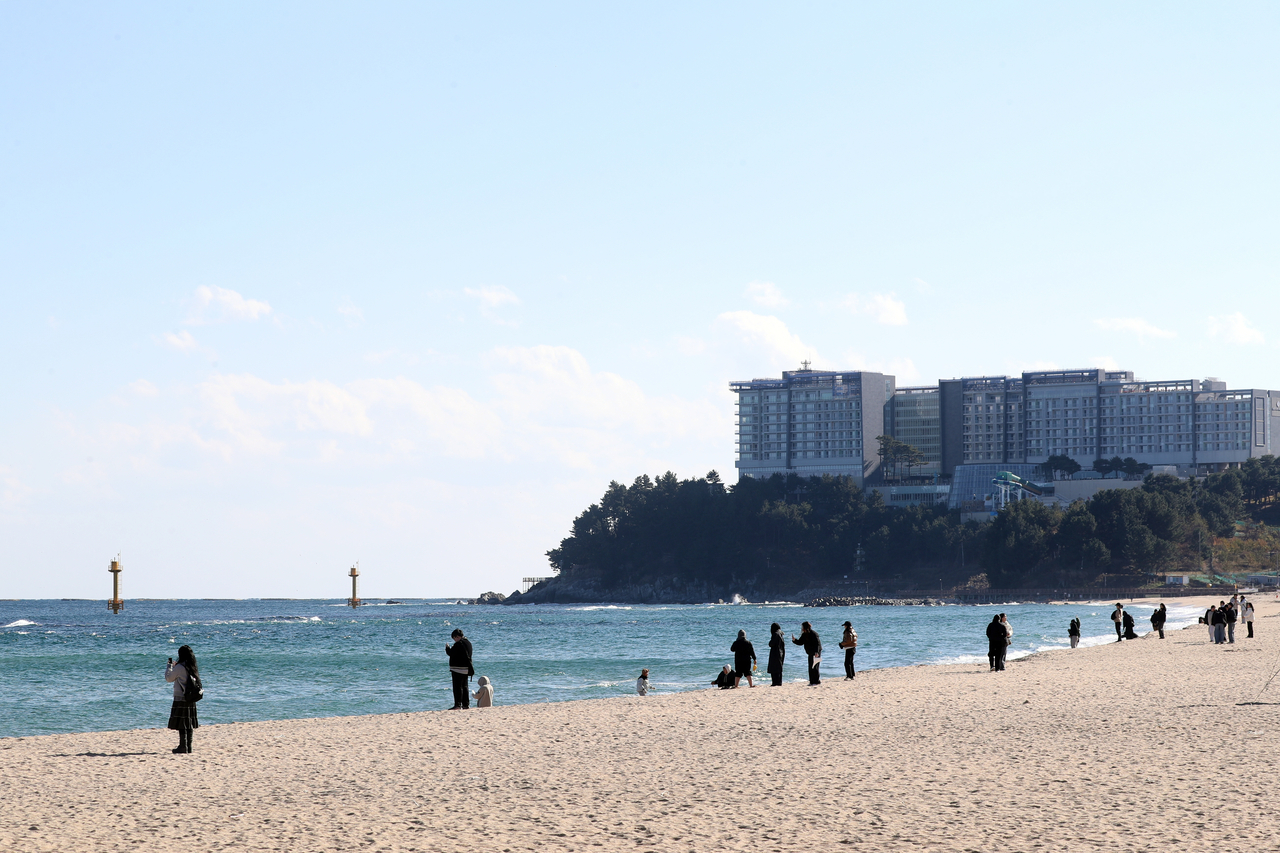
Another warm winter forecast — 'the crisis will come back to our tables'
The outlook for this winter is also concerning. A three-month forecast the Korea Meteorological Administration released Monday projects that this winter — December through February — will be warmer than average. The culprit is El Niño, a periodic warming of equatorial Pacific waters that pushes warm, moist southerly winds onto the Korean Peninsula.
Sea surface temperatures in the El Niño monitoring zone last October ran 2.6 degrees above the historical average — the highest reading for that period since 1950. The Korea Meteorological Administration expects El Niño to peak next month.
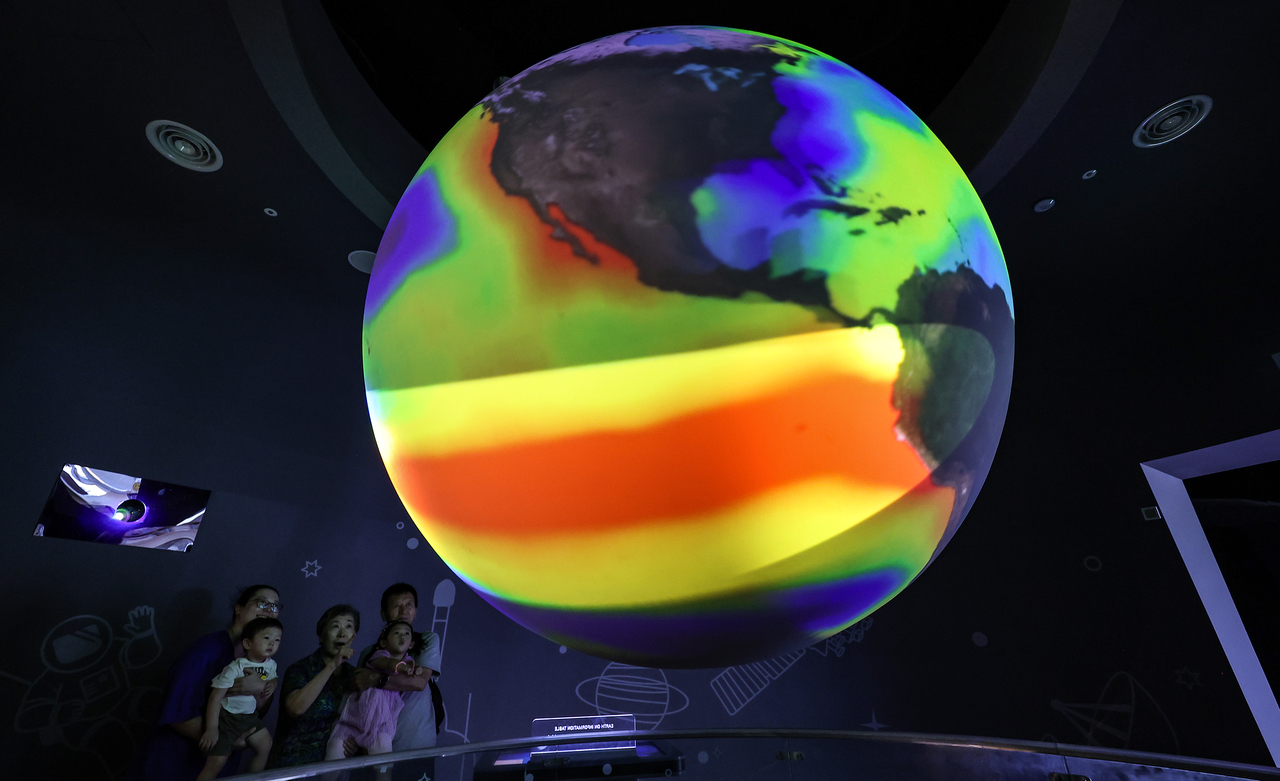
The winter will not be uniformly mild, however. The Korea Meteorological Administration also warned that cold air from the north will push south repeatedly, causing large temperature swings. A winter that alternates between warmth and sudden cold is the worst possible scenario for honeybees.
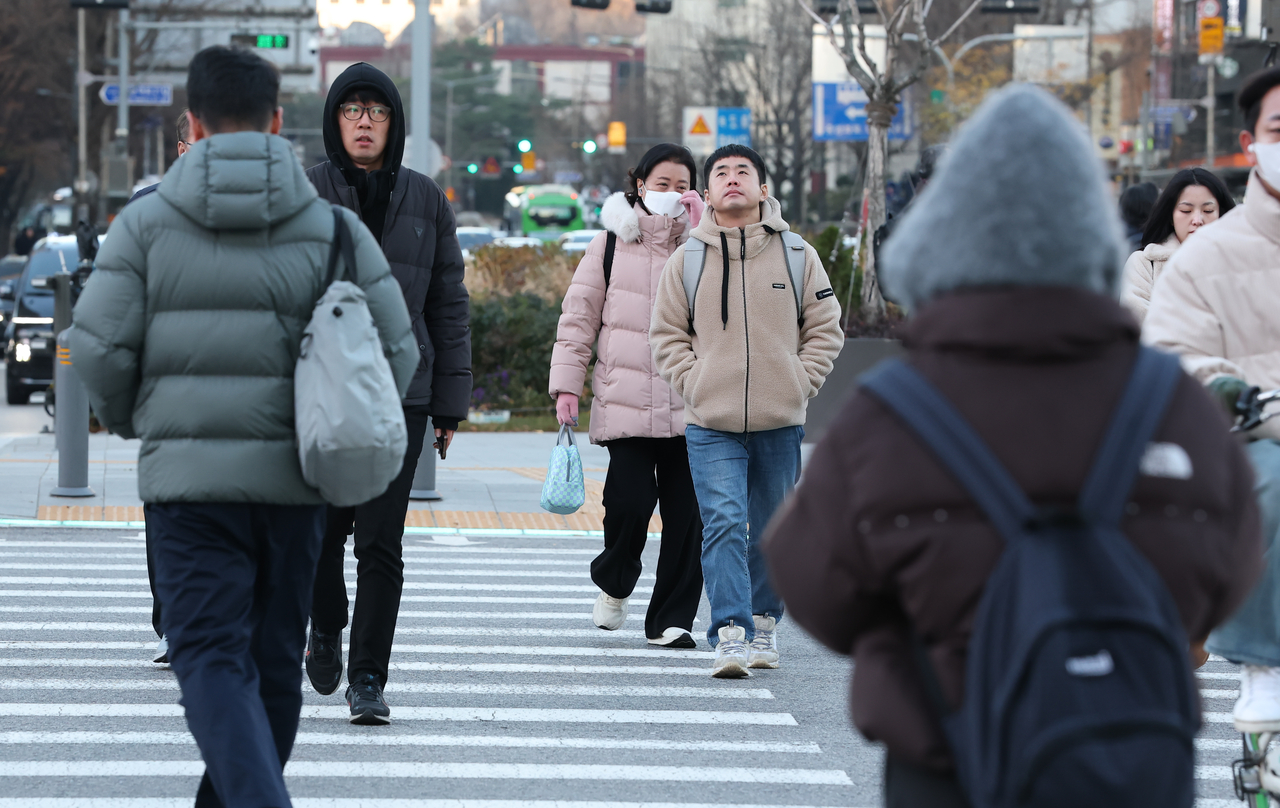
Early signs are already visible. Seoul recorded nine consecutive days with daytime highs at or above 12 degrees from Nov. 9 through Nov. 17 this month. The mercury reached 19.4 degrees on Nov. 16, then dropped sharply to 4.9 degrees three days later. After falling to minus 3.6 degrees Wednesday morning, temperatures rebounded to around 16 degrees by Thursday afternoon.
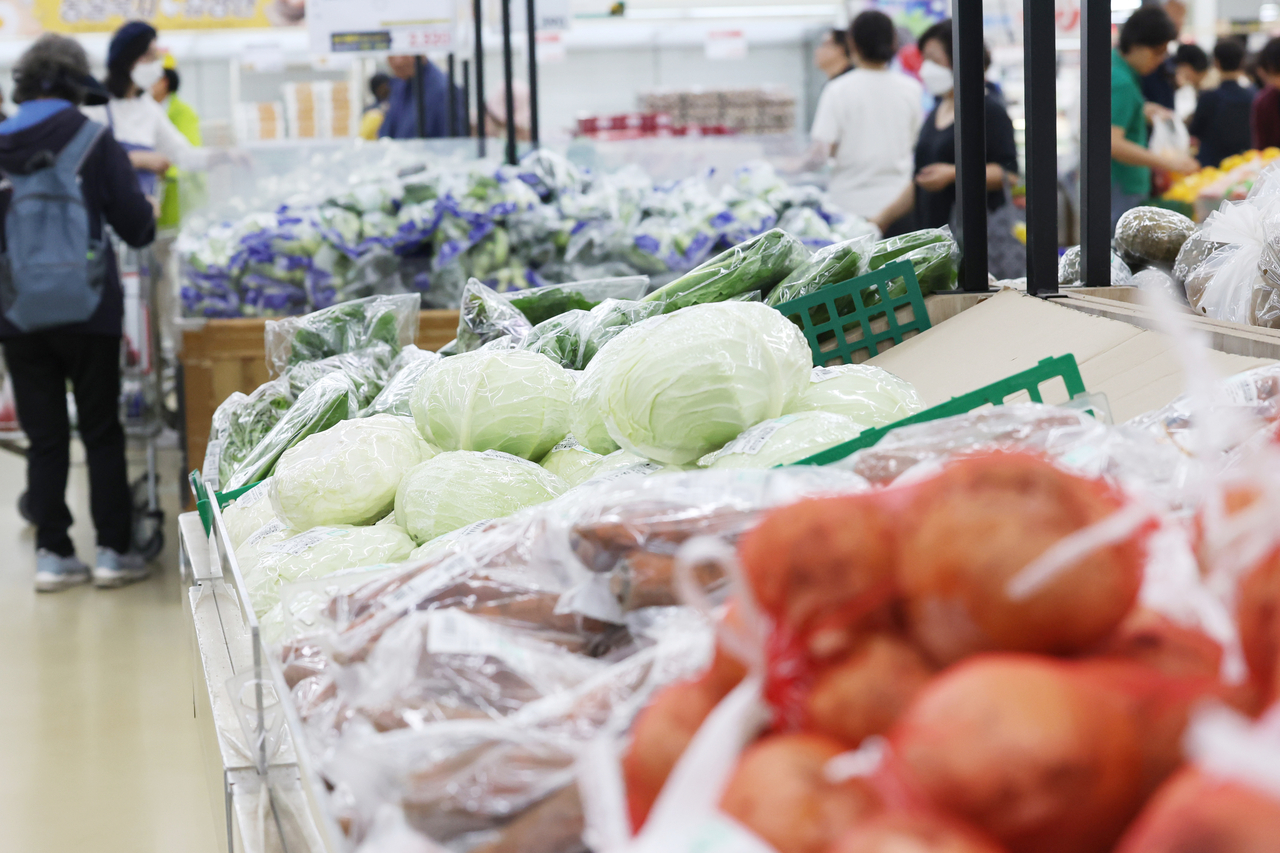
When honeybees disappear, food supplies are shaken. A 2020 survey by the National Institute of Agricultural Sciences found that 27 crops — including watermelon, strawberry, oriental melon and tomato — depend on pollinating bees such as honeybees and bumblebees. By cultivated area, the dependence rate stands at 92.7 percent for watermelon, 93.1 percent for oriental melon and 100 percent for strawberries. Farming those crops without bees is in effect impossible.
The consequences go beyond changes to what people eat. In 2022, researchers at the Harvard T.H. Chan School of Public Health estimated that a shortage of pollinating insects such as honeybees — leading people to consume less fruit and vegetables — contributes to 427,000 premature deaths worldwide each year from heart disease, stroke and related conditions.
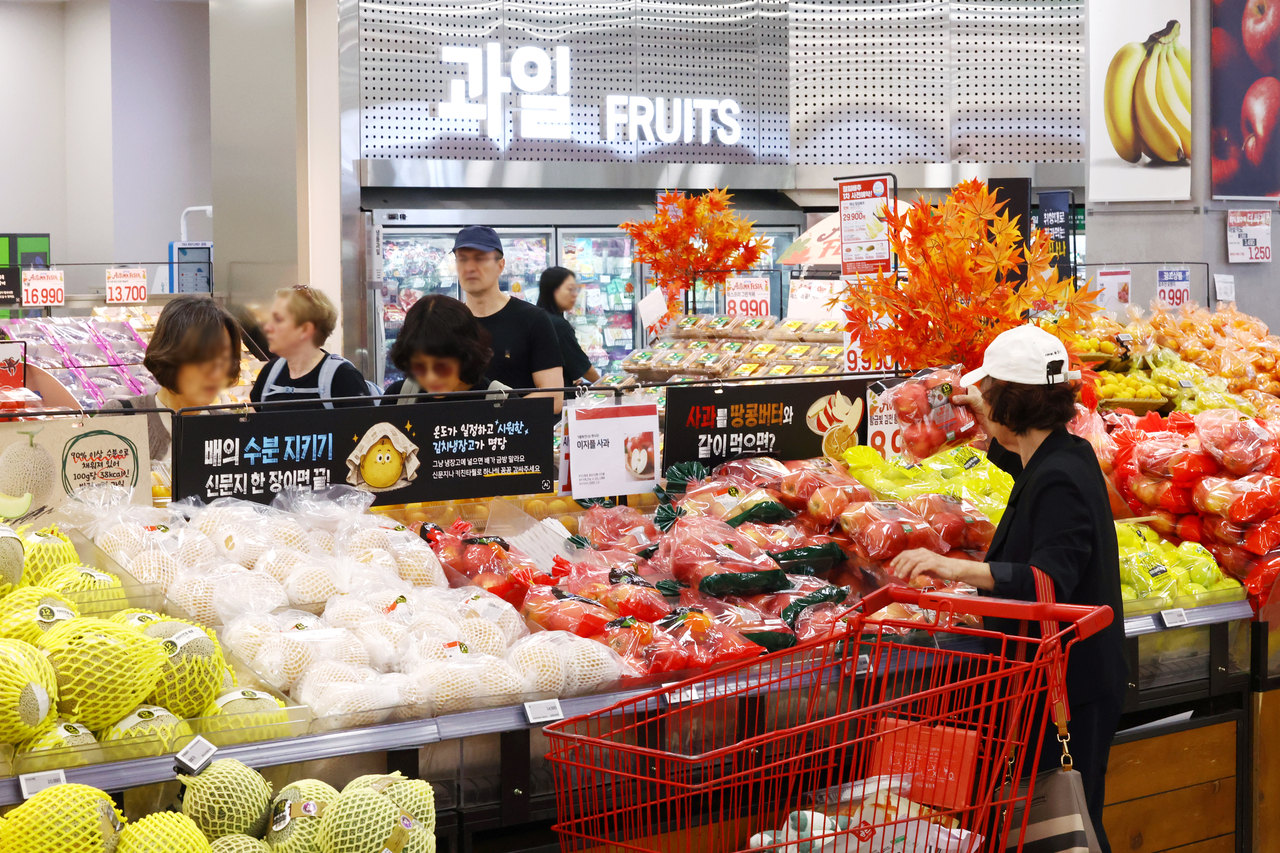
The government has begun to respond. In March, the National Institute of Agricultural Sciences under the Rural Development Administration developed two protective technologies: a water-pouch insulation system that reduces the range of temperature fluctuations outside a beehive from 15 degrees to 6 degrees, and a dedicated overwintering storage facility for bee colonies. The water-pouch technology has been made available to interested beekeeping farms starting this autumn, while the storage facility is set for pilot distribution from 2028.
Seong Je-hun, director of the National Institute of Agricultural Sciences, said: "If honeybees disappear, the damage will extend far beyond beekeeping farms to fruit orchards that rely on bee pollination to set fruit — and will ultimately come back to us as a crisis on our tables and in our ecosystems."

woo@heraldcorp.com