The Korea Customs Service and six partner agencies establish a joint inspection and crackdown framework under the TBFC Special Investigation Unit, signing MOUs with the Ministry of SMEs and Startups, Public Procurement Service, KoFIU, Financial Supervisory Service, K-SURE and Korea Electric Power Corporation
Agencies overseeing government subsidies, policy financing, public procurement, capital market supervision and trade finance have joined forces with the Korea Customs Service to combat trade-based fiscal and financial fraud.
The Korea Customs Service signed a memorandum of understanding Thursday at Seoul Customs House with six agencies — the Ministry of SMEs and Startups, the Public Procurement Service, the Korea Financial Intelligence Unit (KoFIU), the Financial Supervisory Service, Korea Trade Insurance Corporation (K-SURE) and Korea Electric Power Corporation — to cooperate in eradicating trade-based fiscal and financial crimes, known as TBFC.
The signing ceremony served to review the operations of the TBFC Special Investigation Unit, which launched in September to counter increasingly sophisticated trade crimes including capital market manipulation, fraudulent public procurement, illegal government subsidy claims and misappropriation of policy and trade financing. It also aimed to institutionalize an integrated joint inspection and crackdown framework built on inter-agency information sharing.
The cooperation network was expanded beyond the financial, procurement and small-business support agencies that joined at the unit's launch to include the Financial Supervisory Service, which oversees capital markets and accounting, and Korea Electric Power Corporation, which procures large-scale power equipment. The broader partnership is designed to close blind spots in detecting fiscal and financial fraud carried out through trade transactions.
Under the MOU, the Korea Customs Service and the six agencies will share data on company valuations based on import-export performance, procurement and supply contracts, and the selection of recipients for government support projects. They will also establish standard operating procedures for an integrated joint inspection and crackdown system that systematically incorporates findings and carries out follow-up measures.

Before the signing, the participating agencies held a closed working-level meeting to review the cooperative framework put in place since the unit's launch in September. They confirmed that baseline information shared among agencies has been effective in precisely identifying targets for inspection and enforcement.
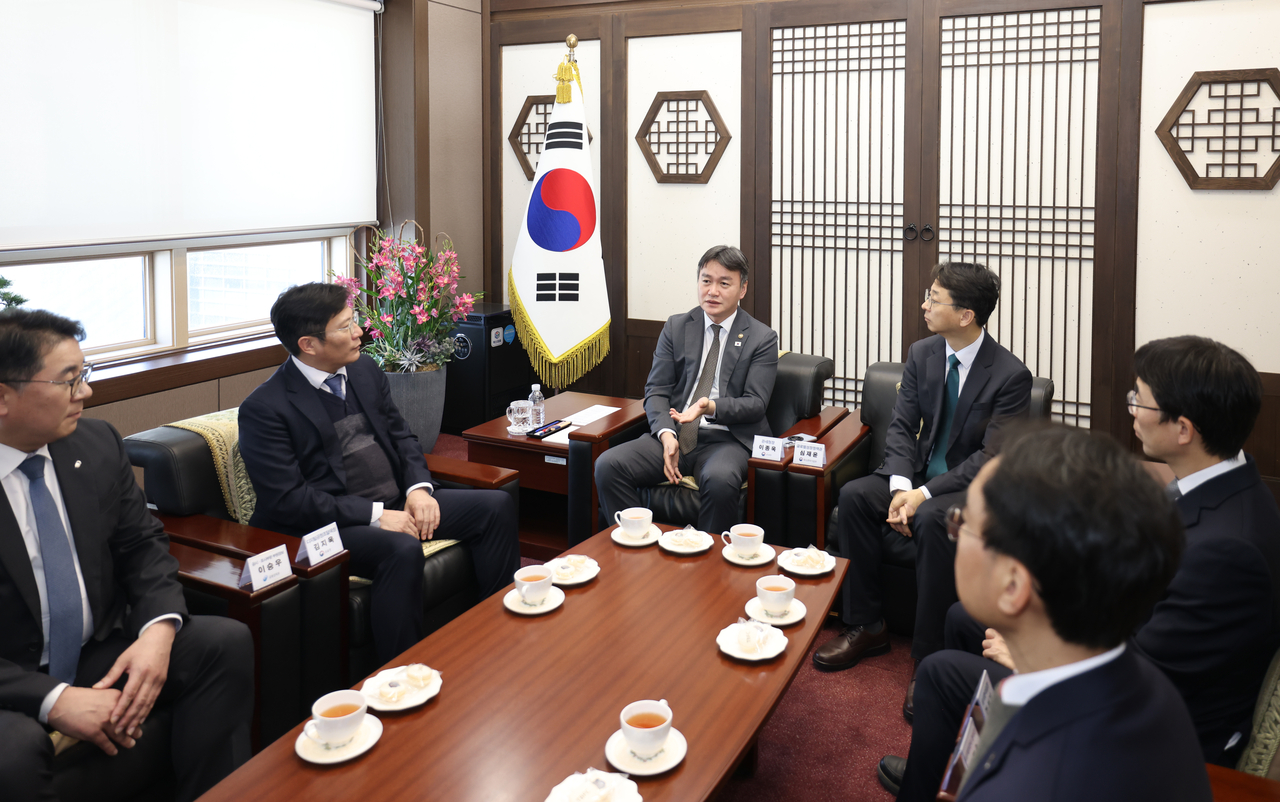
Korea Customs Service Commissioner Lee Jong-wook then chaired a roundtable with representatives of the signatory agencies to discuss the future direction of joint enforcement operations.
"To counter sophisticated fiscal and financial crimes that exploit manipulation of import-export transactions, the customs service's investigative capacity — which simultaneously monitors physical trade flows and foreign exchange movements — must be organically combined at every stage with on-the-ground supervisory intelligence from partner agencies," Lee said.
Lee added that the service would keep the integrated joint inspection and crackdown system running permanently alongside partner agencies — from screening suspicious businesses through foreign exchange audits and investigations to feeding back enforcement results — to prevent leakage of public finances at the source and establish a fair and orderly capital market.
kwonhl@heraldcorp.com