Of 830,000 commercial transport workers, 230,000 are 65 or older
Labor impact more likely to come through hiring freezes than mass layoffs
Rural routes, industrial commuter lines and late-night services cited as priority deployment zones
Singapore covers up to 90% of wages during retraining periods
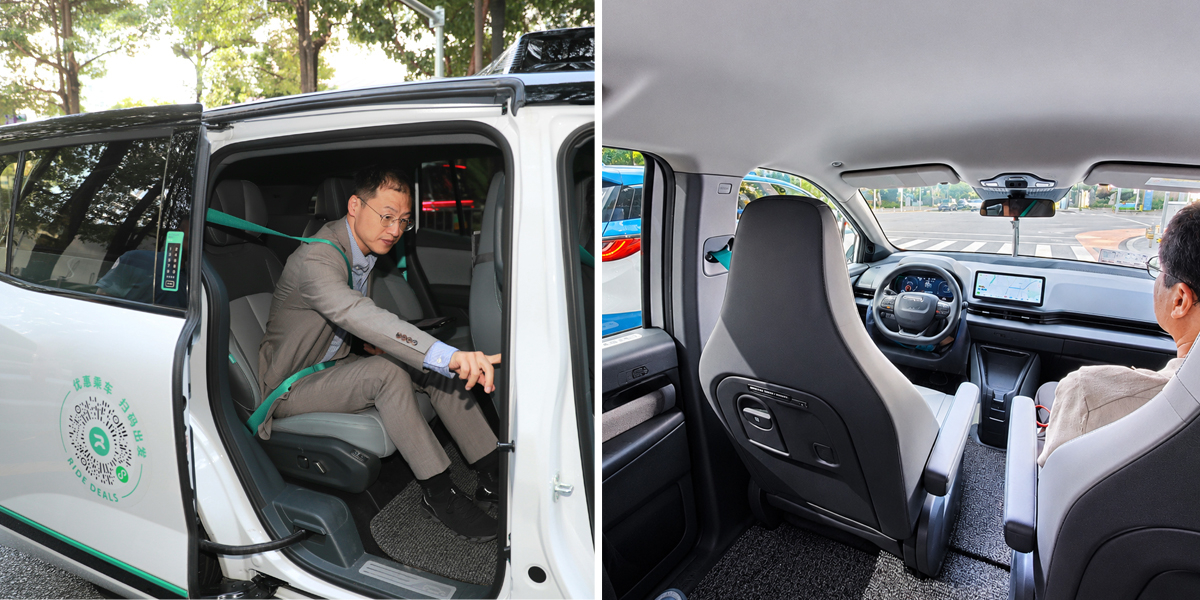
Fears of AI-driven job losses are growing, but more than half of South Korea's taxi drivers are already 65 or older. In areas with shrinking populations, bus routes are being cut simply because operators cannot find drivers.
Analysts say that in a country facing simultaneous population decline and rapid aging, autonomous driving technology may end up supplementing a scarce workforce rather than displacing existing workers. The more pressing debate, they argue, is not whether to introduce self-driving vehicles but in what order and on what terms — and how to help current transport workers transition to new roles.
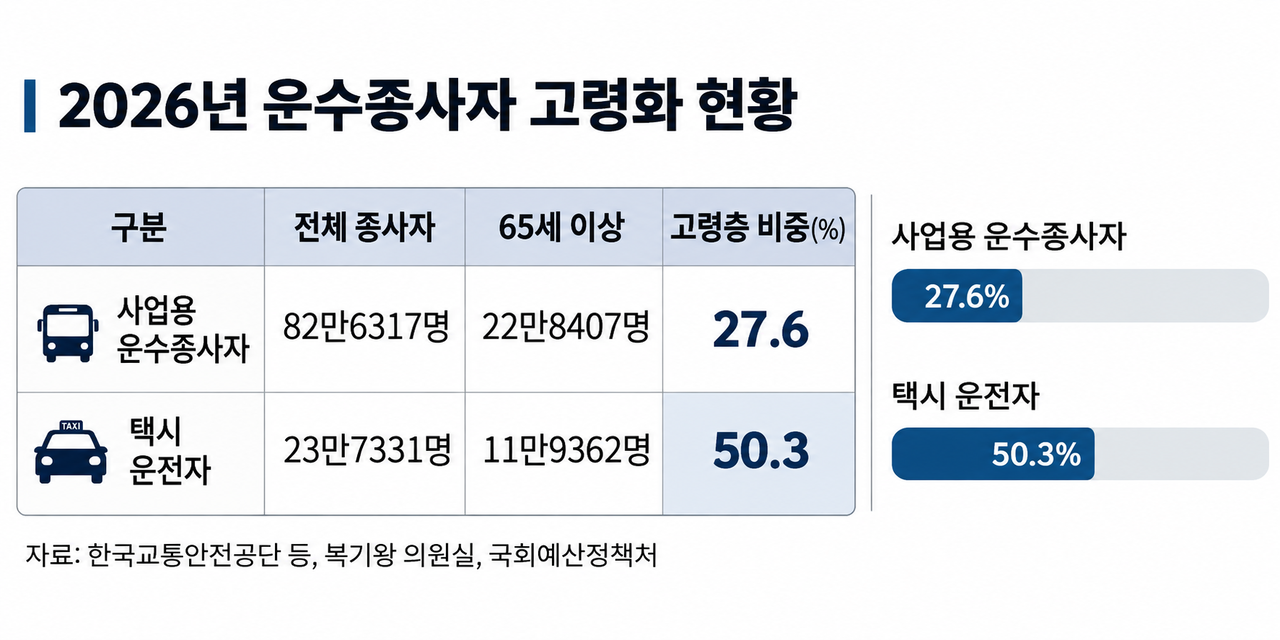
According to a November report by Seoul National University professor Kim Sung-woo published in the National Assembly Budget Office's NABO Population and Employment Trends & Issues, 228,407 of South Korea's 826,317 commercial transport workers — 27.6 percent — are 65 or older. Among taxi drivers specifically, 119,362 of 237,331 — or 50.3 percent — are in that age group, a share nearly double the rate across the transport sector as a whole.
Rural areas cut bus routes for lack of drivers — self-driving vehicles could fill the gap
The commercialization of autonomous driving technology could reduce demand for professional drivers. Given the age profile of South Korea's transport workforce, however, the labor market impact is more likely to materialize first as reduced new hiring, unfilled vacancies left by retirees, and adjustments to dispatch schedules and operating hours — rather than large-scale layoffs.
In areas with declining populations in particular, autonomous vehicles could serve as a means of guaranteeing basic mobility for residents before they ever displace existing drivers. When bus routes are cut because operators cannot recruit drivers, elderly passengers and others who cannot drive are left without adequate transport options.
Singapore has cited a similar dynamic as one justification for expanding autonomous driving services: two-thirds of its taxi drivers are 60 or older, and bus operators there also struggle to recruit drivers.
In South Korea, priority deployment candidates include routes connecting rural town centers with medical facilities and transport hubs, commuter lines serving shift workers at industrial complexes, links between urban rail stations and residential neighborhoods, and late-night and early-morning services.
The relationship with existing public transit also warrants attention. Self-driving vehicles that ferry passengers to train stations or bus stops could improve access to public transport, while point-to-point robotaxis could end up competing directly with buses and rail. The same technology, in other words, can have very different effects on the labor market depending on how the service is structured.
When drivers step away from the wheel — Singapore covers up to 90% of wages during retraining
A central challenge is that even if autonomous driving technology creates new jobs, existing transport workers may not be able to move into them.
The mobility benefits of self-driving vehicles will be broadly shared by users and communities, but the risks of income loss and job displacement will fall disproportionately on current transport workers. New roles in remote monitoring, vehicle maintenance and safety management require different skills, work locations and hiring criteria than driving. Given that half of South Korea's taxi drivers are already 65 or older, retraining alone is unlikely to resolve the transition problem.
Singapore's approach has drawn attention. The government there has announced vocational training and job-placement programs to help drivers move into autonomous vehicle-related roles, along with subsidies covering up to 90 percent of wages during training periods for employers. Support for taxi drivers transitioning to bus driving is also included. The country is treating the introduction of autonomous driving technology and the management of the resulting labor market shift as a single policy package.
In South Korea, the experience of Tada — a ride-hailing service whose launch triggered a prolonged conflict with the existing taxi industry — suggests that stakeholder negotiations should begin at the earliest stages of technology deployment. Analysts say transport industry groups, labor unions and local governments should all have a seat at the table in designing operating models, and that discussions should cover the participation of existing operators in running autonomous fleets, pathways for driver retraining, and the adjustment and compensation of existing business licenses.
There is also a risk that delaying technology adoption to protect existing driving jobs could itself become an obstacle to securing future employment. While overseas companies such as Waymo in the United States and Baidu in China accumulate technical expertise and operational experience through live commercial services, South Korean firms could lose ground — and jobs — across related industries including vehicle manufacturing, components and software.
"Autonomous driving is not a question of whether to introduce it, but of the order and conditions under which it is introduced," Kim said. "The benefits of the technology and the management of labor market change need to be designed together."
fact0514@heraldcorp.com